
Free speech not curtailed by post removal or flagging

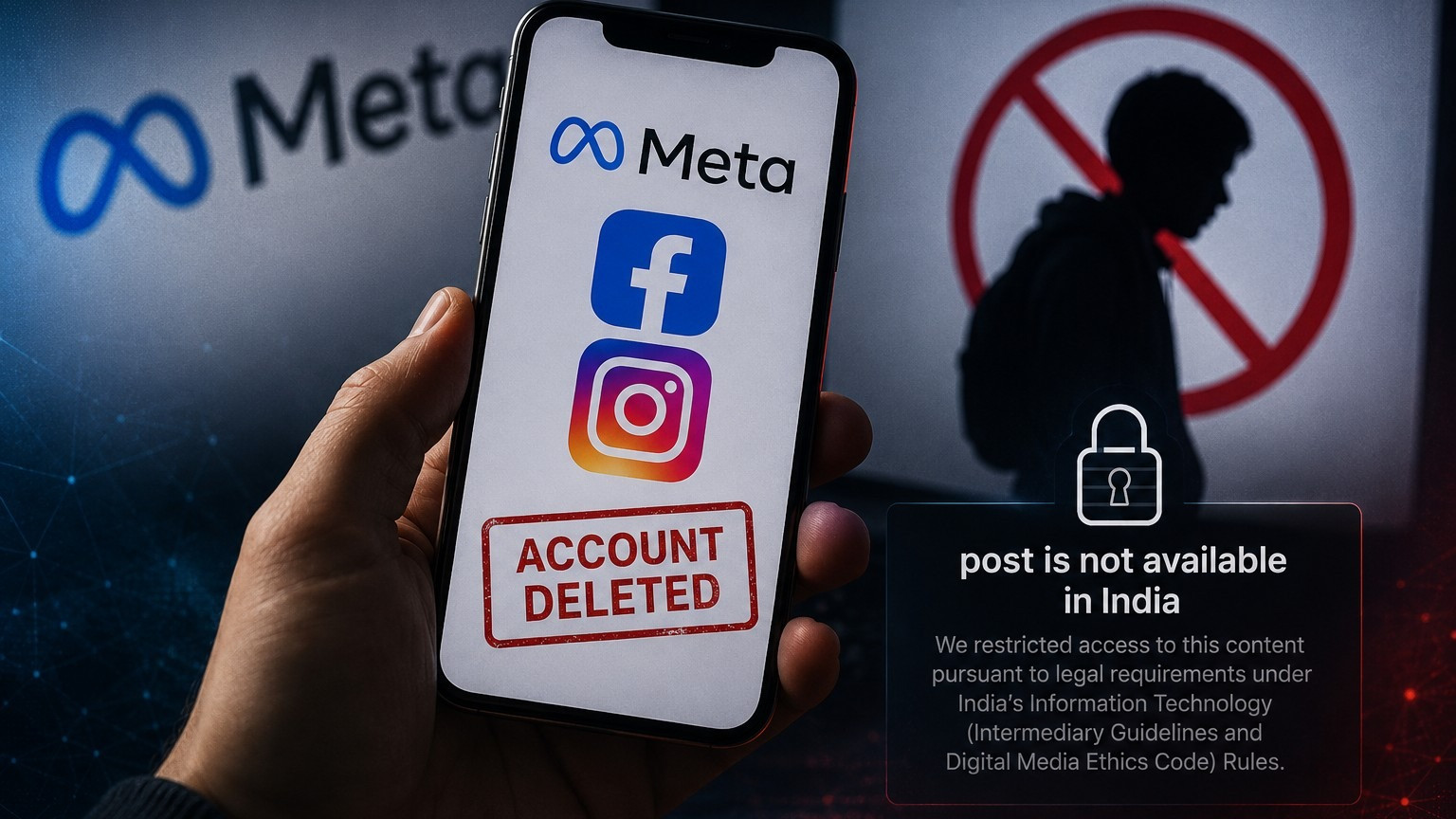
Government pressure leads to continuous removal of posts by journalists, political parties, activists, and media houses on Meta and X.
There are visible effects of the controversy that erupted after Meta restricted a video of Prime Minister Narendra Modi during the Jantar Mantar protest. Although Meta has apologised for the incident, the company is under such pressure from the government that posts by journalists, political parties, activists, and media organisations are continuously being removed from Meta and X, and accounts are being suspended. However, after posts are removed or flagged, have people stopped writing or speaking against oppression, injustice, and corruption? If Meta and X are taking such actions under government pressure, they must have realised that voices of dissent grow stronger after oppression.
These actions are being taken following government notices issued under Section 79(3)(b) of the Information Technology Act. This growing trend has raised concerns about transparency, due process, and press freedom in India.
According to a report by Newslaundry, freelance journalist Sachin Gupta stated that the situation is particularly dire for journalists and content creators who do not have institutional support. He said, “When we share content related to hate speech or violence on social media, the government should take cognisance of those posts and act against the hate spreaders, not against those who post or share it. In a way, this is an attempt to eliminate the messenger so that such issues do not come to light.”
Between July and December 2025, Meta restricted over 41,000 pieces of content in India. This number was almost three times compared to the previous year. This information is from Meta's report on content restrictions in India. According to a Meta employee who spoke to Newslaundry, new figures will be released at the end of this month. Amidst the police campaign to remove objectionable videos related to Jantar Mantar, allegations are being made that the number of restrictions on social media has increased rapidly.
Sachin Gupta questioned the lack of clarity regarding these restrictions. He said,
Independent and freelance journalists and social media creators do not have an institutional platform to publish their news or information, so they use social media. If even their posts are deleted or removed, where will these people go?”
Sachin Gupta received two notices from X for removing two of his posts. One notice was from Saharanpur police and the other from Muzaffarnagar police.
According to Gupta,
Both notices were sent by inspector-rank officers. He claims that when he contacted senior officials of both districts, they said they were unaware that inspector-level officers had issued directives to remove his posts.
One of the posts contained a video of Hindutva activist Pinky Chaudhary, in which he was seen announcing the conduct of Hindu religious rituals at the Islamic educational institution Darul Uloom Deoband. The second video was related to the recent Kanwar Yatra, in which Kanwariyas blocked the Delhi-Haridwar highway. Muzaffarnagar police claimed that this video was promoting violence.
Posts by journalist Santosh Pathak, Alt News co-founder and fact-checker Mohammed Zubair, media organisations Scroll and The Hindu, Indian Youth Congress, Arvind Kejriwal, Aam Aadmi Party, CJP's Ashutosh Ranka, and Saurav Das have also been flagged in the context of current restrictions and takedowns on Meta's platform.
Scroll reported that one of its Instagram posts was not made available in India. This report was about those injured by pellet guns in Kashmir, who have not received compensation even after nearly a decade. A second post published later that day, which did not show injuries from pellets, was also restricted. Instagram did not provide a clear reason for these actions. According to Scroll, the post remained available on Facebook and Threads but was restricted on Instagram.
Similarly, The Hindu's Instagram post about Insha Mushtaq, a pellet gun victim from Kashmir who lost her eyesight during the 2016 Kashmir protests due to security forces' use of pellet guns, was also restricted in India. In response to the restriction of posts by both media organisations, the platform only stated that it had “restricted access to content under India's IT rules.” No further detailed information was provided.
A Meta employee, speaking on condition of anonymity, told Newslaundry that it is legally necessary for the platform to comply with notices issued under Section 79(3)(b). Failure to do so could end the “safe harbour” protection that Meta enjoys as an intermediary.
Section 79 of the IT Act provides intermediary platforms like Meta and X with protection from legal liability for content posted by their users, provided they comply with government takedown directives. If the “safe harbour” protection is lost, platforms could be legally responsible for illegal content present on their sites. This is why platforms largely comply with the notices, despite disputes over the process of Section 79(3)(b) notices.
Meta also reported that access to over 22,000 posts was restricted in response to court orders handed over by local law enforcement agencies. These included AI-generated content related to local leaders. The remaining posts were reportedly restricted due to violations of other local laws.
The Software Freedom Law Centre (SFLC), India, expressed concern over this takedown campaign, stating that it is contrary to the rule of law and the constitutional commitment to freedom of expression under Article 19(1)(a) of the Constitution.
According to SFLC, the Supreme Court upheld the constitutional validity of Section 69A of the IT Act on the grounds that blocking orders under it should be reasonable, necessary, and proportionate. In contrast, the organisation alleges that the Sahyog portal creates a parallel system for online content removal, lacking safeguards like those in Section 69A. This results in users not knowing the reason for takedowns, being unable to effectively challenge them, and affected parties having insufficient legal recourse options.