
Is CM Samrat Chaudhary reconsidering Bihar's prohibition policy?
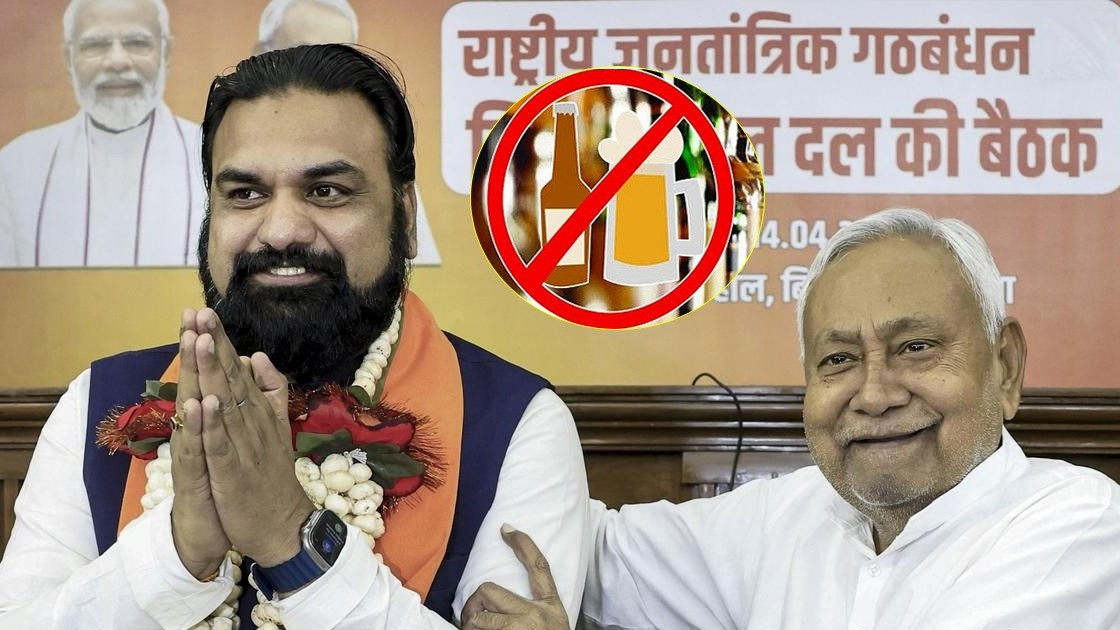
NCAER suggests immediate lifting of prohibition in Bihar.
In Bihar, the prohibition on alcohol should be lifted immediately without any delay. This recommendation has been made by the National Council of Applied Economic Research (NCAER) to the state government. This research paper by the think tank NCAER was presented last week at the India Policy Forum, recommending the state government to remove the complete prohibition on alcohol.
This recent study by NCAER has sparked a new debate in the political corridors of Patna. The study cites the significant revenue loss to the state due to prohibition and its failure to curb crimes against women. This has led to discussions on the impact of the nearly decade-old prohibition policy on the state and whether it should now be reviewed.
This study has given the opposition Rashtriya Janata Dal (RJD) an opportunity to accuse the BJP of failing to implement prohibition properly. Meanwhile, NDA allies have demanded stricter enforcement of prohibition. However, at least one leader from the Janata Dal (United) has expressed an opinion in favour of withdrawing prohibition.
According to sources,
the ruling BJP is aware that the resumption of alcohol sales could significantly boost the state's revenue. However, the party is also cautious that any change in policy could upset former Chief Minister Nitish Kumar.
The source said that the ruling party will take ample time before reviewing this policy. This April marked ten years of complete prohibition in Bihar. According to the key findings of the NCAER study,
prohibition has not succeeded in curbing crimes against women. One of the main objectives of former Chief Minister Nitish Kumar when implementing prohibition in April 2016 was to reduce crimes against women.
RJD national spokesperson Subodh Kumar Mehta said that this study shows the state government's "complete failure." He said, “All political parties in the state had unanimously implemented prohibition. We still support prohibition. This study shows the government's complete failure. The issue is not just the annual revenue loss, but also the parallel black economy of alcohol that has emerged. Such reports indicate that the state government may look for a way out of partial or complete prohibition in the future. JD(U)'s official stance is in support of prohibition, but party MP from Sitamarhi, Devesh Chandra Thakur, has called for a review. He said, “Prohibition has not succeeded anywhere.”
Lok Janshakti Party (Ram Vilas) chief and Union Minister Chirag Paswan said, “It is true that we need to find ways to increase revenue, but that does not mean we should lift prohibition.” Hindustani Awam Morcha (Secular) chief and Union Minister Jitan Ram Manjhi said, “Bihar should adopt the Gujarat model to enforce prohibition more strictly.” Earlier, Chief Minister Samrat Choudhary had made it clear that the state government would not review its liquor policy. However, sources say that serious discussions are ongoing within the ruling alliance regarding prohibition. A BJP source said,
along with prohibition, there has been a significant increase in the use of alternative narcotic substances and a parallel illegal economy of alcohol has emerged.
Additionally, the hospitality industry in Bihar can only flourish if we allow at least partial sale of alcohol.”
The BJP source further said, “But one thing is certain, the state government will take its time in reconsidering its liquor policy. Any change in policy could upset former Chief Minister Nitish Kumar. The decision to withdraw prohibition is a process that will move forward gradually.”
This study titled Macro perspective of Bihar’s development achievements: Unfinished agenda and the way forward was presented by a team led by economist Ratna Sahay. The study highlights the “rapid emergence” of the illegal drug market and the increasing use of alternative narcotic substances.
According to the study,
prohibition is causing significant annual revenue loss to the state treasury. It is estimated that if prohibition is lifted, Bihar's revenue could increase by 14 to 15 percent. Bihar annually collects around ₹65,000 crore in revenue.
The report also highlights the serious challenges associated with implementing prohibition. These include corruption in the system, increasing pressure on the resources of law enforcement agencies, and public health risks arising from uncontrolled and dangerous toxic liquor.
The NCAER study has recommended that Bihar should return to a system of controlled and regulated alcohol sales instead of complete prohibition and impose excise tax on it. The report states, “Re-imposing excise duty will free up significant resources for law enforcement agencies. Additionally, it will provide the necessary tax revenue, which can be used in priority areas such as education, health, infrastructure, and real employment generation.”