
Asim Munir visits Tehran: Will Iran join the Mecca Pact?

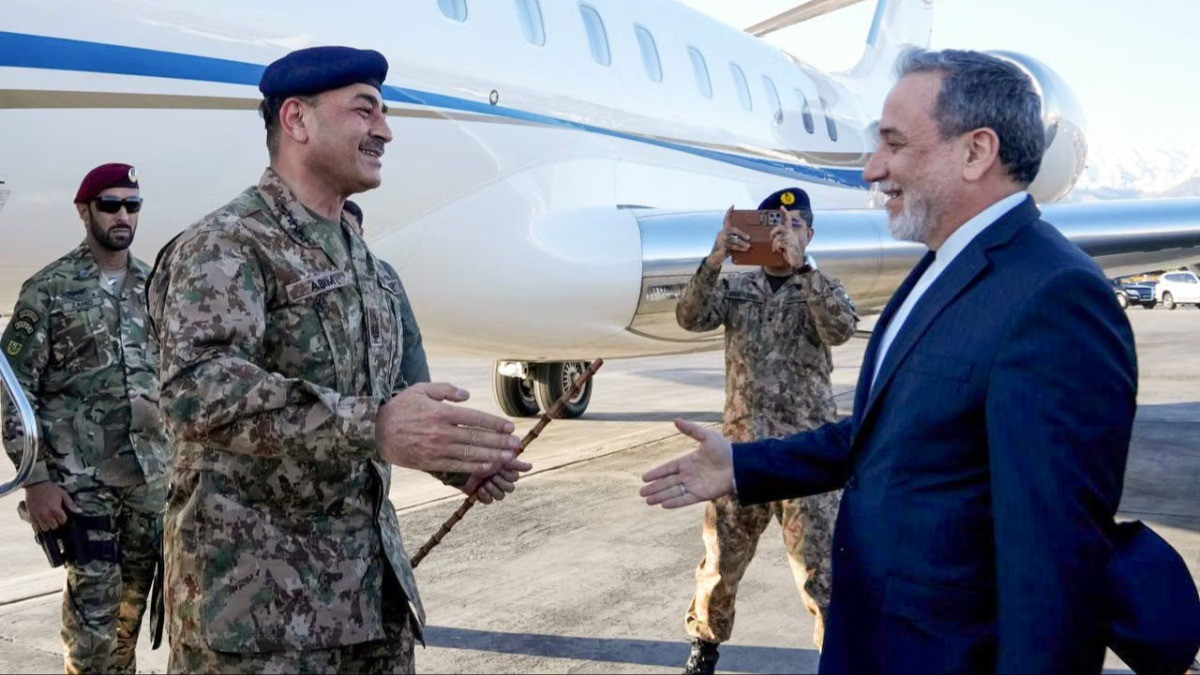
Asim Munir's visit comes as the US is set to impose new economic pressures on Iran.
Pakistan's Army Chief Asim Munir has arrived in Tehran. This marks Munir's third visit to Iran this year. The announcement was made by Iran's Foreign Ministry on Monday. Islamabad continues its mediation efforts to end the conflict against Iran by the United States and Israel.

Al Jazeera reported that Pakistani officials, on condition of anonymity, confirmed Munir's visit but refused to disclose details of the agenda. The media branch of the Pakistani Army, Inter-Services Public Relations (ISPR), the Foreign Ministry, and the Information Ministry did not respond to Al Jazeera's requests for comments on the visit. Unusually, the announcement of this visit was made by Tehran instead of Islamabad. Iranian Foreign Ministry spokesperson Ismail Baghaei said that the visit would further Pakistan's efforts to "strengthen peace and security" in the region.
Asim Munir's visit comes at a time when the United States is about to initiate a new phase of economic pressure on Iran. US Treasury Secretary Scott Basent is set to present details of the sanctions package against Iran on Monday, which US officials have described as "the harshest sanctions in history." Basent has stated that the aim of these sanctions, along with the ongoing naval blockade, is to "bring down" Tehran's government. Iran's Foreign Ministry has termed this plan as an "economic war."
Iranian Foreign Ministry spokesperson Ismail Baghaei told reporters in Tehran that Munir would engage in talks with senior Iranian officials during his stay. This visit follows two phone conversations within four days between Munir and Iran's Foreign Minister Abbas Araghchi. The two officials had discussions over the phone on Wednesday and Saturday.
According to Iranian state media, the two leaders discussed "regional developments" and measures to strengthen "peace, stability, and security" in West Asia. Munir's first visit to Tehran this year was in April, shortly after the Islamabad talks. This was the first direct dialogue between the US and Iran in over four decades, but it did not yield any success. Munir returned to Tehran in May, just hours after US Secretary of State Marco Rubio stated that there had been "minor progress" in the Washington-Tehran talks.
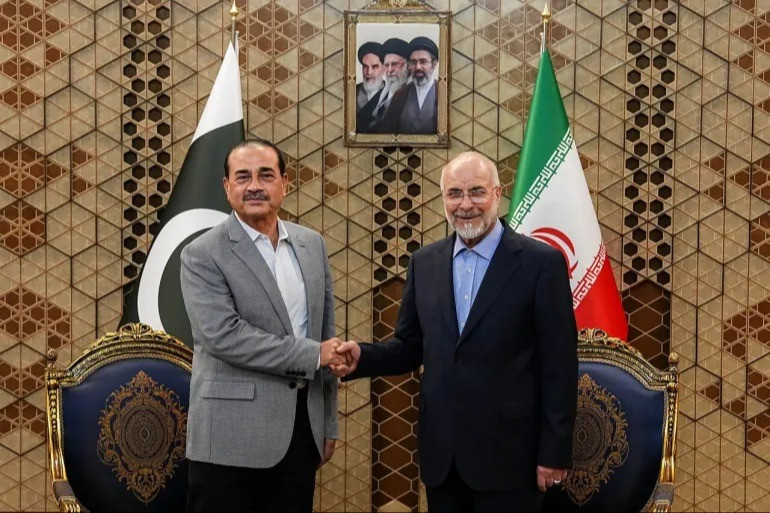
The discussions are also expected to cover the Mecca Joint Defence Agreement signed this month between Pakistan, Saudi Arabia, and Turkey. Munir was present in Mecca during the signing of this agreement.
The issue of Yemen's Houthi fighters may also be raised in Munir's talks with Iranian officials. The Houthis' attacks on maritime routes have repeatedly threatened to escalate the conflict. It is believed that the Houthis have Tehran's support. This issue is particularly significant for Islamabad. On August 11, Houthi fighters attacked a commercial ship flying the Tanzanian flag in the Bab Strait of Al-Mandeb. Three Pakistani sailors were killed, and several others were injured. Pakistan's Deputy Prime Minister and Foreign Minister Ishaq Dar had condemned the attack at the time, calling it a "violation of international law."
Munir's visit comes at a critical time for Pakistan's mediation efforts. Pakistan has been leading mediation attempts since the war began six months ago. Pakistan, Iran, and the US signed the Islamabad Memorandum of Understanding on June 17. The 60-day deadline set in the agreement expired in mid-August, but no party agreed to extend it. Iran has kept the Hormuz closed, demanding that Washington first lift its naval blockade, end oil sanctions, release Iranian assets frozen abroad, and stop military threats. Iran claims the US has not met these conditions.
Munir's visit follows changes in regional dynamics over the past month. Pakistan, Saudi Arabia, and Turkey signed the Mecca Joint Defence Agreement on August 7. Under this mutual defence agreement, an attack on one member country is considered an attack on all three nations.
Pakistan's Home Minister Mohsin Naqvi visited Tehran earlier this month to restart the stalled mediation process but returned without any concrete results. Analysts say Munir's visit indicates that key regional mediators have not given up hope of resuming direct or indirect talks between Iran and the US. However, they are also trying to maintain a balance in their relations with Tehran and Washington.
Oman's Foreign Minister Badr bin Hamad Albusaidi is also set to visit Tehran on Tuesday. According to Iran's state news agency IRNA, Albusaidi recently had a phone conversation with Araghchi. Analysts are divided on how much Munir's visit can actually achieve, given Pakistan's limited capacity to enforce any agreement.
Qamar Cheema, head of the Islamabad-based Sanober Institute and a political analyst, said,
"Both sides see Pakistan as a country that has helped facilitate dialogue without any personal interest in the outcome. It has nothing to gain for itself. This gives it a kind of clarity and allows it to provide a way out of the crisis for all parties."
Javad Heran-Nia, director of the Persian Gulf Studies Group in Tehran, said that Pakistan's persistent efforts are partly driven by its own interests. He told Al Jazeera,
"Pakistan is concerned about the rising tensions and the possibility of another full-scale war between Iran and the US. This would further destabilize the entire region. He also mentioned Islamabad's dependence on energy imports from Gulf countries and said that if instability spreads, remittances from Pakistani citizens working in Gulf countries could also be affected."
Retired two-star General and Pakistani defence strategist Zahid Mahmood went further, stating that,
"Munir is going to Tehran with a proposal from Washington. Pakistan is effectively still carrying Washington's offer for Tehran to find a way out of the crisis. Pakistan remains the most trusted conduit for messages between the two."
However, not all analysts consider Pakistan's role to be so crucial.
According to Andreas Krieg, Associate Professor of Defence Studies at King's College London, it is Qatar, not Pakistan, that remains the main conduit for mediation. He said, "Qatar is leading political mediation and remains the most important bridge for dialogue between Washington and Tehran."
According to Krieg,
"Munir's role is limited. He is a conduit for military-level dialogue with the Iranian regime, where the IRGC and the broader security establishment are increasingly involved in decisions related to war and peace." Some analysts believe that Munir's visit could lay the groundwork for finalizing an agreement between Iran and Oman on the joint management of Hormuz.