
Murli Manohar Joshi hints support for Rahul Gandhi

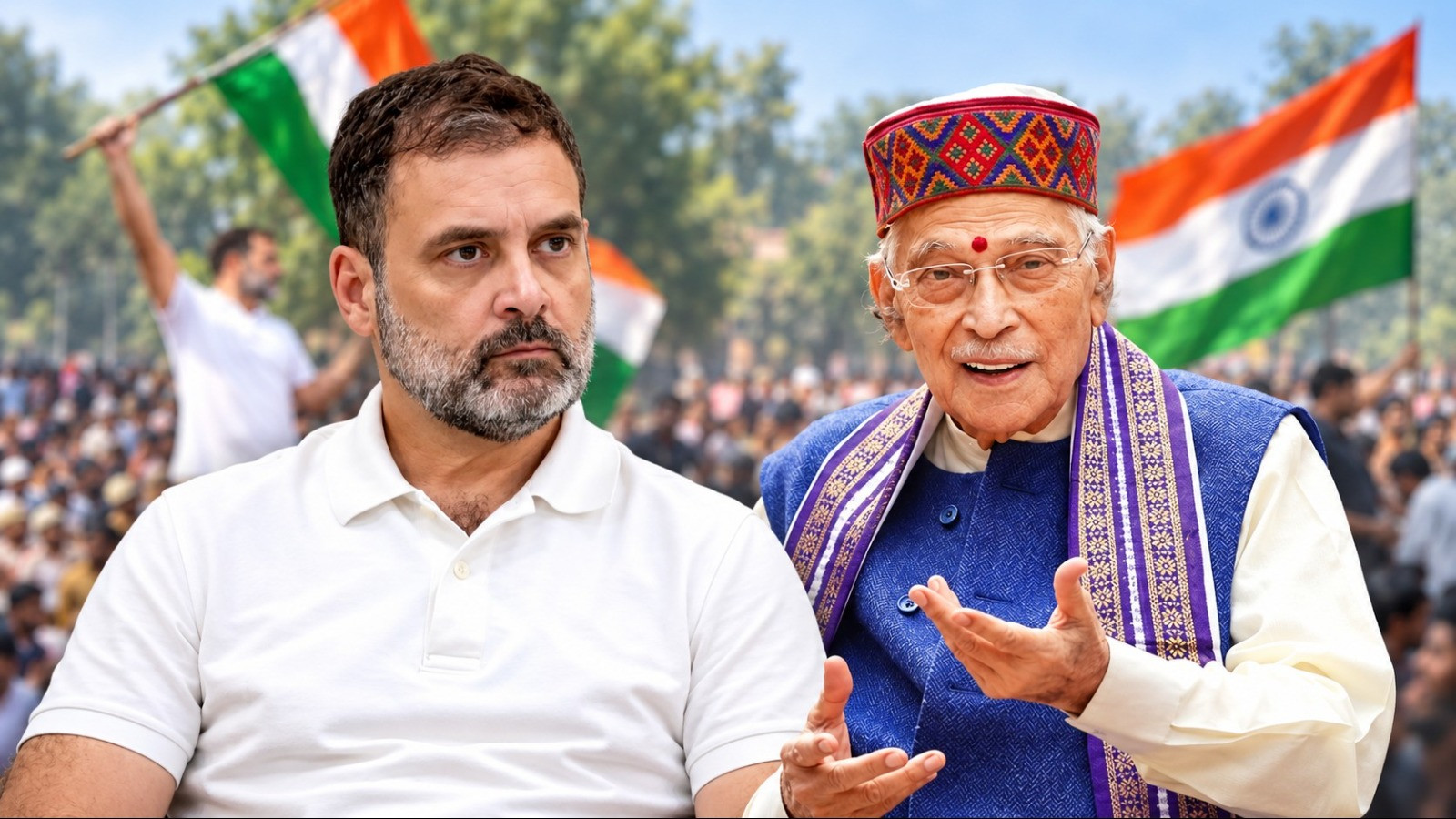
AI Image
Senior BJP leader Murli Manohar Joshi's statements on fair elections and government accountability are seen as aligning with Rahul Gandhi's demands.
Senior BJP leader Murli Manohar Joshi's statements regarding democracy, fair elections, and government accountability are being linked to Rahul Gandhi's demands. However, Joshi did not support any leader or political party by name. But it is clear from Joshi's statement that he is dissatisfied with the current Modi government, and there is indirect support for the demands that Rahul Gandhi is vocal about and criticizing the Modi government.
When asked about Chief Election Commissioner Gyanesh Kumar, Joshi said that democracy can only be maintained when elections are fair. He also emphasized the accountability of governments and stated that the Supreme Court should intervene in case of constitutional violations.
The message of these comments pertains to the credibility of the electoral process and the responsibility of constitutional institutions. Fair elections are essential to maintain voters' trust in a democracy. Similarly, ensuring government accountability is also a crucial part of the democratic system. Rahul Gandhi has consistently raised the issue of electoral fairness and the accountability of the Election Commission, and Murli Manohar Joshi has also spoken about the responsibility of constitutional institutions and fair elections. In this context, Joshi's statement is being interpreted as aligning with Rahul's demands.
However, Joshi neither mentioned Rahul Gandhi by name nor explicitly supported any of his demands or movements. But Joshi's comments raise fundamental democratic questions such as fair elections, accountable government, and the protection of the Constitution. The political implications of his statement can certainly be inferred.
It is noteworthy that senior BJP leader and former Union Minister Murli Manohar Joshi has raised several serious questions about the policies, functioning, and priorities of the Narendra Modi government in recent interviews and statements. In this context, his comment against the Uttarakhand BJP government had increased the unease among BJP leaders when he objected to the loud music played during an event at Badrinath Dham.
And this is not without reason,
In fact, on several occasions recently, Murli Manohar Joshi has openly expressed his displeasure against the policies of the Modi government. Whether it is the case of police lathi charge on students during the Jantar Mantar protest or the NEET paper leak - senior BJP leader Joshi has voiced his anger against the Modi government.
Joshi has expressed concern over cuts in the education budget, the closure of government schools, and increasing privatization under the Modi government. He also questioned why incidents like paper leaks did not occur during the tenure of former Prime Minister Atal Bihari Vajpayee, while corruption has been increasing under Modi's rule. According to PTI, Joshi said that,
He criticized the use of force by police during student protests in Delhi and said that brutal force against women and youth would alienate a large section of society from the government. Moreover, he remarked on the government's excessive spending on roads and the neglect of primary education and health, stating that merely building roads is not development.
While speaking about the New Education Policy, Dr. Joshi also mentioned the era of former Prime Minister Rajiv Gandhi. He stated that,
During Vajpayee's government, there was also a suggestion to change the education policy, but after studying the old policy, it was found that the policy should not be changed just because it was made during Rajiv Gandhi's government. He said that necessary amendments were made within the framework of the old policy at that time.
He questioned the role of the 'NITI Aayog' in the formulation of NEP 2020 and reminded that during his time, the 'Planning Commission' only assessed the needs of labor/employment and did not interfere in education matters. Advocating for the 'Neighborhood School System', he stated that all children, rich and poor, should receive equal and free education in the early stages.
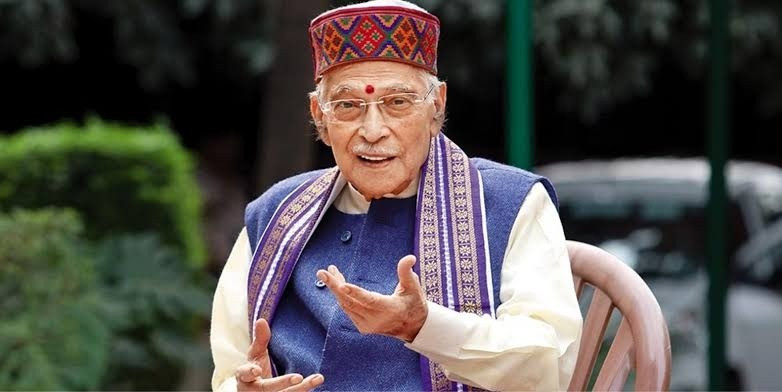
The senior BJP leader stated that education must be economically productive. In Delhi, M.A., Ph.D., and B.Ed. degree holders are forced to work as sanitation workers or on contracts. Education and healthcare should not merely be a means of profit-making. The private sector should come in but invest a portion of its earnings back into the development of education.
Regarding the issue of a developed India, Joshi stated that,
Attention must be paid to human life values rather than modern standards. Tribal communities living in harmony with nature are also developed in their lifestyle.