
Serious questions raised over 16.18 lakh voters in UP list

Details of these 16.18 lakh voters are missing from the Uttar Pradesh Chief Electoral Officer's website.
The Reporters Collective reports that the Election Commission has not disclosed the identities of the 16.81 lakh voters added in Uttar Pradesh during the SIR. The report alleges that the list of applications for adding the names of these 16.18 lakh voters and their details is not available on the website of the Chief Electoral Officer of Uttar Pradesh.
The Election Commission has maintained a mysterious silence regarding the identities of these 16.81 lakh voters. Who are these mysterious voters? Questions are now being raised about how voters were added without uploading photos.
In fact, violating the law, the Election Commission of India (ECI) has not made public the identities of the 16.18 lakh voters whose names it claims were added in the initial phases of the special intensive revision (SIR) of the voter list in Uttar Pradesh.
According to the law,
the Election Commission is required to publish a list of claims and objections at polling station level on the website of the Chief Electoral Officer (CEO) of the state. This should also include “access to each individual application form without a photo.” The Chief Electoral Officer is the top official of the Election Commission responsible for all election-related work in a state and reports directly to the Commission based in Delhi.
The Reporters Collective uncovered this violation of law while analyzing the revision of the voter list in the most populous state of India. Assembly elections are approaching in this state. The report investigated how many people had applied to add their names to the voter list. This included those whose names were removed by the Commission from the draft voter list prepared during the SIR, or those who had recently turned eligible to vote. The number of these applications was then compared to the number of people whose names were actually added to the final voter list. The investigation found results that had no clear explanation.
With the help of independent technical experts, all Form 6 applications publicly released in different parts by the Chief Electoral Officer of Uttar Pradesh were downloaded, compiled, and analyzed. The investigation found that the Election Commission had made public the details of 71.38 lakh applications received for inclusion in the voter list. Most of these applications were from people whose names had been removed from the draft list by the Commission. In contrast, the Election Commission added 84.3 lakh voters to the final list. This means that 12.92 lakh more voters were added to the list than the number of applications made public.
This is legally impossible. The Election Commission can only add a voter's name to the list if they apply through Form 6. The number of people added to the voter list cannot exceed the number of those who applied to include their names.
Moreover, the Election Commission had also received several lakh applications for removing voters' names from the draft list. Given this, the addition of so many extra voters to the list seems even more implausible.
To understand this legally impossible situation, all data related to the SIR on the website of the Chief Electoral Officer of Uttar Pradesh and all press releases were examined.
The investigation revealed that,
the Election Commission mentioned in a press release on March 7 that 16.18 lakh voters had applied to include their names in the list even before the draft list was prepared. People only find out that their names have been removed or that they have been declared absent, dead, transferred elsewhere, or double entries after the draft list is prepared under the SIR. However, the Election Commission stated that 16.18 lakh voters had applied through Form 6 even before the draft list was made public.
It should be noted that in this phase, only those citizens apply who have turned eligible to vote. Under the law, the names and details of those applying to add or remove names should be made public so that others can verify whether the application is valid or not and what action has been taken on it.
Election officials in Uttar Pradesh did not provide this data. Therefore, it is now not possible to determine who these voters are, in which assembly constituencies or polling stations they were added, or whether officials actually verified their eligibility.
To unravel the mystery of these 16.18 lakh added voters, the Chief Electoral Officer of Uttar Pradesh, Navdeep Ridwa, was contacted. He became agitated. He said, “We do not provide consultation services to clear your doubts or questions.” The Reporters Collective directly dodged questions and hung up the phone.
The web archive of the Chief Electoral Officer of Uttar Pradesh's website was also checked, but there was no archive available on the Wayback Machine. Subsequently, detailed questions were sent to him and the Election Commission based in Delhi, but neither had responded by the time the report was published. If it is assumed that these mysterious 16.18 lakh voters of the Election Commission, who applied before the draft list, are valid and that this is merely an administrative oversight of the Chief Electoral Officer of Uttar Pradesh, then another unusual figure emerges from this assumption.
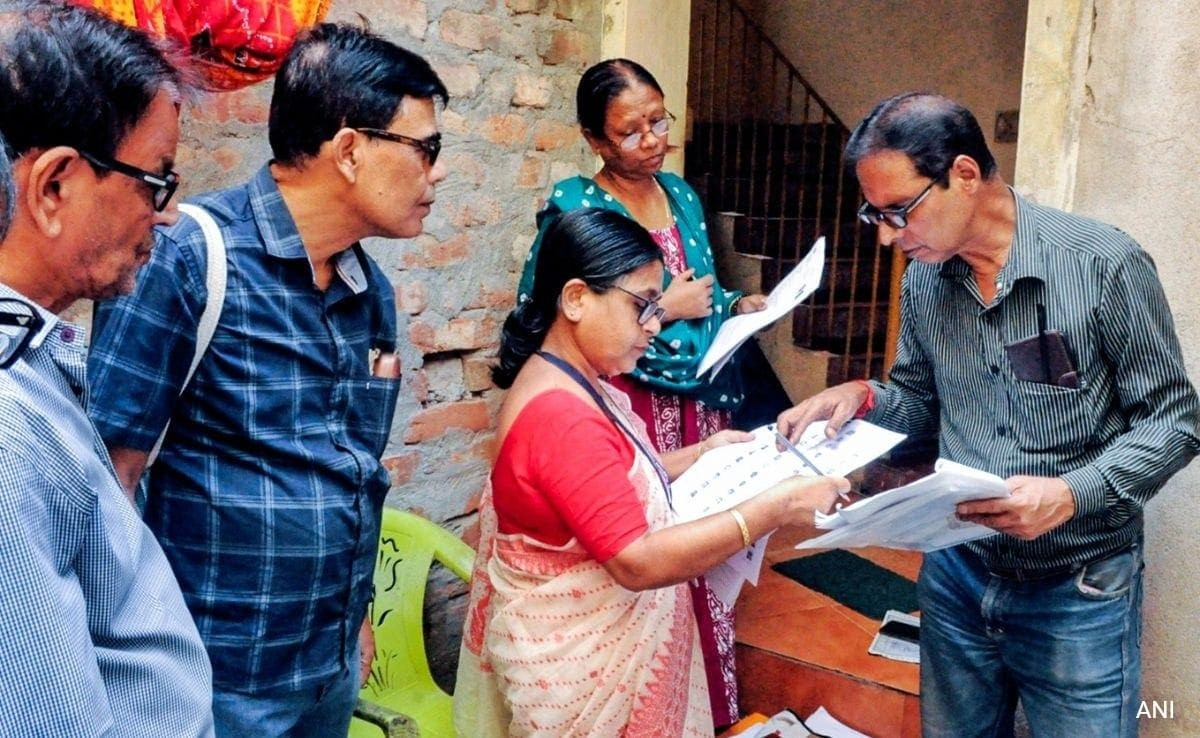
The figures from each stage of the SIR in Uttar Pradesh match the final voter list only if it is assumed that 96.27 percent of those applying to re-add their names after being removed from the list and those applying upon turning eligible to vote were valid voters. This means that the valid voters who were removed had their names incorrectly cut from the list at the outset by the SIR.
This high percentage does not align with trends in other states. According to a senior official of the Election Commission who spoke to The Collective,
the approval rate for applications to add names through Form 6 in other states has been around 60 to 70 percent. In contrast, in West Bengal, where SIR was conducted alongside Uttar Pradesh, the approval rate for applications to add names through Form 6 during the same revision period was about 18.5 percent.
Before the SIR began, there were 15.44 crore registered voters in Uttar Pradesh. After considerable delay, the SIR in Uttar Pradesh commenced in October 2025. On January 6, 2026, the Chief Electoral Officer's office published the draft list and removed the names of 2.89 crore voters, declaring them absent, transferred elsewhere, dead, or double entries. Reports indicated that the removal of approximately 18.7 percent of voters' names from the draft list caused widespread panic. There was also unease among the BJP leadership in the state.
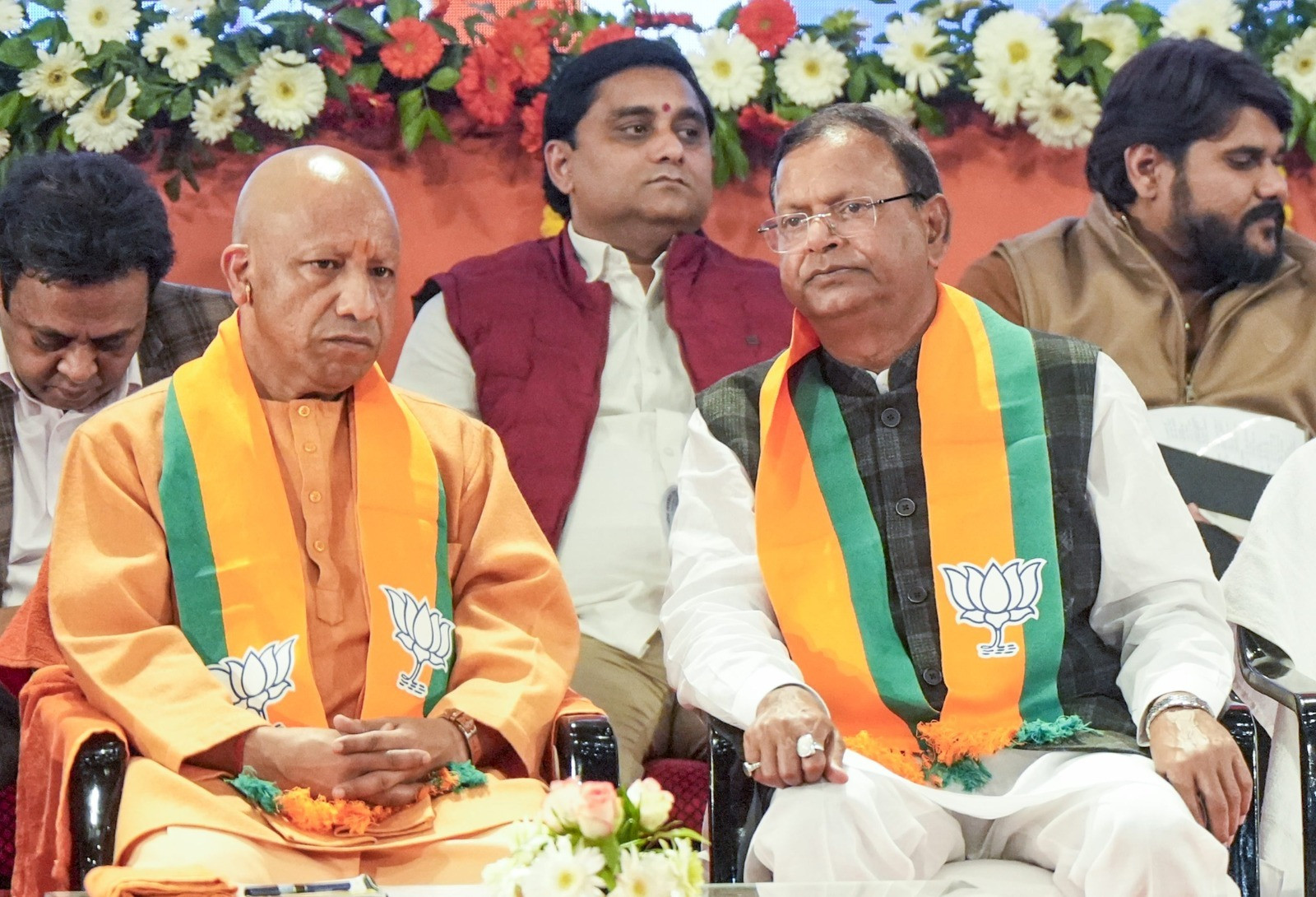
A few hours after the scheduled time for publishing the draft voter list on January 6, BJP state president Pankaj Chaudhary and senior party leaders, including Chief Minister Yogi Adityanath, convened a statewide meeting. They instructed booth-level BJP workers to add at least 200 voters at each booth before the final list was published.
This order from the Chief Minister was not only crude but also inconsistent with the party's stance. The central leadership of the BJP has consistently justified SIR. Meanwhile, its Chief Ministers were indirectly saying the opposite and inciting their workers to get a fixed number of voters' names re-added to the electoral rolls.
Uttar Pradesh's Chief Electoral Officer Navdeep Rinhwa had also acknowledged that a significant portion of the Form 6 applications they were receiving was from voters whose names had been wrongly removed from the electoral rolls. In a press conference in February, Rinhwa stated, “Those whose names have been removed from the draft list are the ones filling out Form 6.” The day before this, the highest number of Form 6 applications had been filed in Uttar Pradesh in a single day.
After a Form 6 application is submitted, it must be kept secure with the relevant electoral registration officer (ERO) for four years. Each application for name inclusion must first be verified on-site by the booth level officer (BLO) and then approved by the ERO. Since party workers in the relevant constituency also submit multiple applications to influence the electoral rolls in their favor, which may include dubious or non-existent voters, the approval rate for these applications generally remains around 60 to 70 percent.
With the help of analysts who did not wish to disclose their identities, data from the 71.38 lakh applications for name additions made public by the Chief Electoral Officer of Uttar Pradesh for all 403 assembly constituencies was extracted. Form 6 applications filed in all assembly constituencies before January 6, 2026, were missing.
The existence of these 16 lakh applications submitted during the SIR counting phase was discovered only after viewing the X account of the Chief Electoral Officer of Uttar Pradesh. However, which constituencies these applications were from and what their details are remains a mystery. It is also unknown how the Election Commission removed the names of nearly one crore voters from the list during the draft phase and then re-added most of them.