
US and European oil giants see profits double
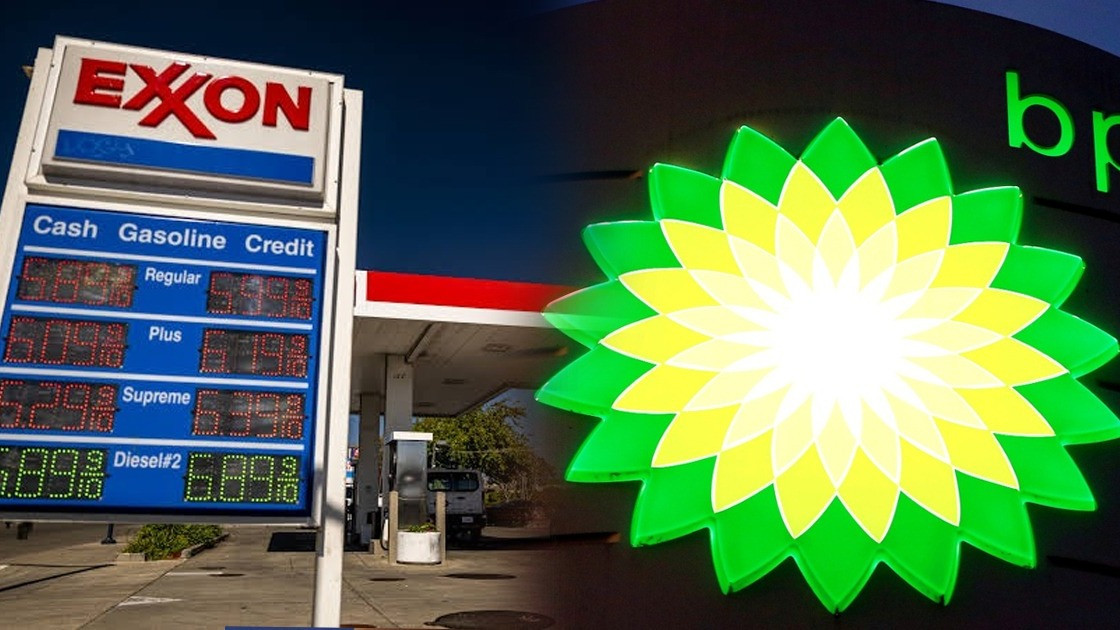
Exxon Mobil reports its second-quarter profit has doubled to $14.53 billion.
The world is no longer under any illusion that war is also a business. The United States and the United Kingdom have long mastered this art. They destroyed Iraq under the pretext of Weapons of Mass Destruction (WMD) and are now eyeing Iran under the guise of nuclear facilities. But this is just the visible truth. The real issue is business. It's about trade. It's about the oil trade.
It is noteworthy that due to the conflict between Iran and the United States, petroleum supply has been disrupted, leading to increased fuel prices and shortages worldwide, resulting in significant profits for American oil and gas companies. BP's quarterly profit has reached $5.73 billion. Just days earlier, Shell recorded its second-largest quarterly earnings in history. Due to the Middle East crisis, BP has recorded its highest quarterly profit since the first year of the Russia-Ukraine war, driven by rising oil and gas prices.
The Guardian reports,
BP's quarterly profit more than doubled to $5.73 billion (£4.27 billion) in the three months to the end of June. This is about $2.5 billion more than the previous quarter. The ongoing conflict in the Middle East has disrupted energy exports from the Gulf region, leading to increased oil and gas prices.
Despite better-than-expected profits, BP's new CEO Meg O'Neill said,
"There is still much to be done," as BP is not fully capitalizing on its potential. O'Neill is expected to make significant changes in the 117-year-old company, including exiting the North Sea in the UK, where BP has been producing oil and gas for nearly six decades.
BP announced its rising profits shortly after Shell recorded its second-largest quarterly earnings in history amid market volatility caused by the Middle East crisis.
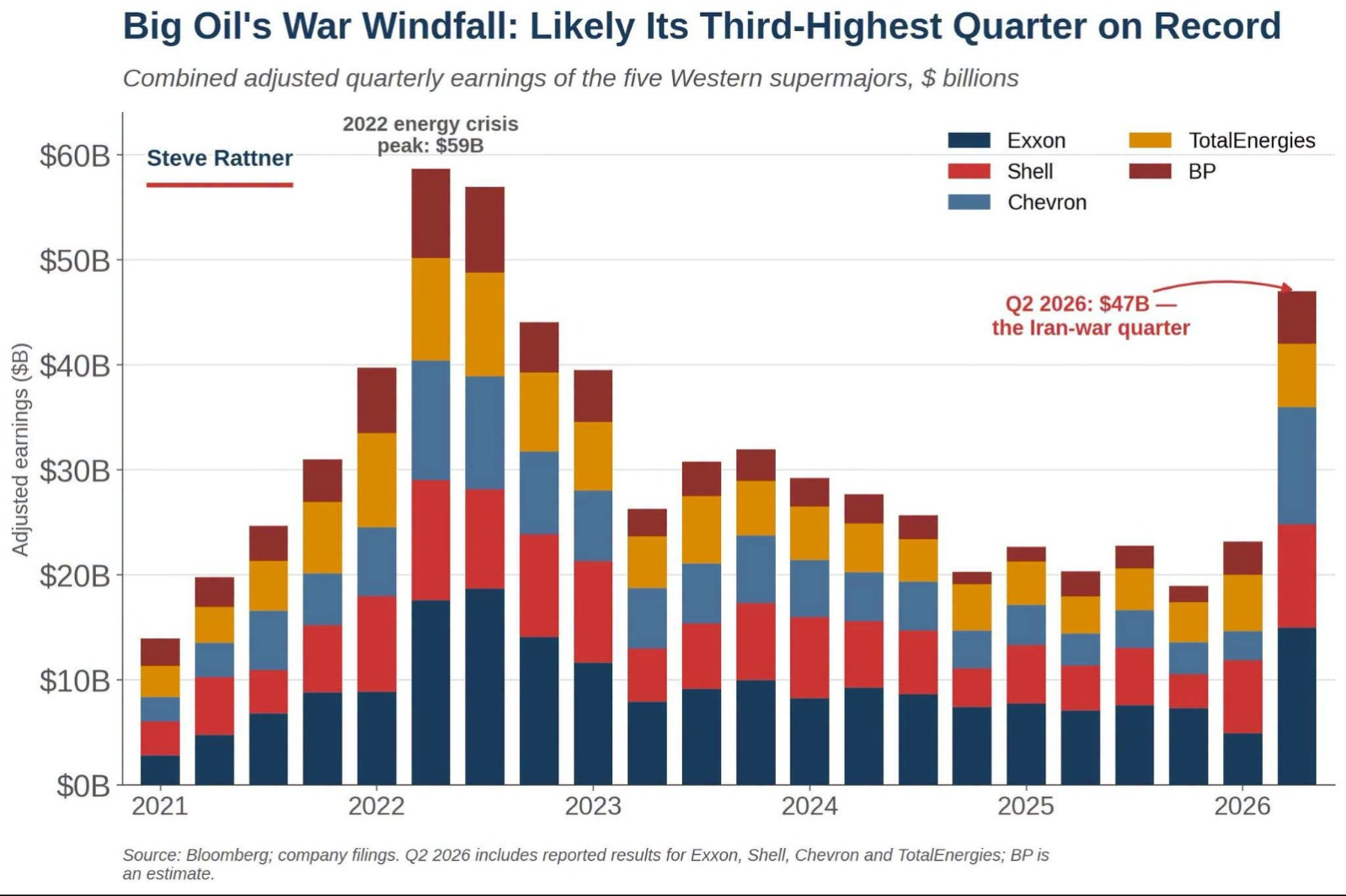
Europe's largest oil company, Shell, saw its net profit double to nearly $10 billion in the three months to June. This is the company's largest quarterly earnings since the record profits following Russia's attack on Ukraine.
The Middle East crisis also benefited Saudi Arabia's oil company Aramco. The company's net profit increased by 44% to $32.69 billion in the three months ending June 30. Meanwhile, there is criticism of the unprecedented massive profits of the world's largest oil and gas companies. While families and businesses struggle with rising energy bills, millions in Europe have been affected by severe heatwaves. The climate crisis caused by fossil fuels is making such heat events more likely and severe.
PBS News reports that American oil and gas companies also made significant profits during this period amid rising fuel prices and shortages worldwide.
Exxon Mobil reported that its profit doubled to $14.53 billion in the second quarter. Record diesel production played a significant role in this. The Texas-based oil company's revenue increased by 42% to $116.02 billion. Houston-based Chevron's profit nearly quadrupled to $12.07 billion, while its revenue increased by 56% to $70.06 billion.
Europe's six largest oil companies collectively recorded a profit of $22 billion in the first quarter, more than 40% higher than last year. Patrick Galey, head of fossil fuel affairs at Global Witness, said,
"There are some groups in the world for whom this crisis has been very beneficial, and oil producers are among them."
Donald Trump said,
Chevron and ExxonMobil, which reported sharp increases in their profits this week, are "making too much money" and should return some of their profits to the public.
Friends of the Earth's campaign head Rosie Downs said,
"It's clear that not everyone is feeling the pain of the energy crisis. BP is once again making huge profits, while millions of families are paying the price of skyrocketing energy bills and an increasingly out-of-control climate crisis, which includes more severe heatwaves, wildfires, and droughts."
It is noteworthy that due to limited global supply, the price of international benchmark Brent crude rose from around $70 per barrel to above $100 per barrel for most of March, April, and May. At one point, the price reached $126 per barrel. The massive profits earned by oil companies from early April to the end of June may face additional political and public scrutiny this year. During this period, petrol, diesel, and aviation fuel prices rose sharply, increasing costs for drivers and air travelers.
In some countries, fuel supply became so limited that rationing had to be implemented in some parts of Australia, while government offices had to be closed in Nepal and Sri Lanka.
Energy companies like Exxon and Chevron do not directly set the price of American oil. During the quarter, the price of American oil rose from $68 to $115 per barrel. Prices are primarily determined by demand and supply and the prices paid by traders, refineries, and other buyers. Nevertheless, Democratic lawmakers in the US Congress introduced bills in March to impose taxes on the excess profits of large oil companies from 2026, with the proceeds distributed to consumers.
The UK and some other European countries imposed a temporary windfall profit tax on fossil fuel companies in 2022. The UK has extended it until 2030. Exxon CEO Darren Woods opposed the windfall tax in a conversation with investors, saying that punishing companies that provide energy during times of crisis is a "very short-sighted" step. He said that after the last windfall profit tax was imposed in Europe, Exxon canceled some of its planned investment projects there.

Satish Verma
सतीश वर्मा पेशे से पत्रकार हैं। हिंदी की मुख्यधारा की पत्रकारिता में इन्हें 20 साल से ज्यादा का अनुभव है।