
Supreme Court clears Dr. Manmohan Singh posthumously in coal block case

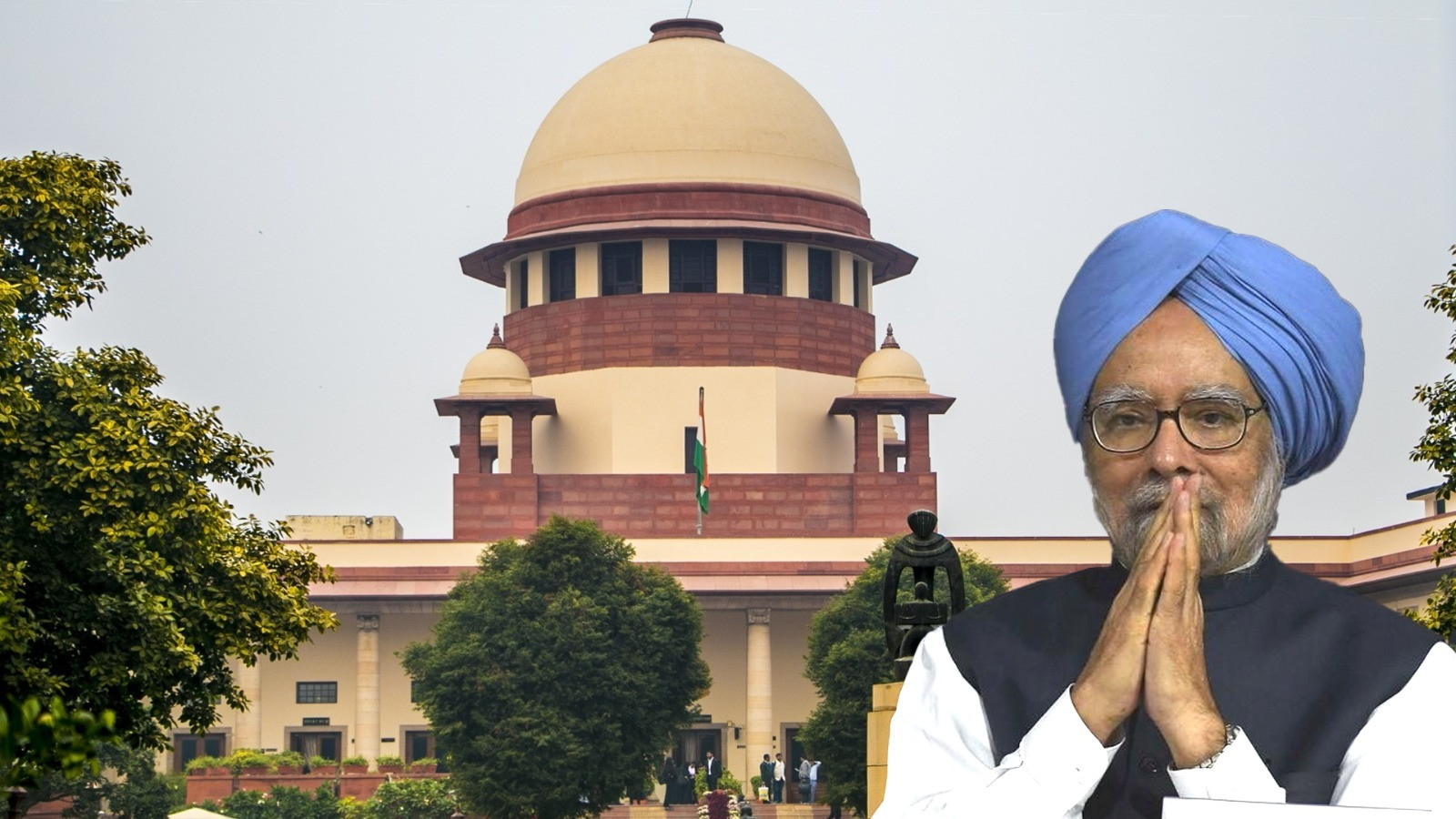
Former PM Dr. Manmohan Singh receives posthumous clearance from Supreme Court in coal block allocation case.
On Wednesday, the Supreme Court ended the criminal proceedings against former Prime Minister Dr. Manmohan Singh in the Talabira-II coal block allocation case. The court accepted the Central Bureau of Investigation's (CBI) closure reports and quashed the 2015 trial court order summoning him as an accused.
According to The Hindu, the Supreme Court has posthumously cleared former Prime Minister Dr. Manmohan Singh of legal charges in the coal block allocation case, stating there was no substantial basis for prosecution. This decision comes nearly one and a half years after Dr. Manmohan Singh's demise in December 2024, while his appeal had been pending in the Supreme Court for the past 11 years.
Chief Justice of India Justice Suryakant, Justice Joymalya Bagchi, and Justice V. Mohan's bench stated,
Technically, the appeal had become infructuous due to his demise, but the court deemed it necessary to examine why the special court summoned him as an accused when the CBI had twice stated in its closure reports that no criminal case was made out against Dr. Manmohan Singh.
The Supreme Court, in its judgment, stated that the special judge had no "solid and sufficient reason" to reject the investigation agency's report and take cognizance of the case. The court noted that the special court's decision was not appropriate considering the principles laid down by the Supreme Court from time to time regarding the acceptance of the investigation agency's closure report.
The bench annulled the order passed by the special CBI court on March 11, 2015, accepted both closure reports of the CBI, and directed that the case be considered completely closed. With this, all criminal proceedings against Dr. Manmohan Singh came to an end. The Supreme Court also stated,
Even though the appellant is no longer alive, judicial review of the order making him an accused was necessary. The court said that if the appeal had been dismissed solely on the basis of his demise, no decision would have been made on the legality of the special court's order. Therefore, the court thoroughly examined both closure reports on record and concluded that there was no basis for prosecuting Dr. Singh.
During the hearing, senior advocates Kapil Sibal and Abhishek Manu Singhvi, representing Dr. Manmohan Singh's legal representatives, requested the court to remove the adverse remarks made against the former Prime Minister by the special court.
Kapil Sibal argued that the special court imposed vicarious criminal liability on Dr. Manmohan Singh without any direct evidence. He stated that the CBI had clearly mentioned in two separate closure reports that there was no evidence to prosecute the former Prime Minister, yet he was made an accused.
Meanwhile, Abhishek Manu Singhvi urged the court,
to expunge the adverse remarks of the special court from the record so that the legal blemish on Dr. Manmohan Singh's reputation could be completely removed.
Senior advocate R.S. Cheema, representing the CBI, informed the court that the special court's order also involved some constitutional questions related to other accused and the Prevention of Corruption Act, so some legal issues might still remain in other cases. To this, Singhvi clarified that Dr. Manmohan Singh was only challenging the remarks and order against him, and had no claim on matters related to other accused.
During the hearing, the Supreme Court also commented on the functioning of the special court. The bench noted that both parties agreed that the special judge had overstepped the limits of his authority. The court remarked orally that there should be a realistic limit to judicial conduct and that any court must show sufficient legal basis when rejecting the investigation agency's report.
It is to be noted that the entire case was related to the allocation of the Talabira-II coal block in Odisha in 2005. At that time, Dr. Manmohan Singh was the Prime Minister and also held the additional charge of the Coal Ministry. After a lengthy investigation, the CBI filed two separate closure reports. In both reports, the agency stated that no criminal case was made out against Dr. Manmohan Singh and there was no evidence to prosecute him.
Despite this, in March 2015, the then special CBI judge Bharat Parashar rejected both closure reports of the CBI. He believed that a prima facie case was made out and ordered Dr. Manmohan Singh, then Coal Secretary P.C. Parakh, and some others to appear in court as accused.
Subsequently, Dr. Manmohan Singh immediately approached the Supreme Court. On April 1, 2015, the Supreme Court stayed the summons order of the special court and all related proceedings. However, it took more than 11 years for the final hearing and decision. The special court's argument was that granting approval for the allocation of the coal block to Hindalco, contrary to the recommendations of the screening committee, resulted in undue benefit to the private company. But Dr. Manmohan Singh consistently maintained that the decision was made under the then prevailing government policy and administrative procedure, and there was no criminal intent or illegality involved.
Now, with this decision of the Supreme Court, not only have all criminal proceedings against Dr. Manmohan Singh been permanently ended, but the court has also endorsed the CBI's conclusion that there was no evidence to prosecute him. This decision is being seen as a posthumous legal honour for the former Prime Minister.