
Supreme Court asks Centre to preserve RAF weapon records from July 20

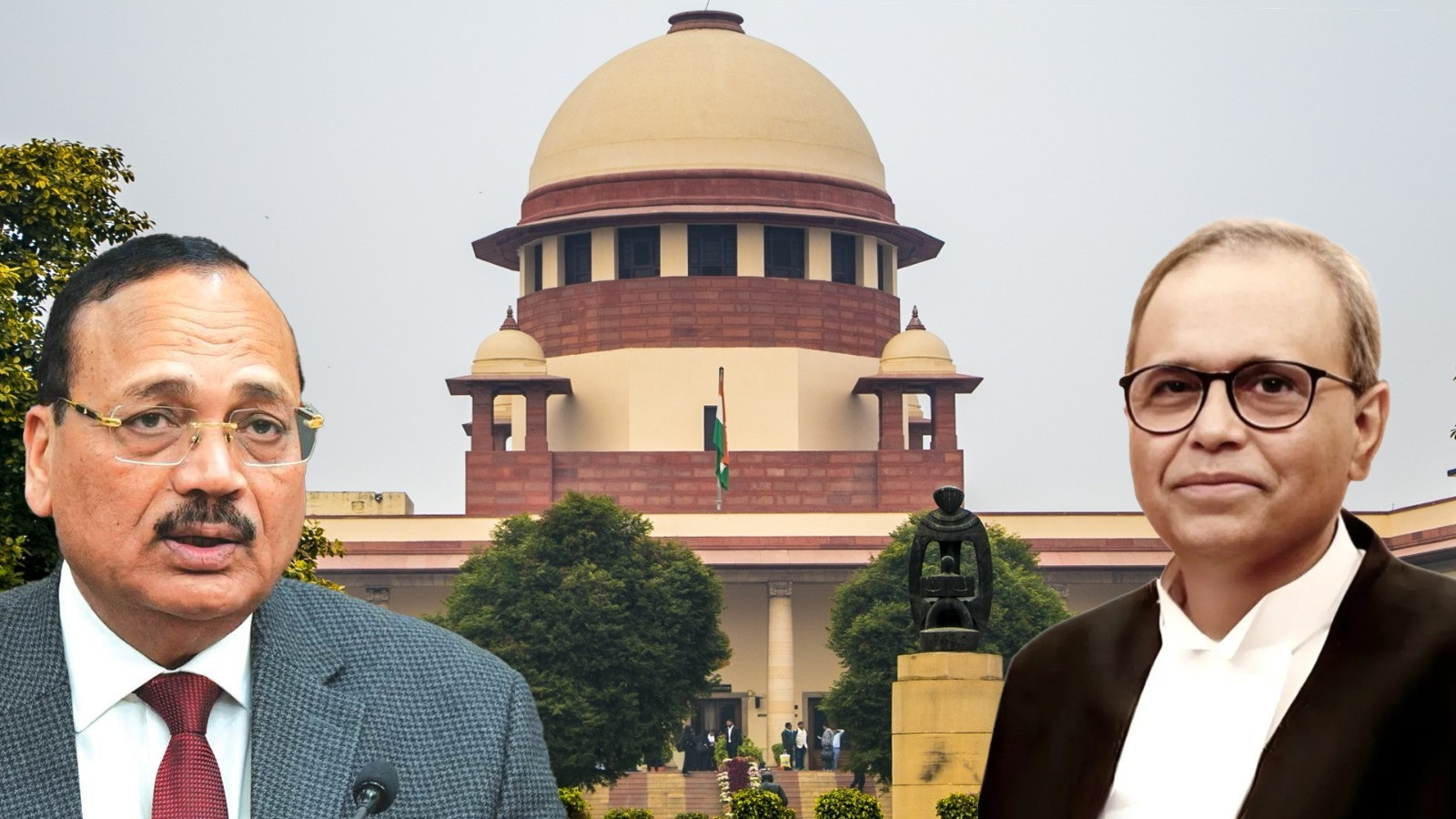
The Supreme Court has issued a notice to the Centre on a plea by two victims injured by pellet guns.
Controversy over the use of pellet guns on students is escalating. The Supreme Court has issued a notice to the Central Government on a petition filed by former IPS officer Yashovardhan Azad and two victims injured by pellet guns. The petition seeks a ban on the use of pellet guns for dispersing crowds of citizens. The Supreme Court has directed the Central Government to preserve the records of ammunition (weapons) provided to the Rapid Action Force (RAF) personnel deployed at Jantar Mantar during the July 20 protest.
According to a report by The Hindu, the petitioners argued that although pellet guns are described as "less lethal" or "non-lethal" weapons compared to firearms, they can be deadly or cause serious injuries if fired at a large crowd from close range, especially to vital parts of the body. They cited the serious eye injury of 19-year-old Sahil during the July 20 firing, stating,
This incident demonstrates how cruel and severely damaging pellet guns can be when used against protesters.
The bench of Chief Justice Suryakant, Justice Joymalya Bagchi, and Justice V. Mohan stated that peaceful protests can sometimes turn violent suddenly. In such situations, the police have to act at different levels according to the circumstances. The court questioned how a complete ban on the use of pellet guns could be imposed if the police might be permitted to fire in certain situations.
The petitioners allege that during the 'Parliament March' protest against the paper leak in New Delhi on July 20, the Rapid Action Force (RAF) indiscriminately fired metal pellets, causing serious injuries to many. Both petitioners claim that pellets had to be surgically removed from their bodies. Senior advocate Vrinda Grover, representing the petitioners, stated during the hearing,
Metal pellets are fired from shotguns and scatter over a large area. This can cause severe damage to the eyes and other sensitive parts of the body. She argued that such weapons are not safe or appropriate for crowd control.
However, the Supreme Court also clarified that it is not against investigating whether the use of pellet guns in the July 20 incident was in accordance with the rules. The court stated that if the established rules for the use of force were not followed, an investigation could be conducted.
Vrinda Grover also pointed out that the Delhi Police does not have a clear standing order regarding the use of pellet guns. Meanwhile, Solicitor General Tushar Mehta assured the court that the government would present all necessary rules and documents before the court. During the hearing, the Supreme Court directed the Delhi Government to provide appropriate medical facilities to the injured petitioners and other such individuals. Additionally, the court emphasized the need to preserve the ammunition and related records used in the July 20 incident, so they can be used if required for the investigation.
The petition demands a ban on the use of metal pellet guns for crowd control. It also seeks compensation, better treatment, and rehabilitation for the injured. The petitioners have cited United Nations (UN) guidelines and previous Supreme Court rulings, stating that the use of force during crowd control should always be based on the principles of necessity, proportionality, and accountability.