
Remembering freedom fighter Jitram Bedia

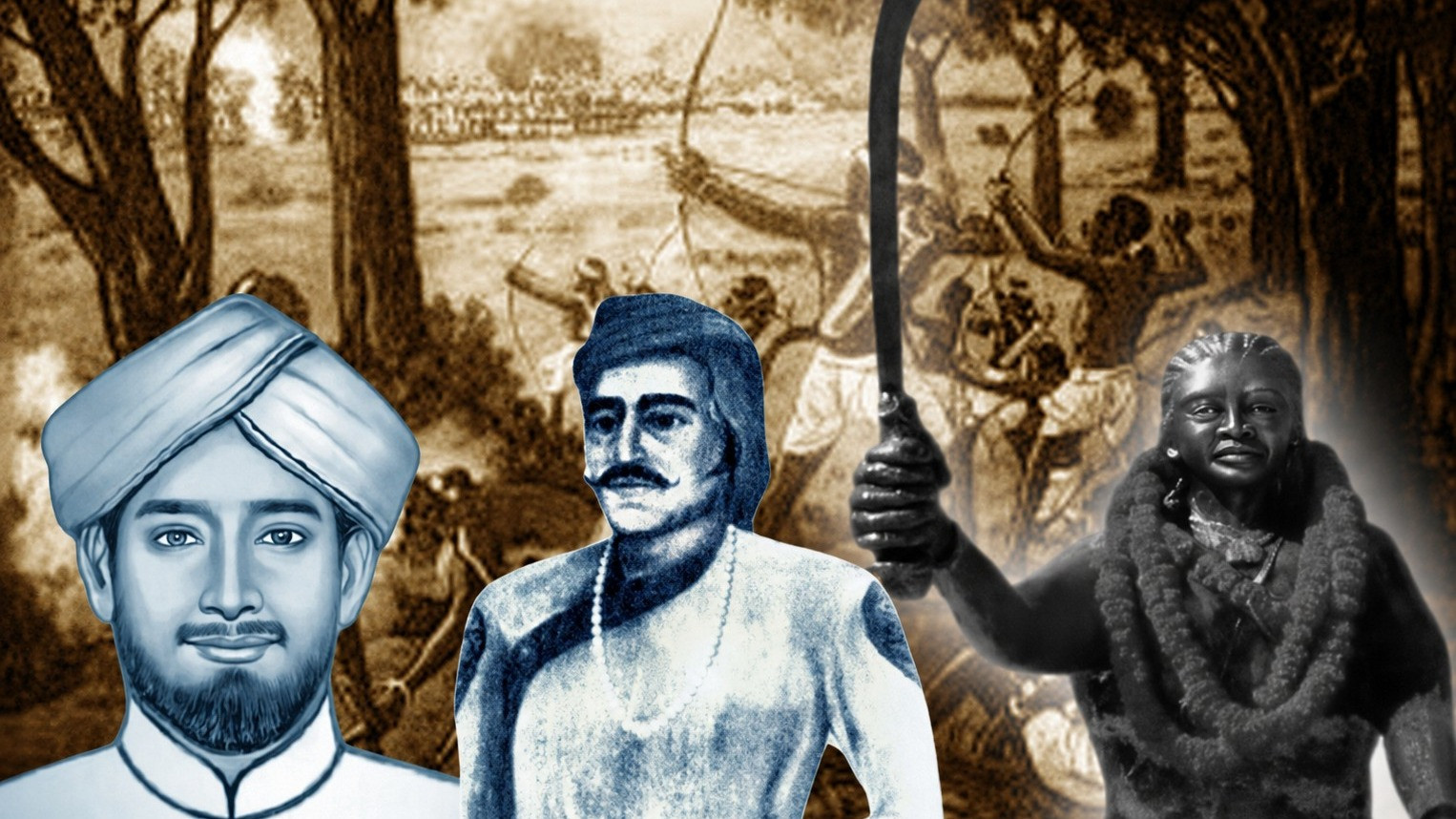
Jitram Bedia grew up hearing tales of the Palamu Chero rebellion, Singhbhum Ho uprising, and Tamar revolt against the British from his father and ancestors.
Many revolutionary patriots sacrificed their lives against the colonial British rule, but many of them, who had taken up arms against the endless exploitation by the oppressive British, their informers, landlords, moneylenders, and usurers, remained anonymous for a long time. Jeetram Bedia is one such revolutionary who remains in obscurity even today…
Jeetram Bedia's descendants say that they were threatened with death and hanging by the British, which is why they did not speak of the rebellion. Even after independence, they could not say anything about it. Historians also missed this aspect.
Who was Jeetram Bedia?
Jeetram Bedia was born on 30 December 1802 in the village of Gagari, located in the Ormanjhi block of Ranchi district, in a very poor tribal family. His father's name was Jagatnath Bedia, his mother's name was Maheshwari Devi, and his wife's name was Gayatri Devi. The village of Gagari is situated at the foothills.
His father kept cows, bulls, buffaloes, sheep, goats, and pigs. When his father took the animals to graze in the forest daily, Jeetram Bedia would accompany him. As his father's body began to tire, and as Jeetram Bedia grew older, his responsibilities increased. After his father's death, all the household responsibilities fell on his shoulders.
He would take his domestic animals to graze in the forest. Initially, he faced a lot of difficulties in herding as all the animals would graze separately, making it difficult to gather them. Then Jeetram Bedia came up with a trick—he tied wooden clappers and bells around the animals' necks so that their sound would make it easier to find them. Additionally, he cut bamboo from the forest to make a flute and would play it while returning home from the hills to the village at dusk.
Jeetram Bedia actively participated in social functions from a young age, and his actions pleased not only the tribal society but also other communities.
He also treated minor illnesses with natural herbs found in the forest, which kept children, the elderly, young men, and women healthy. His medicines were very beneficial to people, and as a result, his fame spread. People came from far and wide to meet him, fostering a sense of brotherhood and unity. Listening to people's sufferings stirred Jeetram's heart.
The family environment had a profound impact on the personality and character development of Jeetram Bedia. He felt that the country was in the grip of the British and that the people of the Chotanagpur region were severely oppressed by their injustices and atrocities. The British rule was governing the entire country, and his father believed that it was necessary to drive the British out of the country to save their people from exploitation. He shared these thoughts with Jeetram Bedia, and gradually these ideas took deep root in his mind.
In his childhood, Jeetram Bedia heard stories from his father and ancestors about the Chero rebellion of Palamu, the Ho rebellion of Singhbhum, and the Tamar rebellion against the British. When he heard stories of British atrocities on the tribals, his face would flush with anger and his fists would clench. The thought of driving the British out with arrows would cross his mind. Day by day, Jeetram Bedia's leadership skills grew. Seeing his remarkable ability to serve people and unite them, people from nearby villages began to say that Jeetram Bedia was truthful and a revolutionary.
By that time, the British rule had set its sights on the water, forests, land, and hills of the hilly Chutupalu valley region of Ranchi, Ramgarh, and Hazaribagh. The British were planning to exploit the natural resources of this area, taking advantage of the simplicity of the communities residing there, to gather wealth for their rule.
The then British administration began to pressurize villagers in various ways to collect revenue (tax). The conditions created by landlords and usurers against freedom-loving tribals and other communities proved helpful in establishing British rule. However, these circumstances also gave rise to a spirit of rebellion.
The influence of British rule began to increase in Ramgarh, Pithoria, Ormanjhi, and the entire Chota Nagpur region, and the area was being devastated by the exploitation of the British and landlords. Seeing this, the desire to rebel and lead it grew strong within Jeetram Bedia. Observing the organizational and leadership capabilities of the young Jeetram Bedia, people believed that he could lead the rebellion against the British. However, Jeetram Bedia knew that this battle could not be won alone.
At the same time, against British rule, the king of Khatanga village, Tikait Umrao Singh, and his Diwan, Sheikh Bhikhari of Khudia village, rebelled. Inspired by their struggle, the brave warrior of Gagari village, Jeetram Bedia, also joined them. During the rebellion, a deep unity developed among the three, and they took charge of leading it in their respective areas.
This was not an immediate and sporadic struggle against a specific event, but a powerful rebellion against the unjust system of British rule. The socio-economic situation of this area was also undergoing drastic changes, and the exploitative landlords and moneylenders took full advantage of it. The water, forest, and land that their ancestors had inhabited and preserved with their blood and sweat were now being snatched away from the people of the Chutupalu Valley region. The British and their supporting landlords exploited this situation using various methods of exploitation, but this situation began to change when the people of the region took up arms against them.
Tikait Umrao Singh, Sheikh Bhikhari, and Jeetram Bedia began to unite the local tribals and indigenous people. They informed the people that the water, forest, land, and all natural resources are ours, and the British, in collusion with the landlords, are planning to seize them. The people understood the essence of this message and sounded the bugle of rebellion against the British. While the Santhal Rebellion was ongoing in 1855-56, the Sepoy Mutiny erupted across the country against the British in 1857. At that time, the command of the rebellion in the Ranchi and Ramgarh regions was in the hands of Tikait Umrao Singh, Sheikh Bhikhari, and Jeetram Bedia. They began holding secret meetings at various places to strategize the rebellion.
As soon as people received the news that these three had taken command of the rebellion, they began joining the rebels with double enthusiasm. Thus, the number of rebels started increasing rapidly. Jeetram Bedia instructed his companions to gather bows and arrows, swords, slingshots, axes, spears, sickles, and stones. He confidently resolved that the British guns would be faced with these traditional weapons, and urged everyone to keep their spirits high to win. To suppress this rebellion, the British rulers sent the Madras Regiment under the leadership of Major MacDonald. The Madras Regiment set up camp and stationed itself in Ramgarh.
The Martyrdom of Jeetram Bedia
Wherever there was a possibility of the Madras Regiment under Major MacDonald passing through, Tikait Umrao Singh, Sheikh Bhikhari, and Jeetram Bedia would hide with their brave supporters in the bushes of the forest. Some companions would scout the path while others waited with bows and arrows and other weapons for the arrival of the British army. As soon as the Madras Regiment appeared, a companion would signal everyone by mimicking the sound of a wild animal or bird.
The bowstrings would silently be drawn, and as soon as the army came within range of the arrows, a barrage of arrows would begin. The Madras Regiment would flee in fear. In this guerrilla warfare, the villagers, armed with traditional weapons, actively participated. Due to the resistance of Tikait Umrao Singh, Sheikh Bhikhari, and Jeetram Bedia, the British army failed to carry out repressive actions.
These three warriors posed a significant challenge to the British, and the tribal rebellion continued unabated. Thousands of rebels from the region sacrificed their lives in this struggle. Major MacDonald planned to capture these three warriors at any cost and publicly hang them. Eventually, on 6 January 1858, the British succeeded in arresting Tikait Umrao Singh and Sheikh Bhikhari. Without trial or hearing any testimony, these two brave men were hanged from a banyan tree in Chutupalu Valley on 8 January 1858.
Jeetram Bedia was still out of the British grasp, and the entire responsibility of leadership fell on his shoulders. Armed with a sword and bow and arrow, he challenged Major MacDonald's Madras Regiment and the British, calling for their expulsion from the region. Disturbed by this call, the British government planned to kill Jeetram Bedia at any cost. People were greatly impressed by Jeetram Bedia's guerrilla warfare style, organizational skills, and eloquence, and thus the local populace stood firmly with him.
Jeetram Bedia stayed in mountain caves during the day and organized people in villages at night. He had hideouts in the mountains from Mahodigarh to Gagari. The Madras Regiment worked tirelessly to find him, but capturing him was not easy. When Jeetram Bedia advanced on horseback with hundreds of people, the British soldiers were taken aback. Finally, on 23 April 1858, between Gagari and Khatanga villages at Bansairgarha, Major MacDonald and his Madras Regiment completely surrounded Jeetram Bedia and his fighters. Jeetram firmly rejected the order to surrender. A fierce battle ensued between the rebels and the British forces. The British fired indiscriminately, resulting in the martyrdom of many brave rebels. Jeetram Bedia's group also killed many Madras soldiers with a barrage of arrows.
It was difficult for bows, arrows, and swords to withstand bullets and gunpowder for long, yet Jeetram Bedia continued to fight fearlessly with arrows and swords. Eventually, on MacDonald's orders, the Madras Regiment shot down Jeetram Bedia and his horse between Khatanga and Gagari villages. Their bodies were buried at Bansairgarha, and since then, the site has been known as Ghodagada in memory of Jeetram Bedia's horse. Even today, the sword, axe, and mace of the martyr Jeetram Bedia are preserved by his descendants.
References
Surendra Kumar Bedia, Jharkhand Samay Ke Sulagte Sawal, BlueRose Publishers