
Nellie Sengupta: From Cambridge birth to India's freedom fight
Beyond a 'stop-gap': Recognising Nellie Sengupta and women's political agency
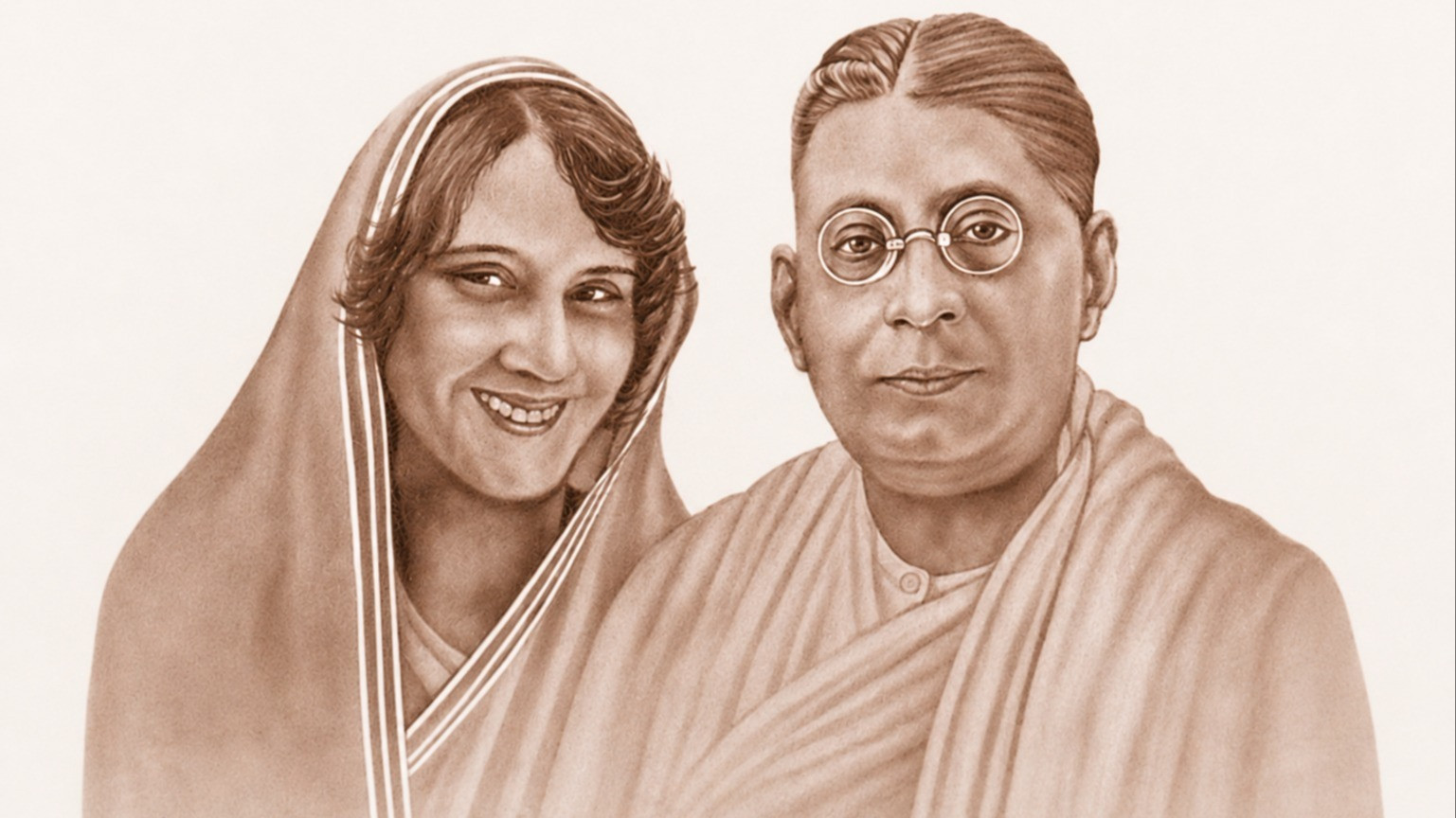
Recently, a comment on social media regarding Nellie Sengupta caught my attention. It was stated that her becoming the president of the Indian National Congress in 1933 was merely a "stop-gap arrangement"; it was not her actual "achievement" but a "tribute" to her late husband Jatindra Mohan Sengupta.
As a student and teacher of history, especially gender history, this interpretation seems questionable to me. Not because we should overlook the extraordinary political circumstances of 1933, but because the language we use about women in history is also important.
Viewing Nellie Sengupta merely as a temporary arrangement or a tribute to her husband repeats the old tendency where a man has his own political identity, while a woman's identity is defined through the man she is associated with.

Nellie's political existence predated her widowhood
Nellie Sengupta was born in 1886 in Cambridge as Edith Ellen Gray. Her life is a story of crossing many social and cultural boundaries. In England, she met a Bengali youth studying law, Jatindra Mohan Sengupta. Despite family opposition, she married him in 1909, came to India, and became part of a Bengali joint family.
But caution is necessary here. Nellie's story should not be seen merely as a tale of love and marriage between an English woman and an Indian nationalist. Doing so once again places the man at the center of the story and the woman as a supporting character. Nellie's political journey goes far beyond this.
During the Non-Cooperation Movement in 1920, when Jatindra left his legal profession to play an active role in the national movement, Nellie also joined the movement. She promoted khadi, sold it door-to-door, and participated in political activities despite colonial restrictions. After her husband's arrest, she did not retreat but stepped forward herself and organized meetings. Due to her opposition to colonial power, she too had to go to jail.
Therefore, when she became the Congress president in 1933, she was not a political newcomer suddenly pushed forward just because she was the widow of an important leader. Behind her were years of political struggle, participation, and risk. This distinction is significant.

Beyond wife, daughter, and widow, women have a history
Gender history teaches us to ask a very simple but important question: whose agency does traditional history recognize?
Indeed, in historical writing, women's political lives have long been presented through their relationships with men—as someone's "wife", someone's "daughter", someone's "widow". Undoubtedly, these relationships were and are important. Nellie's relationship with Jatindra Mohan Sengupta would have influenced her life and political environment. There is no problem in acknowledging this. But being influenced and not having one's own agency are two entirely different things. Men too enter politics through family, friends, political mentors, institutions, and networks. Yet we rarely attribute their later achievements to the person who introduced them to politics. So why do we have a different standard when it comes to women?
Labeling Nellie's presidency merely as a "tribute" to her husband is problematic because it shifts the focus of history from Nellie to Jatindra. The achievement of becoming president becomes a tribute to her husband's memory rather than a recognition of Nellie's political capability or acceptability, and once again, the woman begins to disappear from history.
Were they really just a "stop-gap"?
It is true that the political circumstances of 1933 were not normal. During the Civil Disobedience Movement, there was colonial repression, arrests, and restrictions on Congress activities. Nellie's presidency cannot be viewed separately from that political context. But acknowledging the circumstances under which someone assumed office and saying that it was not their achievement are two different things.
Political history is replete with examples where people assumed leadership due to crises, arrests, deaths, resignations, or other extraordinary circumstances, yet history asks why that particular individual was entrusted with the responsibility.
Therefore, perhaps the better historical question is not—
Was Nellie Sengupta merely a stop-gap arrangement?
But rather—
Why was Nellie Sengupta trusted to lead the most important national political organization in India during a time of political crisis?
This question restores her agency in history rather than erasing it and raises an uncomfortable question: if a man had been entrusted with leadership under similar circumstances, would we so easily say that it was not his achievement, that it was merely a 'stop-gap arrangement'? This is where gender enters the way we read history. Bias is not always intentional; sometimes it is hidden in the different standards by which we measure the achievements of men and women.

Husband died, Nellie's politics did not
There is another historical problem in limiting Nellie's political identity to Jatindra. Jatindra Mohan Sengupta passed away in 1933, but Nellie's public life did not end with him.
She remained politically active and later played a role in Bengal's legislative politics. After the partition in 1947, she made an extraordinary decision. Despite Chittagong becoming part of East Pakistan, she chose to stay at her husband's ancestral place rather than leave. There too, she continued to work for public life and minority interests. From a feminist history perspective, this fact is extremely important.
If Nellie's political commitment had been merely borrowed from her husband, it would have been expected to end with his death, but her subsequent life shows that the Indian national movement and public service had become her own political commitments.
She came from England to colonial India, stood against the colonial government of her own birth country, went to jail, remained politically active even after becoming a widow, and continued to be involved in public life even after partition. To encapsulate such a long political life in the word "tribute" unnecessarily diminishes that history.
Gender history does not mean making women great
There is often a misconception about feminist history. Restoring women's place in history does not mean making every woman a heroine. Nor does feminist interpretation mean exaggerating women's achievements, ignoring their limitations, or overlooking historical circumstances.
On the contrary, gender history demands that we view women with the same historical seriousness with which we have traditionally viewed men. It is an effort to find women's decisions, struggles, limitations, and agency, and it asks why certain tasks in political movements were considered "important" and recorded in history, while organizing communities, selling khadi, holding meetings, keeping the movement alive during arrests, and managing political networks were often considered secondary.
The most important thing is that gender history urges us to pay attention to the language through which we determine historical significance. "President of the Indian National Congress" acknowledges political authority. "Widow of Jatindra Mohan Sengupta" indicates a relationship.
"Tribute to the husband" again centres the achievement on the man, and "stop-gap arrangement" almost renders the woman's political role irrelevant. These words are not entirely neutral. They are capable of rendering a woman's contributions anonymous in history.
Giving Nellie her own place in history
To establish Nellie Sengupta's importance, it is not necessary to separate her from Jatindra Mohan Sengupta. Their lives and political struggles were deeply intertwined, as was the case with many couples active in the national movement. However, being influenced by one's husband does not mean lacking one's own political thought. Being elected to a position under extraordinary circumstances does not negate the achievement of that position. And being a widow certainly does not turn a woman's entire political life into a memorial for her husband.
Nellie Sengupta was among the select women who, along with leaders like Sarojini Naidu, chaired the Congress during a time when women's public and political presence was seen as a challenge to social norms, not only in India but also in Western countries. For a woman to reach the highest position in an Indian national political organisation was, in itself, a significant event in gender history.
However, there should be a discussion on the circumstances under which Nellie Sengupta became Congress President. There should also be a debate on the political and institutional significance of her presidency. The task of history is to ask questions. But we must also avoid the old habit of writing history where a woman's relationship with an influential man is made so prominent that her own history becomes obscured.
Perhaps the most important contribution of gender history is that it does not ask us to make women larger than life in history. It simply asks us not to make them smaller than they are.
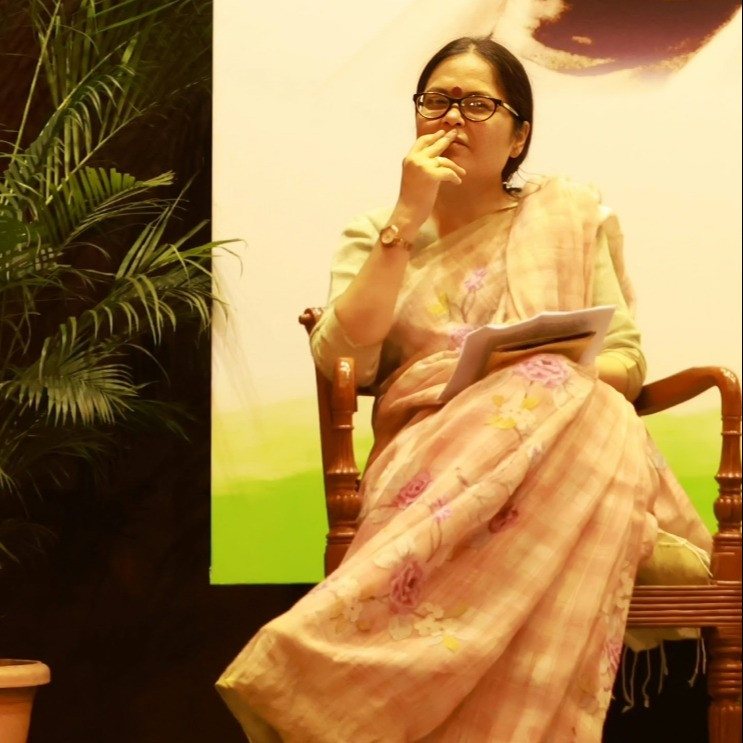
Dr. Chayanika Uniyal
डॉ चयनिका उनियाल दिल्ली विश्वविद्यालय में इतिहास की असोसिएट प्रोफेसर हैं और जेंडर मुद्दों की प्रखर प्रवक्ता