
Modi government considers selling E10 petrol alongside E20

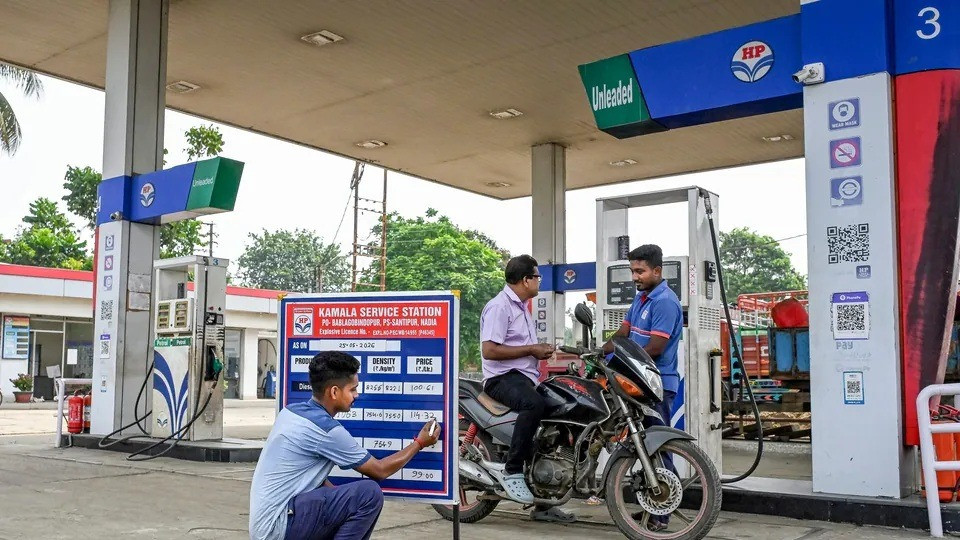
The possibility of providing E10 petrol is under consideration.
After widespread protests from vehicle owners and transporters across the country regarding E20 petrol, the Modi government seems to be reconsidering its stance. Amidst the ongoing debate over selling only E20—comprising 80% petrol and 20% ethanol—as the standard petrol in the country, there is a possibility of making E10 petrol available for older vehicles. Sanjay Khanna, Chairman of Bharat Petroleum Corporation Limited (BPCL), the country's second-largest fuel retail company, shared this information with journalists on Thursday. However, no concrete decision has been made yet, as discussions are ongoing about the supply and logistical challenges associated with selling two different base fuels.
In response to a question from ‘The Indian Express’, Khanna said,
“Among the options being considered is the availability of E10 fuel for older vehicles. This is the possibility currently being worked on. What challenges will arise in its supply, and can we handle an additional grade of motor spirit, i.e., petrol, in parallel—discussions and work are ongoing on all these aspects. That is why we do not have a ready answer yet. It is certainly among the options being considered. Details on how and to what extent it will be implemented are being prepared at various levels.”
Earlier, on August 19, ‘The Indian Express’ reported, citing sources, that initial discussions were underway within the government and the petroleum industry about whether E10 petrol could also be sold for older vehicles alongside E20.
India achieved the target of 20% ethanol blending in petrol last year, five years ahead of the original timeline. However, several sections have raised objections regarding E20 petrol. It is claimed that older vehicles not designed for higher ethanol blends may experience reduced mileage and additional impact on engine parts.
The government has been trying to address these concerns, stating that the mileage reduction in older vehicles may be at most three to five percent and that the benefits of E20 outweigh this loss. The government describes it as a cleaner and better fuel and has consistently dismissed claims that E20 could damage engine parts. Despite this, the question persists as to why vehicle owners are not given the option to choose between pure petrol, E10, and E20.
According to sources familiar with the matter, these discussions are still in the early stages. They involve studying the technical and non-technical aspects related to the country's complex fuel retail supply system. Sources said that the discussions began due to dissatisfaction among some sections against E20 and complaints about the lack of options for consumers. This concern is particularly about older vehicles and two-wheelers certified for E10 petrol.
In July, the government stated that providing multiple grades of the same base fuel across the country would create a “very large logistical challenge.” It would increase costs and affect the operational capacity of India's complex fuel distribution network. The government also stated that the current E20 fuel is cleaner and better than pure petrol and petrol with lower ethanol blends. Significant investments have been made for this, so returning to lower blend fuels for several reasons would not be appropriate.
Petrol is the second most used petroleum fuel in India. During the last financial year, the country consumed approximately 4.3 crore tonnes of petrol.
Meanwhile, Chief Economic Adviser V. Anantha Nageswaran and Economic Affairs Department Advisor Akash Pujari advocated for making petrol with lower ethanol blends like E10 available alongside E20 in an article published on August 18 in ‘The Indian Express’. Although the views expressed in the article were personal, it was the first time a senior government official publicly demanded more options for petrol.
Nageswaran and Pujari wrote,
“Reintroducing the option of lower blend fuels like E10 alongside E20 at petrol pumps will address most people's concerns. It will reduce rather than increase the total consumption of ethanol, and until the program to technically adapt vehicles is completed, it will provide safety to the existing vehicle fleet.”
Both authors acknowledged that concerns about engine damage expressed on social media do not stand up to factual scrutiny. However, they expressed concern about the millions of older two-wheelers in the country that were not designed for E20 fuel use.
According to those associated with the vehicle industry, only petrol vehicles manufactured and sold after April 2023 are considered fully E20-compatible. A senior official in the oil industry stated that providing two base variants of petrol simultaneously is not a “simple and straightforward” task and will present various complexities.
On the condition of anonymity, the official said,
“It would be almost like launching a new petrol variant, and that too on a large scale. Besides base fuel E20, we already have two to three premium petrol variants, but their consumption is significantly lower than base petrol. Therefore, providing such fuels in limited quantities alongside E20 is not very difficult. But if E10 is to be sold in large quantities, an almost new supply network will have to be set up parallel to the existing supply system, as the current system has completely transitioned to E20.”
According to experts, most petrol pumps in India have only one or two underground tanks. To provide E10 alongside E20, separate tanks for petrol would have to be arranged at thousands of petrol pumps. Additionally, separate dispensers would also have to be installed for both fuels.