
Is Modi government using census to check citizenship?

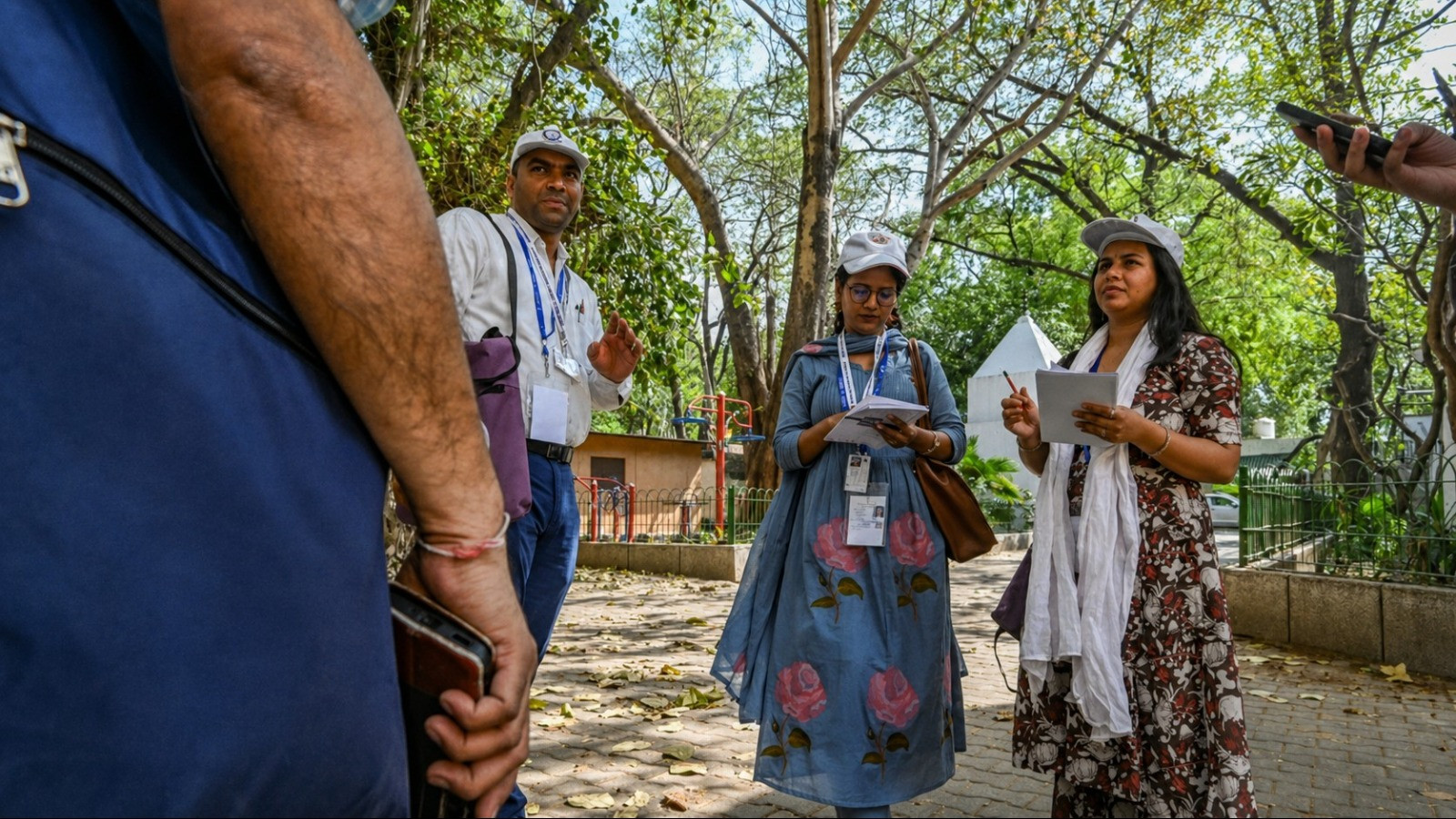
Political parties express concern over the questions prepared for the census.
The questions being asked for the census, are they part of the same "chronology" in which it was said that NRC would follow CAA? On one hand, names of Muslims are being removed from the voter list through Special Intensive Revision (SIR), and on the other hand, preparations are being made to ascertain citizenship through the census. Political parties have expressed concerns over the questions prepared for the census.
According to a report by Indian Express, a political controversy has arisen over the questionnaire prepared for the 2027 Census population enumeration phase. The Congress has alleged that including detailed questions about respondents and their parents could pave the way for surveillance and there might be some "deeply malicious intent" behind it. Left parties have also expressed similar concerns.
This controversy began after a report was published in ‘The Indian Express’ on August 15.
The report stated that many new or revised questions included in the census questionnaire were also part of the National Population Register (NPR) questionnaire notified in 2020. At that time, NPR also became controversial amidst protests against the Citizenship Amendment Act (CAA) and fears of a nationwide National Register of Citizens (NRC).
The population enumeration questionnaire contains a total of 40 questions. Out of these, 14 questions are new or modified compared to the 2011 census. These include the name of the spouse, self-declared nationality, information related to father and mother, Scheduled Caste/Scheduled Tribe/caste, literacy and digital literacy, highest educational qualification and stream of study, place of COVID-19 vaccination, number of bank accounts, mobile number, Aadhaar, voter ID, passport, and driving license. Eight of these questions—self-declared nationality, information about father and mother, mobile number, Aadhaar, voter ID, passport, and driving license—were also included in the 2020 NPR questionnaire.
Questions related to parents are particularly significant. The 2020 NPR questionnaire asked for the birth date and birthplace of a person's father and mother. It also asked for district and state information, and if the parents were born outside India, the name of that country was also asked. These questions were at the center of political opposition to NPR at that time. There are primarily two different concerns in this matter—the first is privacy, and the second is the political context in which NPR was reintroduced.
The argument regarding privacy is that traditionally, census data has been collected for population-related statistics and planning schemes. But the scope of personal information in the new questionnaire has significantly expanded. It includes information that can identify an individual or link their information to other government databases. Therefore, the question is not only how much data the government is collecting but also how that data will be stored, secured, and used.
The second concern is related to citizenship. The National Population Register (NPR) is a register of "usual residents" of the country, not a register of citizens. A usual resident is a person who has been residing in a local area for at least six months or intends to reside there for the next six months. Under this definition, a foreign national can also be a usual resident if they meet this residency condition.
However, in law, NPR is linked to the process of preparing a national register of Indian citizens. The Citizenship (Registration of Citizens and Issue of National Identity Cards) Rules, 2003 provide for the preparation of a population register and verification for creating a register of citizens. The rules also provide that individuals whose citizenship is considered doubtful can be marked for further inquiry.
This legal connection became highly politically contentious in 2019-20. NPR was being reintroduced at a time when CAA had been passed and about 19 lakh people were excluded from the list after the NRC process in Assam. During this period, Union Home Minister Amit Shah repeatedly spoke of a nationwide NRC and urged people to understand the "chronology" in which NRC was said to follow CAA.
However, NPR was not a new arrangement. It was first prepared in 2010 during the house-listing phase of the 2011 census. It was later updated in 2015 through a house-to-house survey. But political circumstances fundamentally changed the perspective on this entire process. What was previously completed without major controversy later became associated with the fear that it could question people's citizenship. The government tried to assure people that answering the controversial questions related to parents' birth dates and birthplaces would not be mandatory.
The then Information and Broadcasting Minister Prakash Javadekar had said,
If a person remembers the birth date and birthplace of their parents, they can provide this information. If they do not remember, the relevant columns can be left blank.
The then Union Minister Ram Vilas Paswan also said,
A person's citizenship cannot be lost just because they do not know their parents' birth date or birthplace. He also said that no documentary proof would be required for such information.
The government also stated that NPR is primarily a database of the country's residents, aimed at formulating better policies and delivering welfare schemes more effectively to people. Amit Shah argued that knowing the demographic composition of an area would help governments plan services and identify beneficiaries.
However, a contradiction further fueled distrust. In December 2019, Amit Shah had said that NPR data would never be used for NRC and that both processes operate under different laws. But prior government statements in Parliament and the citizenship rules themselves clearly linked the population register to the process of preparing a register of citizens. There is also a valid administrative argument in favor of collecting detailed demographic information.
The government claims that a comprehensive database of the country's residents can help in policy formulation, planning public services, identifying beneficiaries, and enhancing national security. Information obtained from different government databases can also be used to reduce duplication and discrepancies in records and lessen paperwork for citizens.