
Houthi rebels plan toll on ships passing Bab al-Mandeb
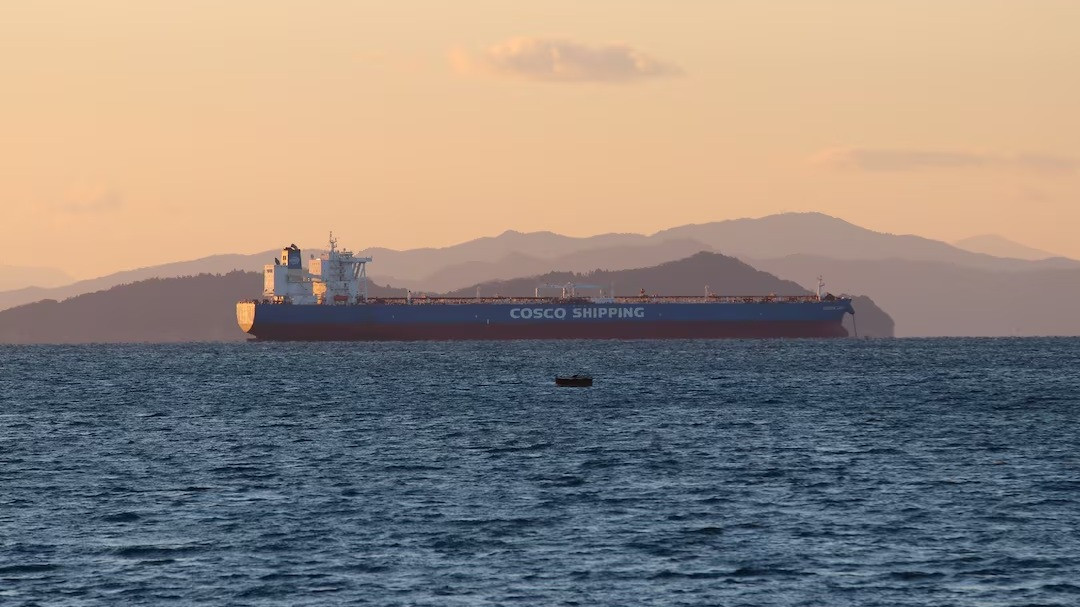
Yemen's Houthi group is preparing to impose fees on commercial ships passing through the Red Sea.
The Houthi organization in Yemen, after opening a maritime front against Saudi Arabia, is now preparing to impose fees on commercial ships passing through the Red Sea. Regional sources told Reuters that the Houthi leadership is considering a plan to levy fees on most ships passing through the Bab al-Mandeb Strait. However, it is not yet clear when this will be implemented.
On July 20, the Houthis announced a maritime blockade against Saudi Arabia. The Houthis claim this step is in response to the Saudi "siege" on Yemen, while Saudi Arabia has denied this allegation. Following this announcement, tensions in the Red Sea escalated rapidly, with the Houthis claiming they have begun targeting Saudi ships.
The Bab al-Mandeb Strait is one of the world's most important maritime routes, connecting the Red Sea to the Gulf of Aden. A significant portion of trade between Asia, Europe, and the Middle East passes through this route.
According to regional sources, earlier this month, Houthi officials who attended the funeral of former Iranian Supreme Leader Ayatollah Sayyid Ali Khamenei discussed this proposal with officials during their visit. It was during this time that the idea of creating a system to levy fees on ships passing through Bab al-Mandeb emerged. The report also claims that Iranian advisors are providing technical and administrative advice to Houthi officials to prepare such a potential system. However, there has been no official response from Iran or the Houthis on this matter.
Sources speaking to Reuters say that one objective of this plan is to normalize the system of collecting fees on international maritime routes and to exert additional pressure on the United States and its allied countries. A report also claims that under this proposal, Chinese ships might be exempted from the fees. Earlier, Reuters had reported that continuous discussions were ongoing between China and the Houthis, aimed at providing a safe passage for Chinese ships. Yemen's internationally recognized government's proposed Foreign Minister Afrah Al-Jouba told Reuters,
If the Houthis succeed in increasing their influence over the Red Sea, they will certainly attempt to collect fees from ships. Meanwhile, Western diplomats believe that if this happens, there will be strong opposition from the Gulf countries and Europe.
According to another report by Reuters, Saudi Arabia is now trying to form an international coalition to protect shipping in the Red Sea. Discussions are ongoing with several countries regarding this proposal, although it has not yet been decided which countries will be part of this coalition.
The importance of the Bab al-Mandeb, which connects the Red Sea to the Gulf of Aden, increases because if this route is disrupted, Saudi Arabia's significant alternative, the Strait of Hormuz, will also be weakened. Tensions have long persisted in Hormuz, and if both maritime routes are affected, it could have a severe impact on global oil supply.
Meanwhile, yesterday, Saudi Arabia's Defense Minister Prince Khalid bin Salman met with US President Donald Trump and Vice President JD Vance. According to a report by the American news website Axios, following joint US-Saudi strikes on Iran-backed militias in Iraq, Saudi Defense Minister Prince Khalid stated,
Despite recent military actions, Saudi Arabia still advocates for de-escalation with Iran and wants to avoid a broader war in the region.
Maritime trade in the Red Sea has not yet fully normalized. In November 2023, during the Gaza war, the Houthis began attacking merchant ships, citing support for Palestine. These attacks paused for some time after the Gaza ceasefire last year, but tensions have risen again following the newly declared maritime blockade against Saudi Arabia. Last week, an attack on a Saudi oil tanker near the Saudi port of Jizan was claimed by the Houthis.
Experts say that if a new fee is implemented in Bab al-Mandeb or if the movement of ships is further affected, its impact will not be limited to the Middle East. It could have a broad impact on energy supply, global trade, insurance costs, and the prices of maritime transportation.

Md. Tousif
मोहम्मद तौसिफ़ राष्ट्रीय और अंतर्राष्ट्रीय खबरों पर नजर रखते हैं और ‘द क्रेडिबल हिस्ट्री’ में रिसर्चर के रूप में कार्यरत हैं।