
Explore Toronto's quirky dice-like buildings
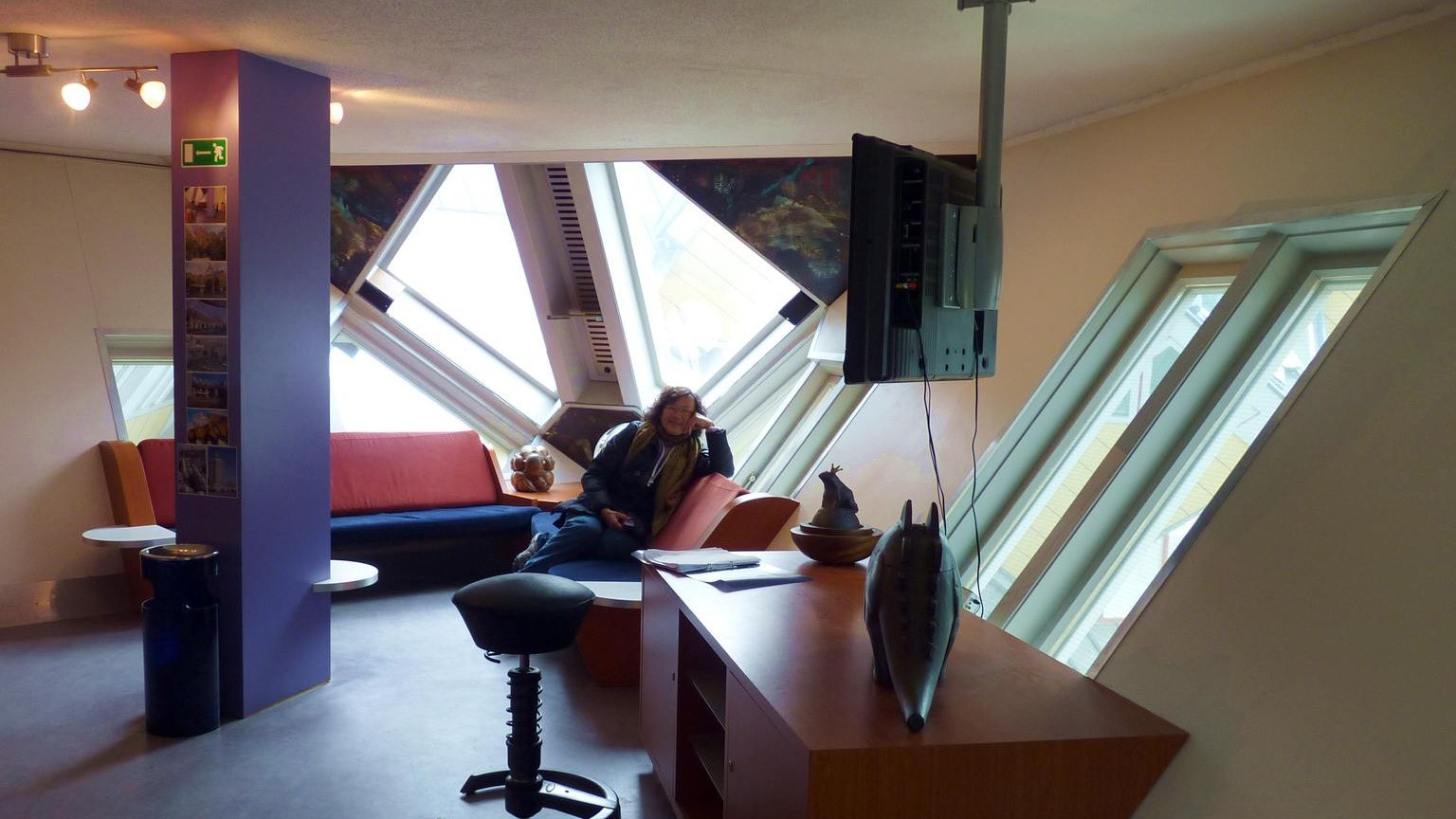
Atul Arora takes us on a tour of Toronto's unique architecture and quirky buildings.
During a recent trip to Canada, while wandering around downtown Toronto, I came across some bizarre buildings and architectural marvels. Here are some of their strange stories.
Cube House: A Whimsical Dream
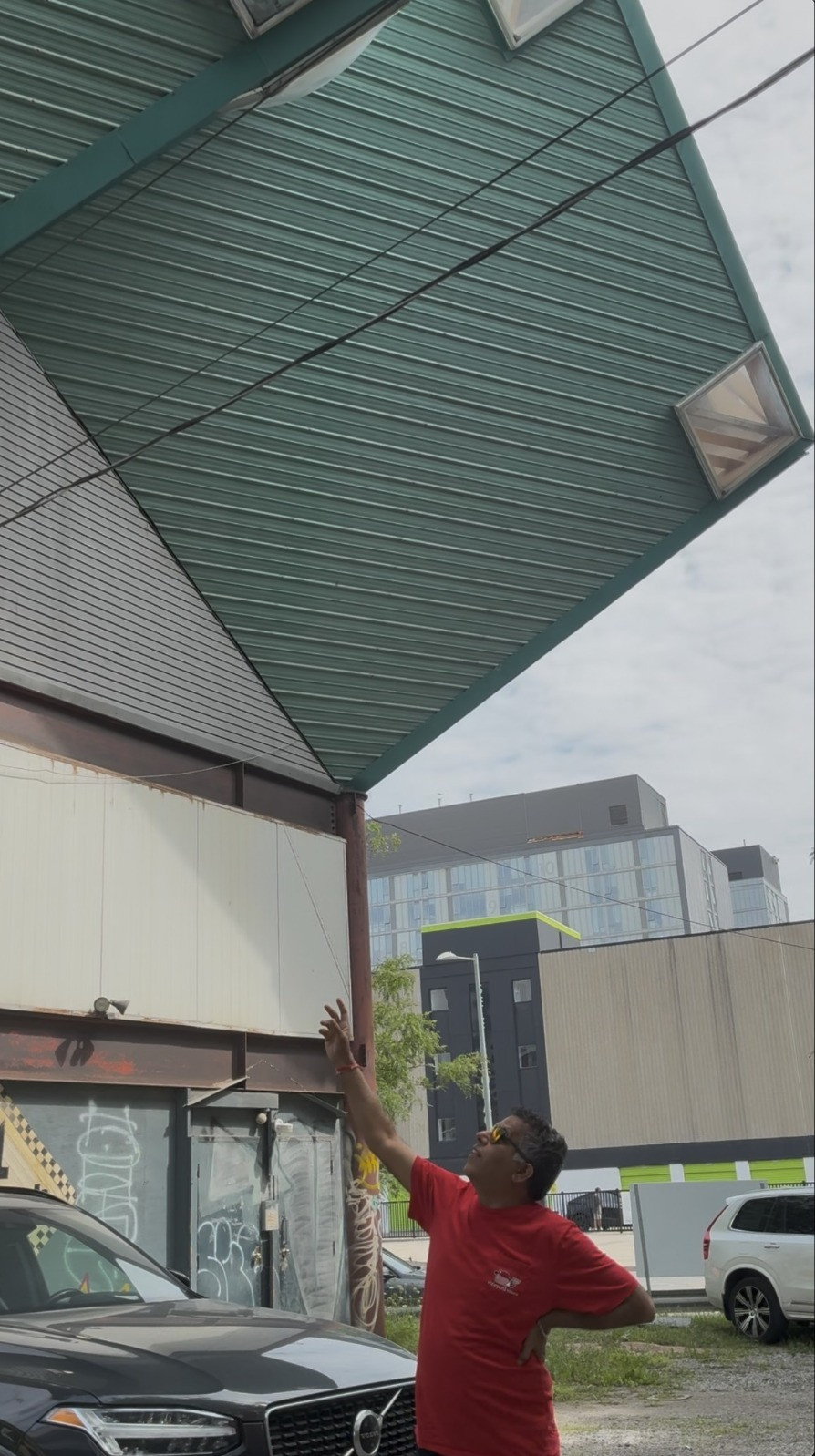
In Toronto's East End, at the busy intersection of Sumach Street, stood a marvel for many years that made passersby slow down their vehicles—Toronto Cube Homes. In a world of ordinary square houses grounded on land, these homes appeared like giant green Ludo game dice suspended in the air, as if a child had left them by the roadside while playing.
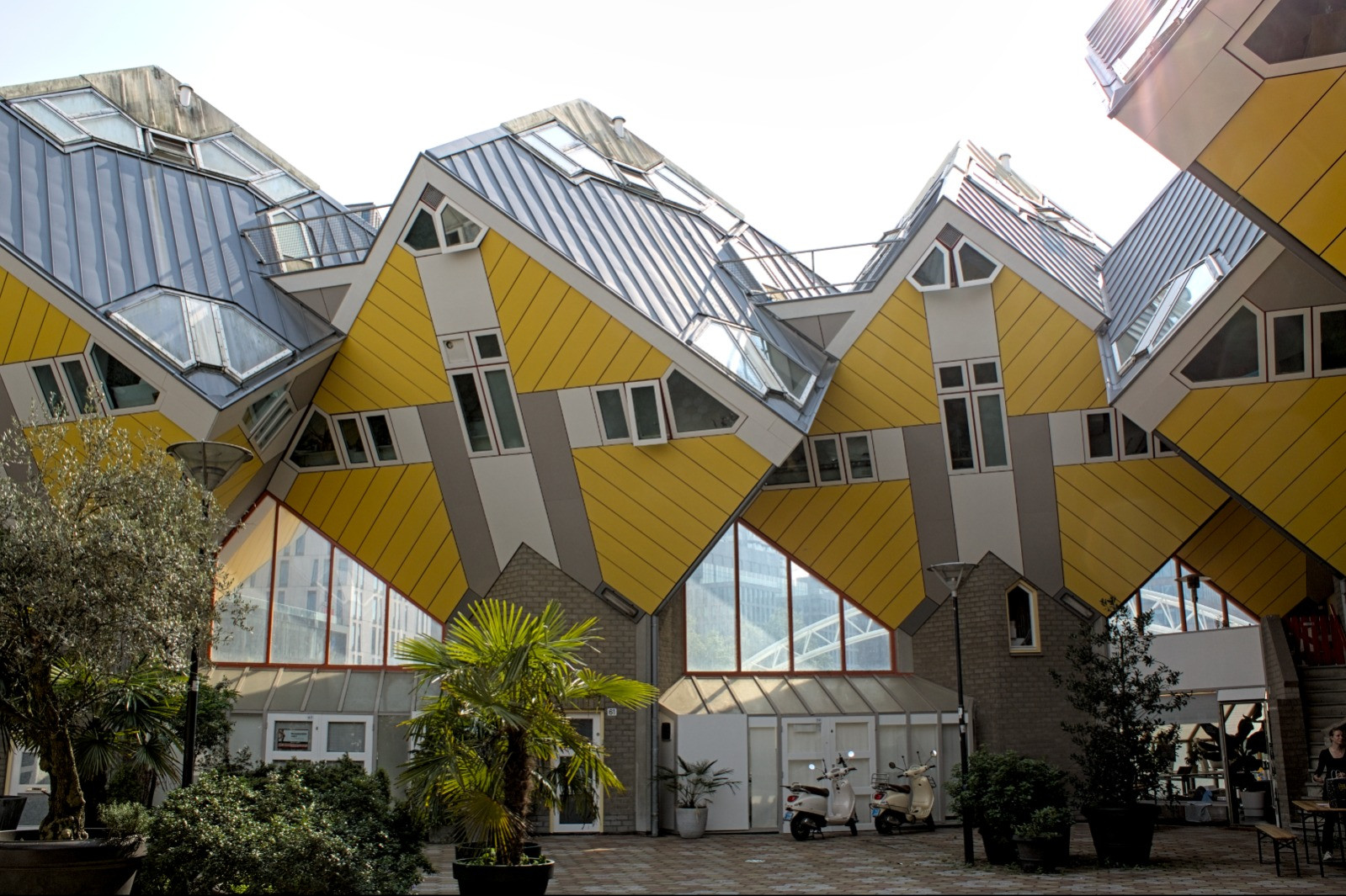
The roots of this unique building trace back to the Rotterdam design of renowned Dutch architect Piet Blom (Piet Blom).
In 1996, two builder brothers from Ottawa—Martin and Ben Hoogman—were inspired by that Dutch experiment and constructed three connected 'cubes' on a triangular, unused plot in Toronto. Their revolutionary idea was that since the city had limited land, why not create space upwards by building structures tilted at a 45-degree angle? Each cube stood like a tree, and together the structure formed a small urban forest.
Living in these homes was no less thrilling than a reality show. Finding straight walls was impossible; windows either opened directly to the sky or leaned towards the street. If you lay on the bed, you could see the night stars through the slanted glass panes. To install a cupboard or hang a picture, you needed not an ordinary carpenter but a professor of geometry. This place became a magical abode for art lovers, design enthusiasts, and those who lived off the beaten path.
However, time and the city's real estate boom did not spare this whimsical dream. Around 2020, the land was sold to a condominium developer. The cubes were vacated and by the end of 2021, they were dismantled and safely stored on a remote farm so they could be reassembled elsewhere in the future. Though the cubes have disappeared from the intersection, they will always remain a testament in Toronto's history to the stubbornness that proves life can be beautifully lived not just in straight lines but in oblique angles as well.
Half House: A Common Family's Defiance Against the Blind Race of Real Estate
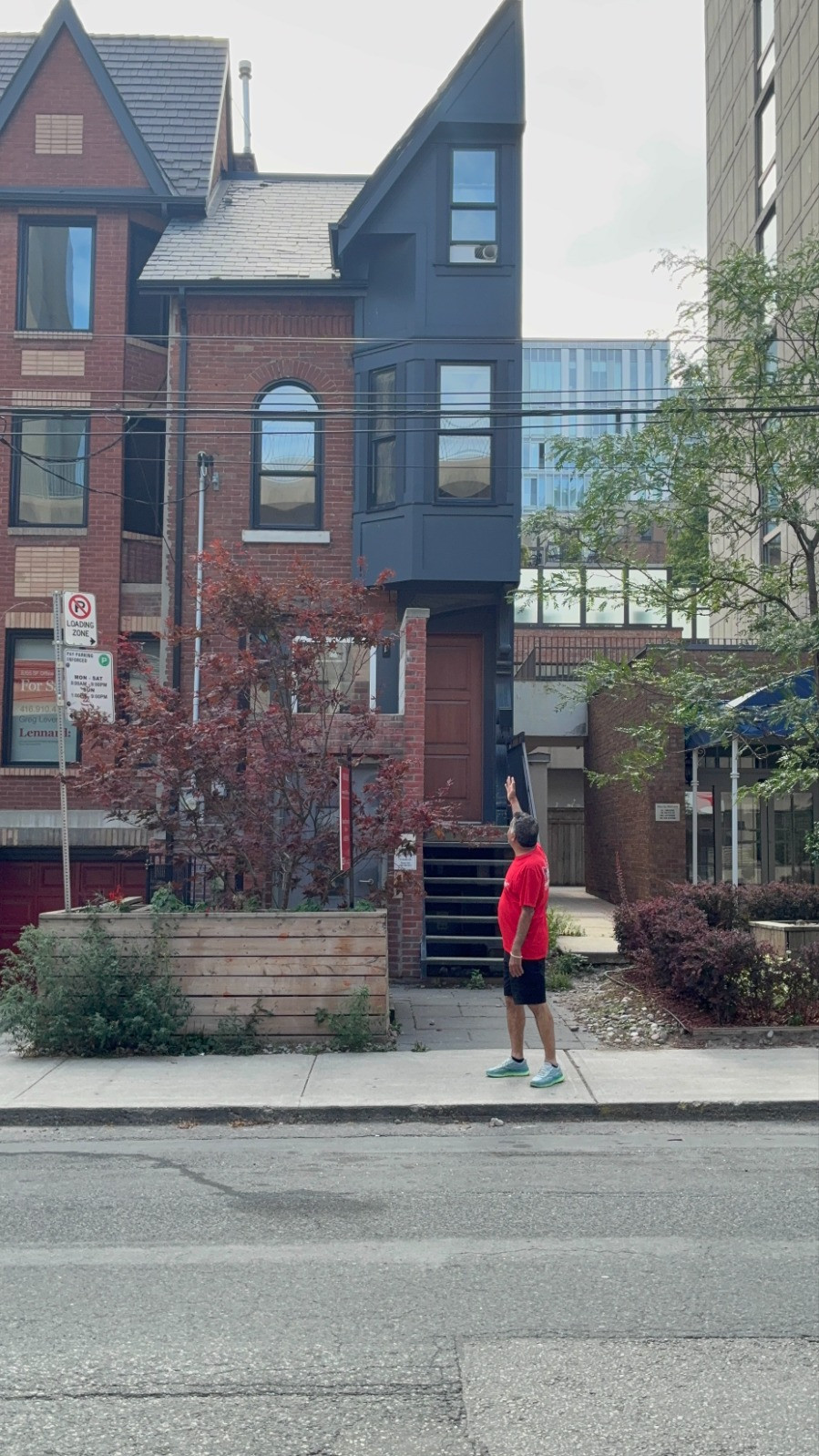
While strolling down St. Patrick Street in Toronto, when I noticed house number 54½, for a moment it seemed like my eyes were deceiving me or someone had photoshopped real life. This is Toronto's famous 'Half House' (The Half House)—
a house that looks as if a giant saw has sliced it in half, leaving one part missing.
The story of this marvel begins in the late 19th century. Between 1890 and 1893, six connected Victorian-style row houses were built here. Everything went peacefully for decades, but in the 1950s and 60s, Toronto saw a wave of property developers. A major real estate company wanted to buy the entire block and erect new buildings. The developer offered hefty sums to the homeowners on St. Patrick Street one by one. Five homeowners agreed and sold their houses. But the Valkair family residing at number 54½ stood firm in their resolve. They clearly stated—
"Come what may, we will not sell our ancestral home." The developers applied pressure, issued threats, and even sought legal avenues, but the family stood like a rock. Finally, in frustration, the builders took an unprecedented and astonishing step. In the 1970s, engineers and workers were called in. With surgical precision, all the neighboring houses were demolished, even the shared wall (Party Wall) adjoining number 54½ was separated in such a way that not a scratch came to this one family's portion. When the dust settled, standing proudly amidst the rubble was—Half House.
Today, this house stands alone with its empty, flat, windowless side wall. It is not just a strange structure of bricks and mortar, but a living monument to the unwavering self-respect and stubborn courage of a common family against corporate pressure and the blind race of real estate. The next generations of the Valkair family preserved this house until the early 2010s. Later, it was sold to a new owner who renovated its interior while preserving its historical structure and unique form.
This is not a public museum or tourist site, but a private home where people live normally—the only difference being that curious tourists and photographers stop daily to admire this unique building.
Leslieville Dollhouse: A Strange Tale of Filling Emptiness with Innocent Childhood Memories
While strolling through the quiet and genteel suburban area of Leslieville, upon reaching 37 Bertmount Avenue, it felt like you had jumped from an ordinary Canadian neighborhood straight into the whimsical madness of 'Alice in Wonderland'. After her husband's death in the 1990s, the owner of this house, Shirley Sumprevale, chose a unique way to combat loneliness—she began decorating the small garden in front of her house with old toys, and soon the entire house turned into an eccentric 'toy land'.
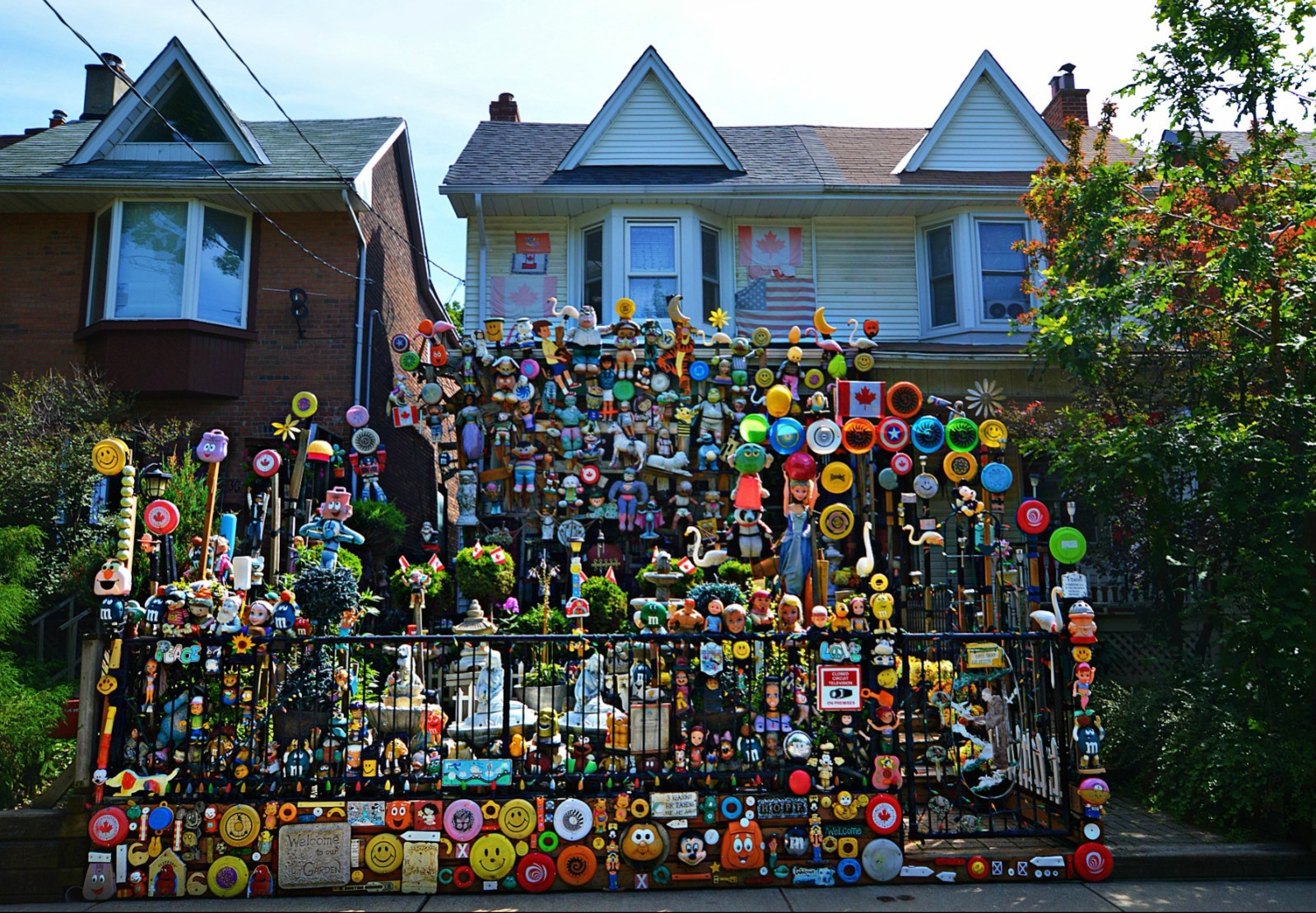
Today, not an inch of this house is empty;
from the fence to the porch and balconies, thousands of Barbie dolls, Superman, teddy bears, plastic mermaids, and Christmas bells are perched. When the wind blows, the hundreds of wind chimes here create a strange music, and countless plastic eyes stare at you intently. This building is not professional architecture, but a touching and strange tale of a person filling their emptiness with boundless colors and innocent childhood memories.
Located at 37 Bertmount Avenue, this house was sold by the family of its original owner (Shirley Sumprevale) in the summer of 2024 due to her age and health reasons. Before renovating the house, the new owners held a farewell event at the end of September 2024. During this time, neighbors and fans were allowed to take their favorite toy as a souvenir in exchange for a charity donation. All the Barbie dolls, toys, and decorative items have been removed from the exterior of the house, and the building has been completely transformed into a normal modern residential home with new decor.
Physically, the building still stands there today, but the unique and eccentric 'Dollhouse' that was a part of Toronto's identity for three decades now lives only in the city's memories, photographs, and stories.
Berczy Park Dog Fountain (Berczy Park Dog Fountain)
Located right behind the Gooderham Building in Toronto's old district, this two-tiered fountain is the city's most playful sight. Designed by landscape architect Claude Cormier, around this fountain stand 27 life-sized iron dogs of different breeds, all with their heads raised—gazing intently at a golden bone placed at the top. Streams of water from the mouths of all these dogs fall into the central basin, as if they are all drooling over that bone.
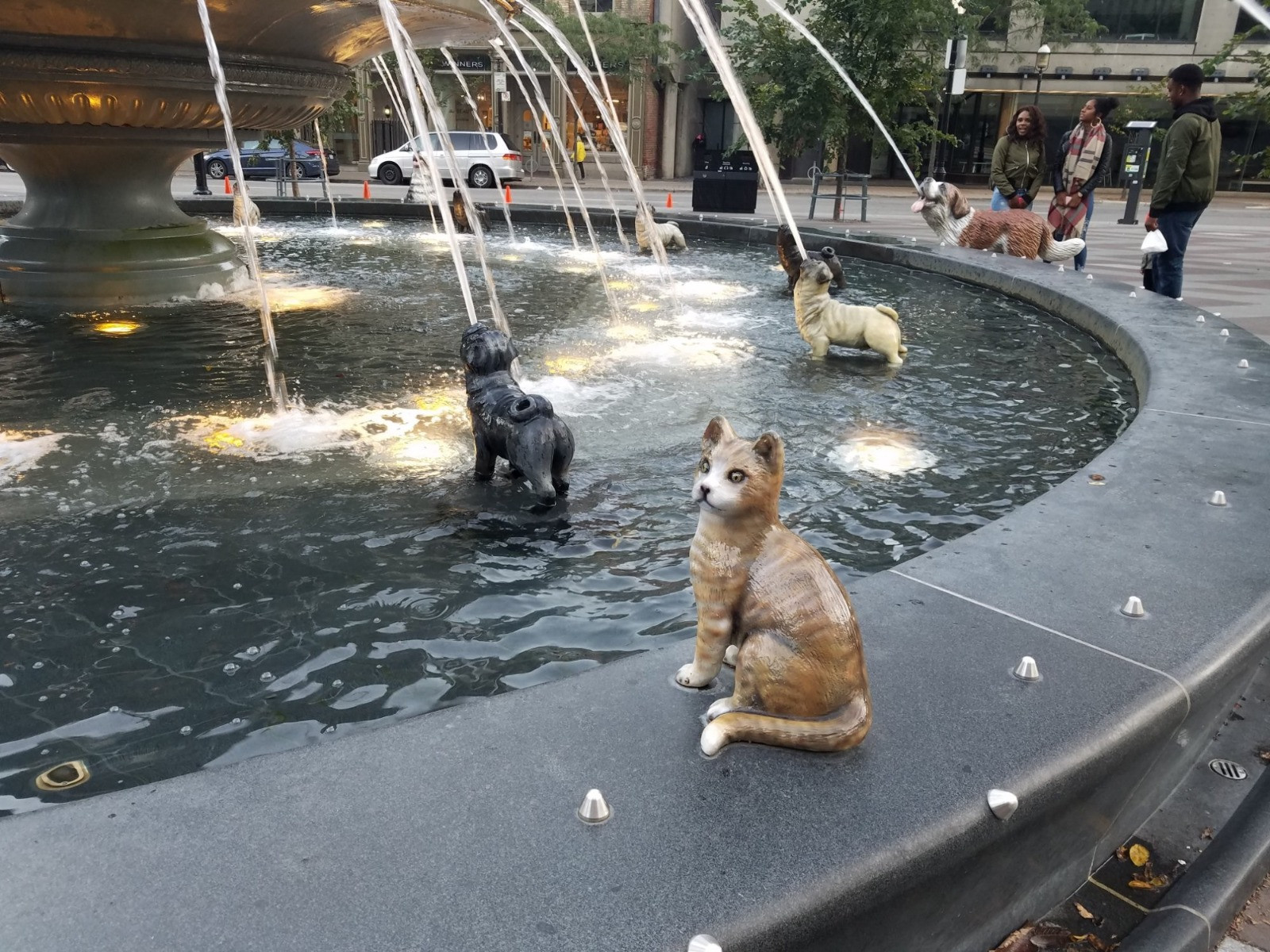
This gathering takes a real twist with a lone, clever cat watching the frenzy of all these dogs from afar with indifference, and two small birds sitting nearby. When it opened in 2017, it became more than just a fountain; it turned into the most popular spot for the city's dogs and their owners, where real dogs are often seen barking and sniffing around these iron dogs, mistaking them for real ones.
The main idea behind the Berczy Park Dog Fountain was the vision of its landscape architect Claude Cormier (Claude Cormier), who believed that "urban public spaces should bring smiles to people's faces rather than being serious and formal."
The mindset behind creating this unique fountain:
- Identifying the real needs of the community: Before the park's redevelopment, it was observed that most people living in this downtown Toronto area had pet dogs and brought them to this park for walks. Instead of traditional historical monuments, the relationship between those dogs and their owners was made the main protagonist of this public space.
- Subversive Humor: 19th-century Victorian-style fountains were typically dedicated to kings, generals, or mythical angels. Cormier deliberately adopted the same grand, classical two-tier design but placed 27 different breeds of dogs worshipping a 'golden bone' at the top instead of human figures.
- Inclusivity: The park includes almost every popular breed, from pugs and poodles to Labradors and German Shepherds, so that every dog owner can feel a connection with their pet. Additionally, water basins were created at ground level in the lower part of the fountain so that real dogs could drink water there. This monument testifies that the city's architecture is not just about concrete and regulations but also a celebration of the lighter joys of life.

Atul Arora
अमेरिका में बसे अतुल अरोड़ा ट्रैवल ब्लॉगर हैं। रोजनामचा नाम का इनका एक यू-ट्यूब चैनल है जिसमें वो खालिस कनपुरिया अंदाज में Humour शो करते हैं।