
China's claim on Arunachal Pradesh: What's the issue?

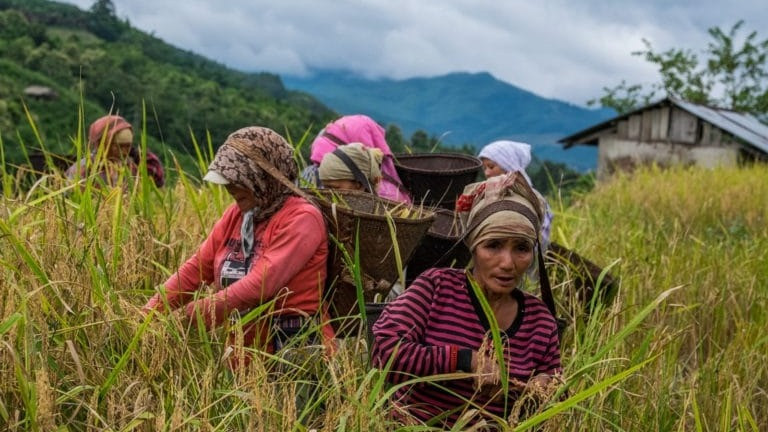
China regards Arunachal Pradesh as 'South Tibet' and denies India's sovereignty over it.
- -Nitya Nagina Mishra
Amid allegations by the People's Party of Arunachal that China is restricting the Indian Army's access to key areas in Arunachal Pradesh, the Ministry of Home Affairs has officially recognised 27 locations in Arunachal Pradesh on the Indian map. Read more.
The Chinese claim over Arunachal Pradesh is not new. The initial conflicts in 1959 also centred around the Longju area of Arunachal Pradesh. Additionally, China has intermittently asserted its claim over areas like Maja and Thang La. In the 64-year history of strained India-China relations, China has been more aggressive about its claim over Arunachal.

It is noteworthy that despite being a country with 20% of the world's population, China controls only 6% of the world's water resources. The distribution of water is a concern for China, as 80% of its water resources are south of the Yangtze River, while a large part of its population resides in the northern plains. This population, not part of China's global manufacturing empire, is still primarily engaged in agricultural activities. In such a situation, Arunachal becomes more important for China because 60% of the Brahmaputra River's water flows through Indian territory. The increasing importance of water due to the rise in chip manufacturing has also heightened its significance for China, as self-reliance is necessary to protect itself from the American economic empire and maintain global technological dependence on itself in the future.
Former Foreign Secretary Shyam Saran, in his book How India Sees the World: Kautilya to the 21st Century, narrates a story of a Chinese king, stating that the root of Chinese aggression is its insecurity. Over the years, China has undertaken several measures to address its insecurity, including the China-Pakistan Economic Corridor, to protect its economy from any potential threats in the Malacca region. Similarly, Arunachal is also a significant area for China.
The Tawang region of Arunachal Pradesh, situated at 3,500 metres, poses a strategic threat to China, which could become a risk in any dispute. In the 1967 India-China skirmish in the Nathu La area of Sikkim, China's experience of fighting in the mountains was not particularly favourable. Thus, Chinese insecurity repeatedly manifests in its claims over Arunachal Pradesh.
In addition to strategic and resource-related reasons, there is also a cultural aspect to this dispute, which is seldom discussed. In global politics, Tibet is considered one of China's two main weak links, which it has already acquired, and the other is Taiwan, an unfinished task that China reiterates its resolve to complete sooner or later.
The cultural and political ties between Tibet and Arunachal Pradesh are very old. The lifestyle of the Monpa people living in Tawang, the nature of Buddhism prevalent in Arunachal Pradesh, etc., bear similarities to the people living in Tibet.
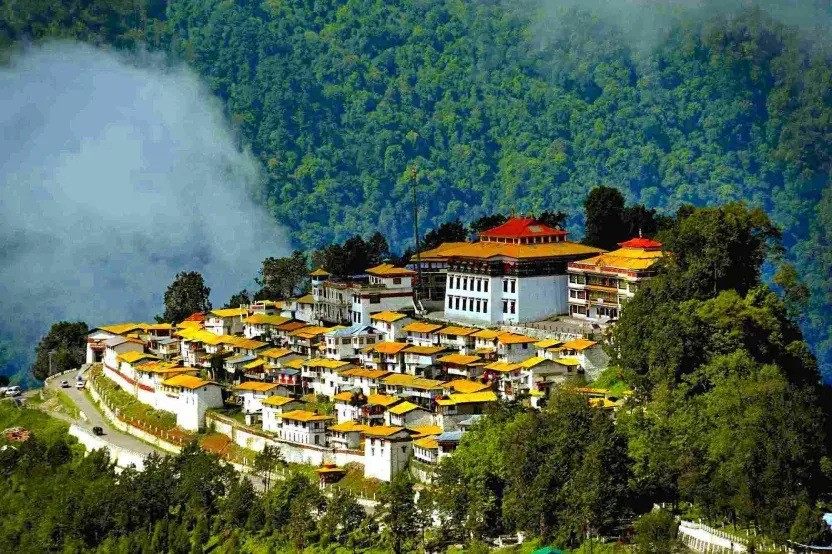
The Tawang Monastery was also constructed at the behest of the fifth Dalai Lama, and the sixth Dalai Lama was born in Arunachal itself. These facts indicate that Tibet and Arunachal Pradesh have always been interconnected as a society. In such a scenario, to strengthen its stance on Tibet, China consistently asserts its claim over Arunachal. It is noteworthy that China recognises Arunachal as "South Tibet" and denies India's sovereignty over it. However, its claim over Tibet is also disputed, and the Dalai Lama continues to challenge China's authority over Tibet.
In such a situation, the Government of India should openly reject China's claims so that not only is the Indian stance strengthened, but the Indians living in Arunachal Pradesh can also dream of a secure future without fear. After all, a nation is made more by its people than by its land.