
Bollywood's new Ramayana: Just glamour or a return to roots?
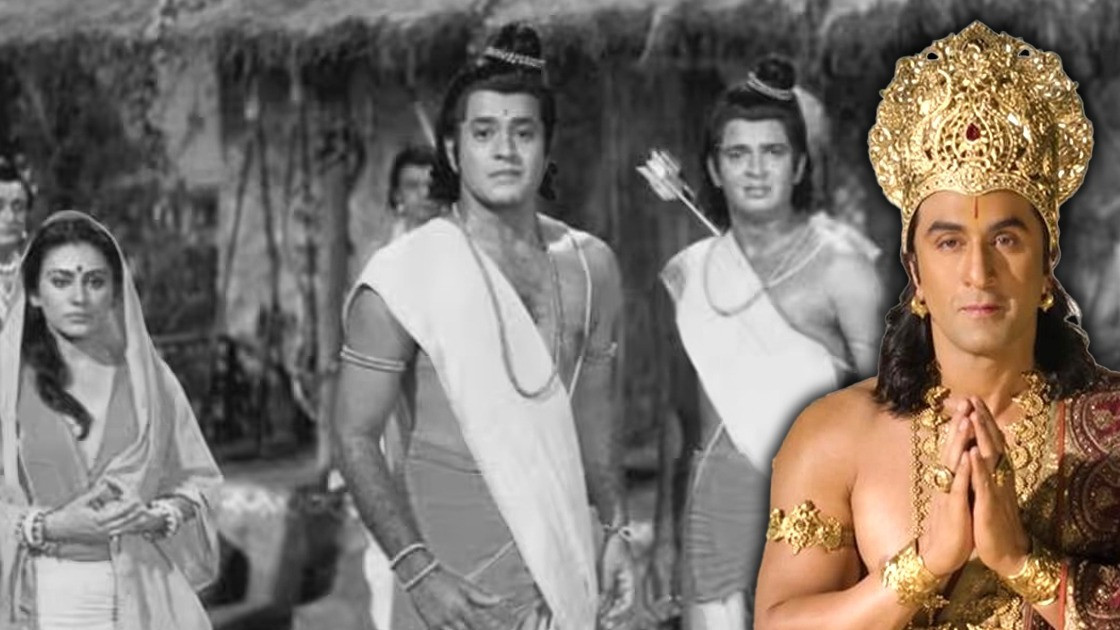
Will this Ramayana cash in on current political trends at the box office?
The much-anticipated multi-starrer film "Ramayana," directed by Nitesh Tiwari of Aamir Khan's super hit "Dangal" fame, made with a budget of ₹5,000 crore, is currently creating a buzz on YouTube. Ramanand Sagar's "Ramayana," which aired on Doordarshan in 1987, remains etched in our hearts and minds. During that era, Arun Govil, who played the role of Ram, and Deepika Chikhalia, who portrayed Sita, were revered as deities. When the serial began at 9:30 AM on Sundays on black-and-white TV screens, the TV would be ceremoniously worshipped, and the streets would be deserted.
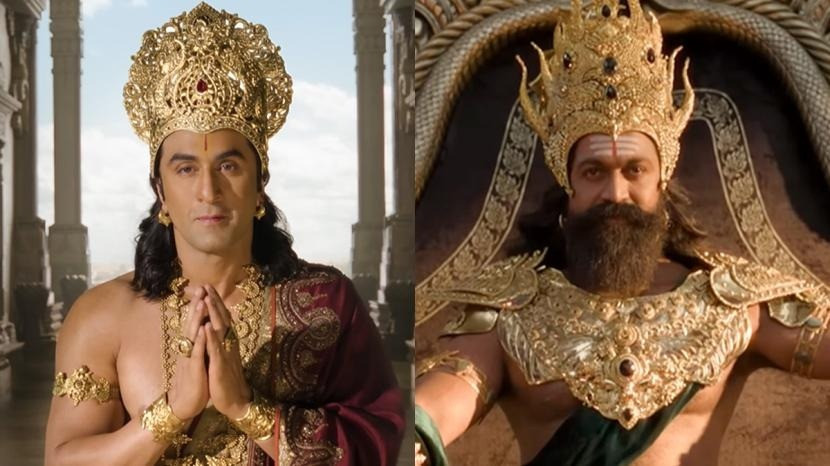
This time, Ranbir Kapoor is playing the role of Ram. It is pleasing to see that the gentle Ram, whom we were familiar with from Ramleela performances and Ramanand Sagar's "Ramayana," has returned, replacing the angry Ram of the past twelve years. In this version of "Ramayana," the Ram of that time is now in the role of Dasharath.
Additionally, Sai Pallavi (Sita), Yash (Ravana), Sunny Deol (Hanuman), Ravi Dubey (Lakshman), Amitabh Bachchan (Jatayu), Lara Dutta (Kaikeyi), Kajal Aggarwal (Mandodari), Rakul Preet Singh (Shurpanakha), Indira Krishnan (Kaushalya), Sheeba Chaddha (Manthara), Mohit Raina (Lord Shiva), Vivek Oberoi, Kunal Kapoor, and other superstars from Hindi and South cinema are part of the ensemble cast.
Before the discovery of the Ram Janmabhoomi in Ayodhya, for us, the epitome of virtue "Ram" was Bhaiya Lal Pandit. Although Bhaiya Lal Mishra was a hereditary priest, his father, Bhikhari (this is the name we know, though his real name might have been different) Mishra, was the priest for the Hindu community in my town Jafarabad, district Jaunpur, Uttar Pradesh, pin code 222180. He officiated at weddings, mundan ceremonies, stories, Diwali pujas, etc. Bhaiya Lal followed in his father's footsteps and took up this profession for a livelihood. Later, he advanced to making horoscopes, matchmaking, and even predicting the future. People from far and wide would come to him seeking solutions to their problems.
A month before Dussehra, from villages and towns to metropolises, there was a craze for Ramleela. In our town, Bhaiya Lal Mishra would incarnate as Ram. Until Dussehra, he remained Ram. After slaying Ravana, he would revert to being Bhaiya Lal Mishra. During this entire month, Ramleela was the sole source of entertainment for every person in our town, from the first day starting at the garden to the slaying of Ravana. This was the first time I saw Ram up close.
Our Ramleela's Ram belonged to everyone. On the left side of the stage set up in the middle of the road, there was a small platform where Goswami Ji would recite couplets from the Ramcharitmanas according to the scenes being enacted on stage. Accompanying him were a harmonium player and a dholak player, who were locals. The audience sat in the middle of the road on mats, imagining Bhaiya Lal Mishra as Ram. This Ram was very gentle, never speaking angrily to anyone. He only got angry once when the ocean refused to give him a path to Lanka. Yes, Munna Barnwal, who played Lakshman's role, was always angry. He even clashed with Maharishi Parashuram, upset over Ram breaking Shiva's bow at Sita's swayamvar. It was Bhaiya Lal, immersed in Ram's character, who always remained calm and smiling.
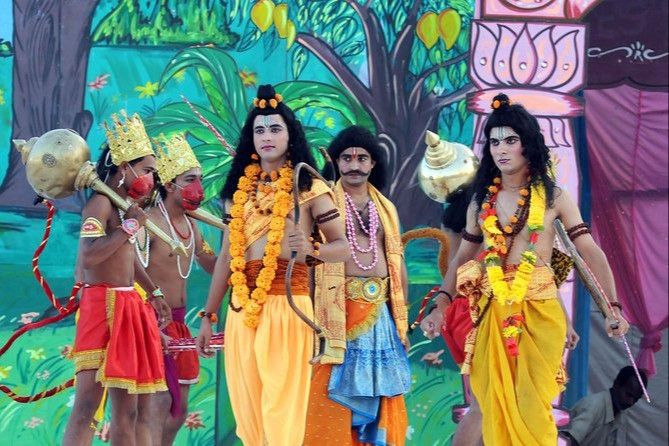
In the audience seated in the middle of the road, the front row was for women and children, with men at the back. There were no religious restrictions to be part of this crowd. I myself was part of the audience, mouth agape. I always liked Ram. How calm and civilized he was, speaking lovingly even to enemies. Even during war, whether it was Kumbhakarna or Ravana in front of him, he never used derogatory language for them. His smile never faded, even when Ravana lay on his deathbed, Ram sent his angry brother Lakshman to learn politics from Ravana.
Today, the concept of an aggressive and combative Hindu nation is being sold politically. Ramayana also envisioned Ram Rajya. In this concept, the metaphor of a lion and a goat drinking water at the same place is well-known, meaning in Ram Rajya, the weak and strong would be equal. Crime would be zero. There would be no place for hatred. Even a small complaint from the public would be the king's top priority. Abandoning his wife on a washerman's taunt, although this decision is worthy of criticism in modern times, imagine a state where even the lowest citizen, a washerman, is important. This is the primary concept of our democracy.
In contrast, today, while our country is the world's largest democracy, where people vote to elect the government, our Constitution does not discriminate between small and big, poor and rich, certainly not on the basis of religion. In true sense, this was the concept of Ram Rajya. But the RSS's goal of a Hindu nation has turned the concept of Ram Rajya, as envisioned by Maryada Purushottam, on its head since its inception. After the Babri Masjid Ram Janmabhoomi dispute, a Taliban-like Hindu nation, where there is no place for followers of other religions, has grown stronger. Today, under the BJP's undisputed rule, this regime of hatred has deeply entrenched itself.
In such an environment, if Lord Ram were to incarnate again, perhaps he would not pick up the bow and arrow against these players of hateful power and their followers but would directly use the Sudarshan Chakra. In such an environment, seeing the Lord on the big screen relaxing his frown and smiling again is a pleasant feeling. Will the film be able to revive the magic of the late Ramanand Sagar on screen again, or will it merely extend the film trailer to cash in on the current political fire at the box office? This will be known when the film releases on Diwali in November.
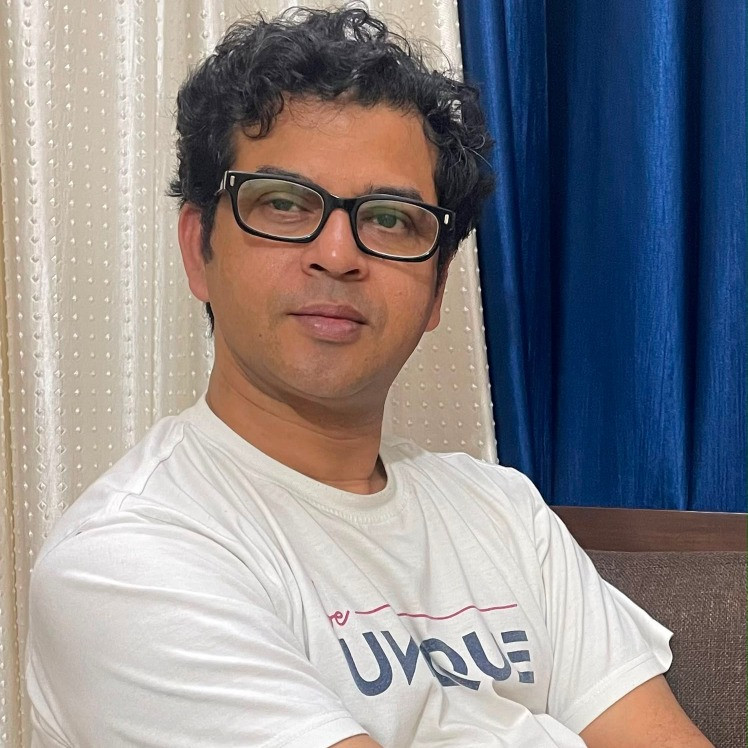
Iqbal Ahmad
इक़बाल अहमद पेशे से फ्रीलांस लेखक हैं और यू ट्यूब पर पाँच साल से सक्रिय पत्रकारिता कर रहे हैं। द क्रेडिबल हिस्ट्री पर इनका साप्ताहिक शो ‘द मुस्लिम एंगल’ दर्शकों में लोकप्रिय है।