
Bhima Nayak: Tribal hero of India's freedom struggle

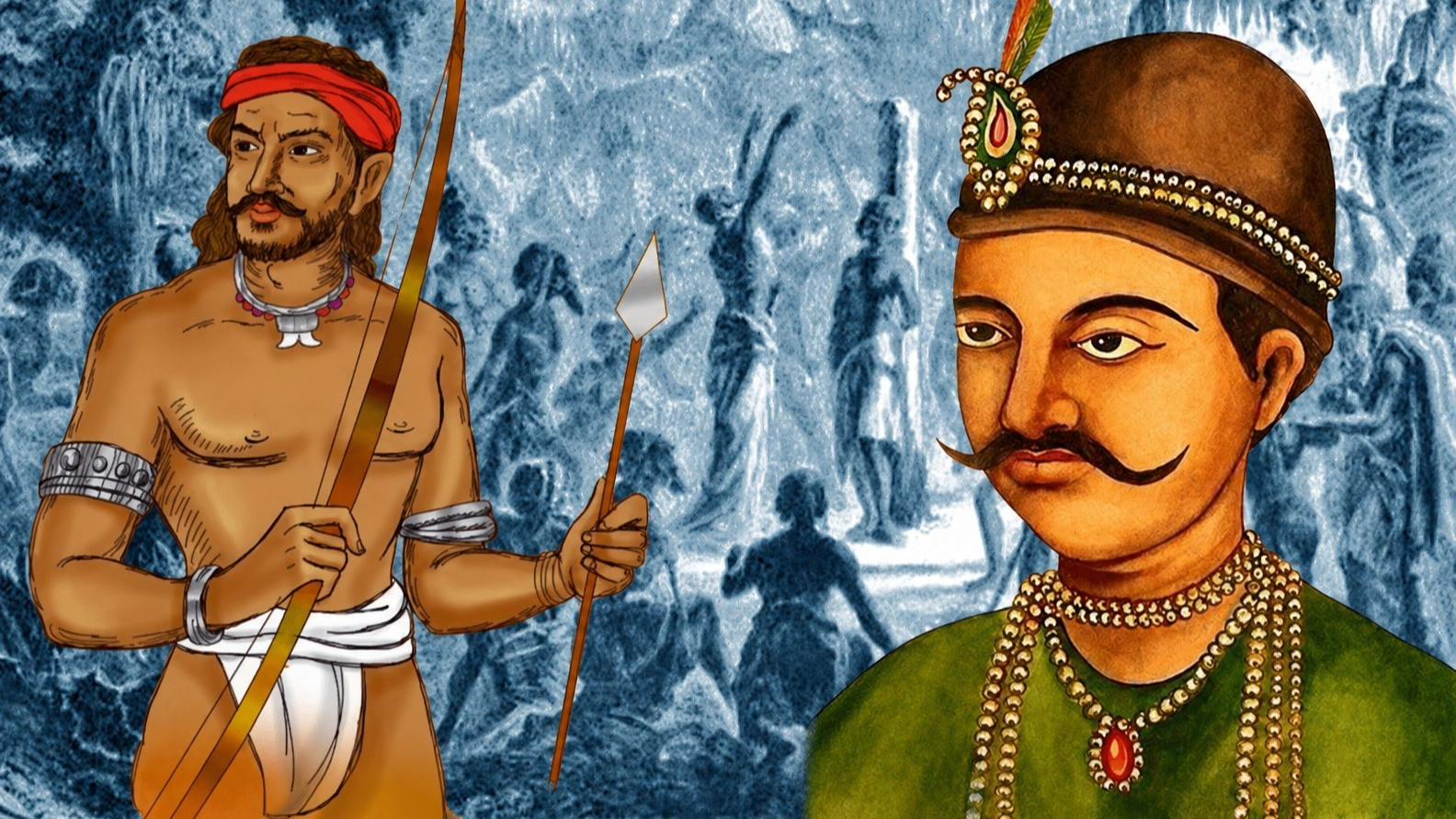
India's freedom movement found its roots among the tribals living in forests and mountains.
The seeds of the freedom struggle in India first sprouted among the tribals living in forests and mountains. These tribals had an unwavering sense of dedication to their land. They waged a fearless struggle for independence, which was later embraced by the entire nation.
One such hero of the freedom struggle and tribal consciousness was Bhima Nayak. This brave leader from the Nimar region of Madhya Pradesh led the Bhil uprising against the British from 1840 to 1864. Inspired by Tantia Tope, Bhima Nayak shook the British rule in Nimar during the 1857 War of Independence.
Bhil tribals of western central India were led by Bhima Nayak, a resident of Panchmohli village in the Barwani State. After directly confronting the British in the 1857 War of Independence, the British deployed the Khandesh Bhil Corps to capture him, but they were unsuccessful. Bhima stood firm with his comrades Mowasia, Revalia Nayak, and ten thousand revolutionaries.
Who was Bhima Nayak
This warrior who awakened the Bhils of Nimar in 1857 was born around 1815. By the age of 10, young Bhima had become skilled in archery and slingshot. The revolutionary spirit in Bhima was significantly influenced by his family's values.
His father Rama taught him to wield weapons, while his mother Surasi supported him on every revolutionary front. Bhima's mother Surasi also contributed to the struggle. She trained 150 women in warfare, enabling women to play an active role in the revolution.
To free themselves from British exploitation and tyranny, Bhima began forming his military unit in 1837. Within just one year, he had 500 trained soldiers. Bhima's army included Bhil, Bhilala, and Makrani soldiers. To ensure their safety, Bhima constructed a fort at Dhanabavdi.
The British deceitfully killed Bhima's comrade Daulatsingh, which deeply affected Bhima. During this difficult time, Khajya Nayak of Barwani gave him the courage and support to take up the fight again.
During the famine, the British resorted to coercion, bribery, and violence in tax collection. In response to this injustice, Bhima seized goods from moneylenders, traders, feudal lords, and government treasuries to distribute among the poor. Before his family deity Nagari Mata, Bhima vowed to drive out the British exploiting the Bhils and embarked on this mission. To crush the Bhil leaders from Gujarat, the British called in their forces. In response, Bhima Nayak and his fellow revolutionaries moved towards the Sendhwa region. The magistrate of Khandesh deposited the wealth of Sendhwa's traders under British protection. However, the common people and traders sided with Bhima Nayak, and only a small portion of the wealth was deposited in the British treasury.
When British soldiers were secretly transporting this wealth from Sendhwa to a safe location, Bhima Nayak attacked them and reclaimed the wealth. On this occasion, he said, “This is the hard-earned money of the people, and only they have the right to it.” This action stunned the British.
Tantia Tope provided trained revolutionaries to Bhima Nayak
Meanwhile, the king of Barwani, Rana Jaswant Singh, secretly assured Bhima Nayak of his support. Bhima continued his unique revolution, while on 3 November 1858, the great hero of the revolution, Tantia Tope, arrived in Nimar. His arrival sparked a wave of enthusiasm among the revolutionaries, and the name of Tantia Tope echoed in every village.
The British appointed half a dozen generals to prevent Tantia Tope from advancing south. At this time, from the Sendhwa Pass to Maharashtra, the influence of brave revolutionaries like Bhima Nayak, Revalia Nayak, Khajya Nayak, Khojeb Singh, and Kalu Baba was prominent.
During this period, Bhima Nayak and Tantia Tope met. Tantia Tope was impressed by Bhima's organisational skills and revolutionary activities. He assigned his 200 trained revolutionaries to Bhima. When Bhima helped Tantia Tope cross the Narmada River, Tantia said, “If our campaign is successful, we will surely repay this favour.”
Bhima Nayak became a challenge for the British in the 1857 Rebellion
After the 1857 Rebellion, the British had almost suppressed the revolution across the country, but Bhima Nayak's revolutionary activities remained a major challenge for them. Captain R.H. Keating sought assistance from the Colonel.
On 4 February 1859, under Keating's leadership, the British army attacked Dholabavdi. Subsequently, on 13 February 1859, a battle took place in Bhima's village Panchbawli. The Bhils had to take refuge in the forests. In this fierce battle, 10 of Bhima's companions were martyred, and many revolutionaries were arrested.
The British imprisoned Bhima's revolutionary companions and his mother Surasi in Mandleshwar Jail. To obtain information about Bhima's activities, Khojevsingh and mother Surasi were subjected to inhuman torture. Ultimately, suffering from hunger and thirst, mother Surasi passed away in jail on 28 February 1859. Her sacrifice broke the revolutionaries' patience. They took over the jail, and a fierce battle erupted in Mandleshwar Jail.
Some revolutionaries managed to escape from jail, but many were later arrested. Nimar's Political Agent Captain E. Thomson conducted the trial. Khajab Budis, Sheikh Mohammad, Haji Amin, Jhagga, Dilsher Khan, and Narsingh Nihal were sentenced to death. These revolutionaries were publicly hanged. Mayaram, Mehboob Ullah, Gulab Khan, Jawahar Singh, Fut Kaiyam Khan, Bahadur Singh, Nuna Devi, Manjushah, and Sarjuddin were sent to Kala Pani.
Despite the repression, Bhima Nayak did not lay down arms
Despite this repression by the British, the Bhil leader neither feared nor laid down arms. The British had established their rule across India, but the Bhil warriors remained steadfast at their front. Until 1861, the Bhils continued to struggle against the British.
On 16 December 1866, all the Bhil heroes of Nimar launched a major attack on the British, causing them significant losses. However, during the crackdown, many Bhil revolutionaries from Barwani were captured. The British continuously searched for Bhima Nayak, but he remained elusive. Finally, on 2 April 1867, based on a traitor's information, the British arrested Bhima Nayak while he was sleeping in the dense forest.
Bhima Nayak refused to compromise until the last moment. He maintained his dedication to the pride and independence of the Bhils. Inspired by this great hero, many Bhil heroes kept the flame of revolution burning, which continued until independence was achieved.
References
Ranjana Chitale, Tribal Warrior, Struggle for Pride and Independence