
Assam social worker Asif Mujtaba released after 17 hours; court’s remarks on state awaited

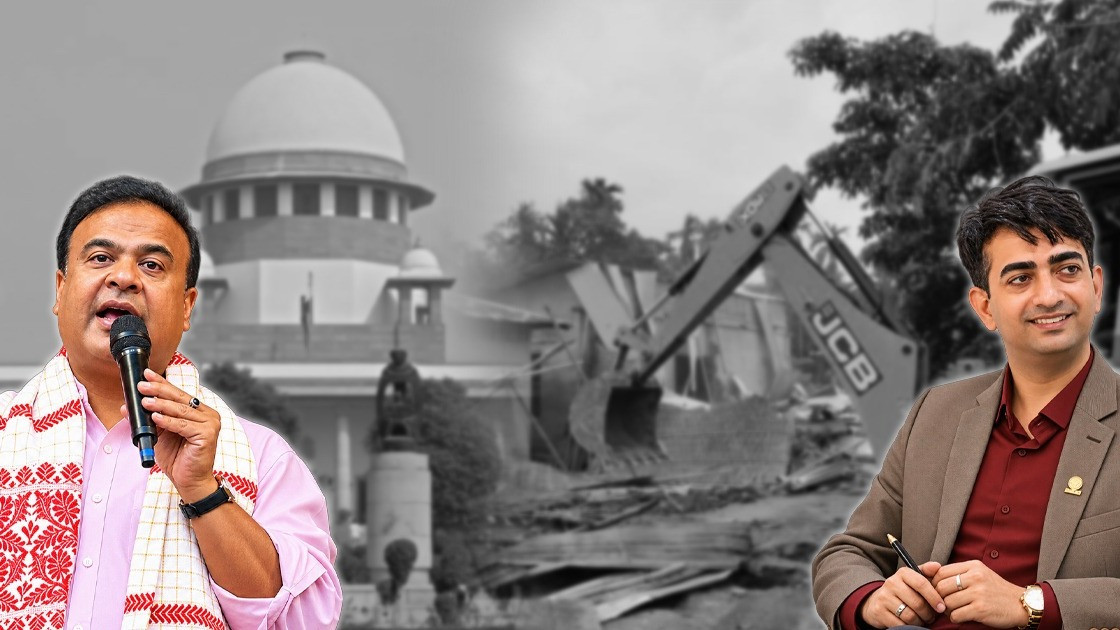
He was meeting families evicted from their homes in Assam.
When criticism of a government decision is treated as opposition to the country or the State, and the voices of those who raise questions are suppressed, can such a system be called democratic?
Social activist Asif Mujtaba, who had gone to meet families affected by the demolition drive being carried out by the Assam government, has reportedly been released from police custody. According to a November 29 report by The Observer Post, Mujtaba said on social media that he was released after about 17 hours. He was detained in Lakhimpur district on Saturday, November 28. However, available reports do not clearly state the legal grounds on which he was held or whether he was formally arrested.

Asif Mujtaba is the founder of Delhi-based Miles to Smile Foundation. His organisation helps people affected by communal violence, mob violence and demolitions. According to its website, alongside providing relief, the organisation also works to support children’s education, rehabilitate families and secure sources of employment. Asif Mujtaba is an alumnus of Aligarh Muslim University and IIT Delhi.
According to Asif Mujtaba and his team, they were meeting families evicted from their homes in Assam. They were making videos of their situation, recording their accounts and helping provide relief. In an interview with The Observer Post, he said he had been in Assam for about eight days. He alleged that the police had stopped him at several places earlier and questioned him about meeting the affected people.
According to reports, he was taken to Boginadi police station in Lakhimpur. Speaking from the police station, Asif Mujtaba had said that even after keeping him there for about two hours, the police had not told him why they were taking action. According to him, it was also unclear whether he was being arrested or being held for some other reason. He said the Superintendent of Police had spoken to him.
An initial report by Northeast Now also said the police had not issued a statement on the reason for the detention. Despite the news of his release, the reason for the action remains unclear. His release does not end the question of why he was held for so long. However, it would also not be appropriate to draw a final conclusion about the police’s intentions or the legality of its action without its version.
According to a report by Siyasat, on November 13, the houses of 135 families living on reserved grazing land in the Boginadi area were removed. Most of these were Bengali-speaking Muslim families. The report, citing officials, said notices had been issued to about 450 families in the district’s grazing areas. Later, on November 19, some temporary houses built along the river were also removed.
The Assam government has said its action is aimed at removing encroachments from government and forest land. It denies allegations that it is targeting any community. On the other hand, Asif Mujtaba has alleged in his videos and posts that Muslim families are bearing the brunt of these actions. An impartial examination of these claims requires scrutiny of land records, notices issued, opportunities for hearings and the grounds for the action.
Some organisations protested against Asif Mujtaba’s detention. According to Hub Network, the Assam unit of CJP had demanded his release, saying that helping displaced families and documenting their plight is not a crime. After his release, Nadeem Khan of the Association for Protection of Civil Rights also expressed relief. Even so, official information about the police action is still needed.
The case raises a larger question: how should the administration treat social activists who bring the experiences of people affected by government action to light? If a person faces a specific charge, it should be investigated through due legal process. Meeting affected families, understanding their needs and recording their accounts should not, by itself, be treated as suspicious activity.
In cases of eviction, people’s basic needs are as important as land ownership and the administration’s powers. The loss of a home affects children’s education, healthcare for the elderly and a family’s livelihood. Needs such as drinking water and a safe place to stay also become urgent. Bringing these problems to light can help identify gaps in relief and rehabilitation. Dialogue between the administration and assistance organisations can help affected families.
For now, the police must explain the reason for its action and clarify Asif Mujtaba’s legal status. The complaints of evicted families must also be heard and they must be helped. Asif Mujtaba’s release is welcome news, but the question of accountability remains. Trust will be built only when the administration explains the reasons for its actions and citizens can speak without fear and help others.
Government actions affecting the Muslim community in several parts of the country, particularly in Assam, have repeatedly come under scrutiny. Critics allege that these actions show communal discrimination. Objections have also been raised over the Chief Minister’s statements about the minority community. Given the seriousness of these allegations, an impartial investigation and accountability on the part of the administration are essential. If complaints of violations of citizens’ rights are not heard effectively, people’s faith in the Constitution and the justice system will weaken. The courts concerned and human rights institutions should examine these cases on the basis of facts. Where injustice has occurred, victims should receive timely relief and justice.