
India's options if US requests Lawrence Bishnoi's extradition

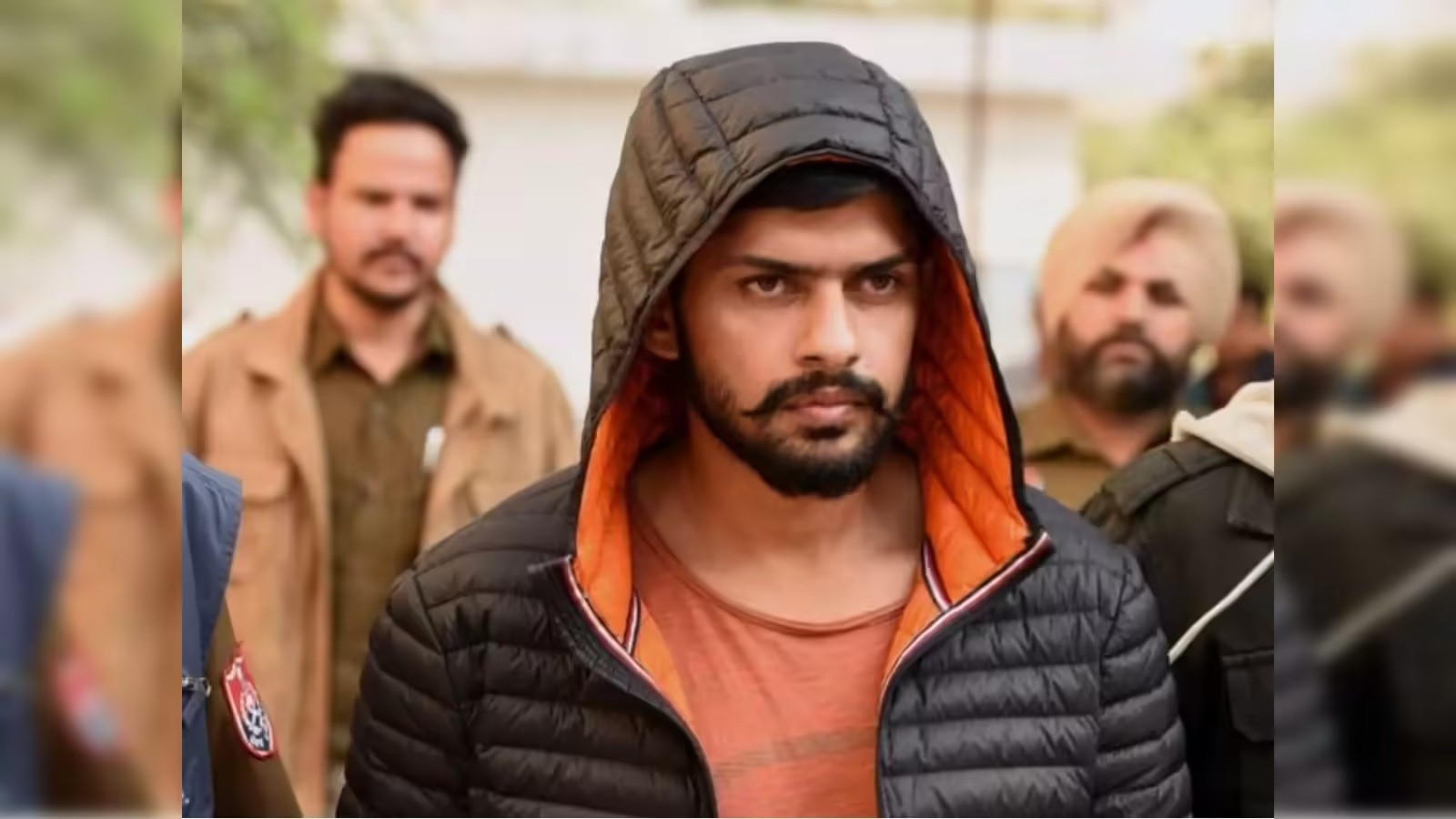
The US has taken significant action against Lawrence Bishnoi's gang and three alleged organized crime groups in India.
The United States has taken significant action against three alleged organised criminal groups, including the gang of Lawrence Bishnoi, who is imprisoned in India. American investigative agencies have announced the arrest of 24 suspects linked to these groups. This action is part of investigations into international organised crime, drug trafficking, extortion, contract killings, and the murder of Khalistan supporter Hardeep Singh Nijjar, among other cases.
According to U.S. government attorneys, these suspects, allegedly connected to three India-based criminal gangs including the Bishnoi gang, have been arrested from the U.S., Canada, and Europe. This information was provided by the U.S. Attorney's Office in California. However, several questions are being raised on social media following this action. The biggest question is whether India can extradite an accused imprisoned in its jails if the U.S. requests it. Another question is how U.S. courts are taking action in the case of Hardeep Singh Nijjar's murder, which occurred in Canada. And could this entire episode affect India-U.S. relations? This report seeks to answer these questions.
Three charge sheets released by the U.S. name a total of 37 accused. Among them are two accused who are alleged to have operated their global criminal network even while imprisoned in India. The prominent names include Lawrence Bishnoi from Punjab and Satinderjit Singh alias Goldy Brar.
It is alleged that both ordered the murder of Hardeep Singh Nijjar. Lawrence Bishnoi is currently imprisoned in Sabarmati Jail in Ahmedabad, Gujarat.
The seven-point federal grand jury indictment filed on June 25 charges 17 individuals with involvement in contract killings, drug trafficking, kidnapping, extortion, arms trafficking, and other organised crimes in the U.S., Canada, and other countries. Besides Lawrence Bishnoi, the name of Jaggu Bhagwanpuria also prominently appears in the U.S. indictments. Can India extradite Lawrence Bishnoi to the U.S.? The straightforward answer is—yes, but the process is lengthy and complex.
An extradition treaty between India and the U.S. was signed in 1997. According to the Indian Embassy's website, for extradition, it is necessary that the crime the person is accused of is an offence under the laws of both India and the U.S. and carries a minimum sentence of one year. The extradition request is formally sent through diplomatic channels. It is accompanied by the charge sheet, arrest warrant, full details of the crime, relevant laws, applicable sections, potential punishment, and evidence sufficient to establish a basis for prosecution. If the accused has already been convicted, a copy of the court's decision or certification from a judicial officer must also be provided.
According to a BBC report, criminal law expert Advocate Nikhil Saraf said,
"An extradition treaty exists between India and the U.S. The U.S. can send a formal request, after which Indian courts and the government decide according to the law." He further states, "This process is generally lengthy. Its pace largely depends on the priority the government gives to the case. If the government wishes, the process can be expedited, but if not, the case can drag on for years."
Under 'Operation Hardball,' U.S. federal prosecutors and the Federal Bureau of Investigation (FBI) have filed three indictments. This is a joint action by law enforcement agencies from the U.S., Canada, and Europe, aimed at cracking down on international organised crime networks.
These indictments also include the case of the murder of Khalistan supporter Hardeep Singh Nijjar. Nijjar was shot dead outside a gurdwara in Surrey, British Columbia, Canada, on June 18, 2023. U.S. prosecutors allege that Lawrence Bishnoi and Goldy Brar ordered this murder.
U.S. attorneys also allege that the Bishnoi gang targeted religious and political leaders, attempted to extort money from community members, and was involved in extortion incidents in California.
This raises the question of how U.S. courts can hear this case when the murder occurred in Canada.
According to the U.S. indictment, this alleged criminal network was also active in extortion, drug trafficking, and other organised crimes in the U.S. The prosecution claims that the murder of Hardeep Singh Nijjar was part of this broader criminal conspiracy. On this basis, U.S. courts can consider it part of their trial. Under U.S. law, it is not necessary for every crime to have occurred within U.S. borders. If significant connections of an international criminal gang's activities are linked to the U.S., in certain circumstances, crimes committed abroad can also fall under the jurisdiction of U.S. courts. For example, if extortion occurred in Los Angeles or if a murder was part of a drug trafficking network linked to the U.S.-Canada border, U.S. prosecutors can include that incident in their trial.