
Delhi Police accused of excessive force on students: Amnesty

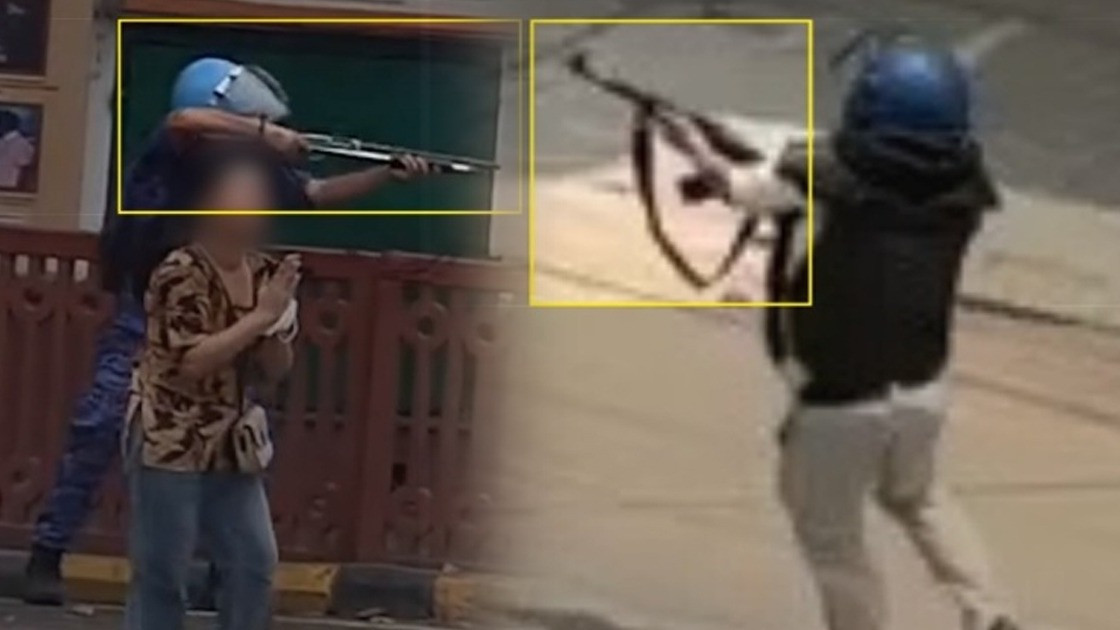
Amnesty International claims it was state-backed violence.
Amnesty International claimed in its report released on Monday that the Delhi Police used excessive force against student protests on July 20 last month. This included the use of electric shock devices and pellet guns.
Amnesty International's report presents a different picture from the police's claim that force was used only after the protesters turned violent. This report comes at a time when the Supreme Court on Thursday constituted a committee to investigate the violence from both the police and the protesters.

Protests erupted in New Delhi after the medical entrance exam paper was leaked. On July 20, these protests turned violent when thousands of protesters attempted to march towards the Parliament.
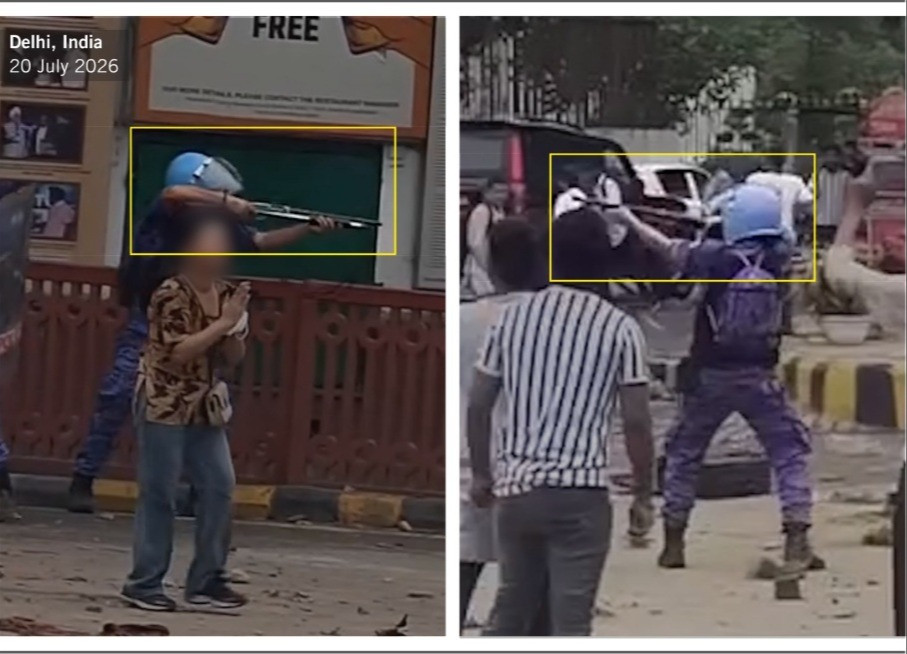
During the Parliament march on July 20, Delhi Police firing pellets at protesting students. Photo courtesy: Amnesty International
Amnesty stated that eyewitness accounts and verified visual evidence confirm the use of
shotguns firing pellets, tear gas launchers, grenades, batons, and electric shock devices against protesters in Delhi and Bihar. In Bihar, AK 47s were also fired at students.
Amnesty also confirmed two incidents in Bihar's Siwan district where a police officer
used deadly force unlawfully against the crowd, including firing AK 47s at students. However, no deaths occurred in these incidents.
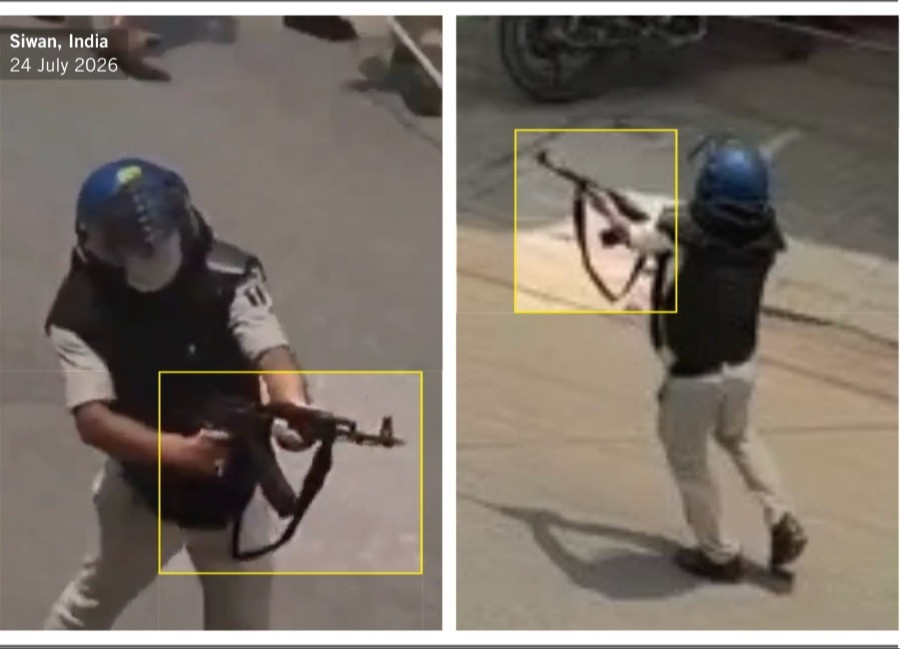
On July 24 in Siwan, Bihar Police personnel firing AK 47s at protesting students. Photo courtesy: Amnesty International
According to Amnesty,
the use of these weapons violated international laws and standards as well as guidelines related to police action in India. There were some sporadic incidents of stone-pelting by protesters, but it stated that the police's excessive response was state-backed violence under the guise of crowd control.
Meanwhile, the Delhi Police told the Supreme Court last week that force was used only after protesters "resorted to violence." The police claimed that "anti-social elements" posing as victim students inflicted "serious injuries" on security personnel.
On Friday, Opposition leader Rahul Gandhi staged a sit-in outside a Delhi police station with a 19-year-old protester who claimed to have been injured by pellets during the July protests. Rahul Gandhi demanded a police investigation into the matter, following which officials registered a case based on the complaint.
The protests, initially led by the 'Cockroach Janata Party' against exam irregularities, expanded to broader issues such as unemployment, lack of opportunities for youth, and concerns of critics regarding Prime Minister Narendra Modi's governance. These protests have become one of the biggest challenges for Modi since coming to power for the third time in 2024.
Amnesty International's Evidence Lab verified two videos showing an RAF officer firing a shotgun towards the crowd at the Connaught Place and Parliament Street intersection. Such weapons can fire both lethal and non-lethal ammunition.
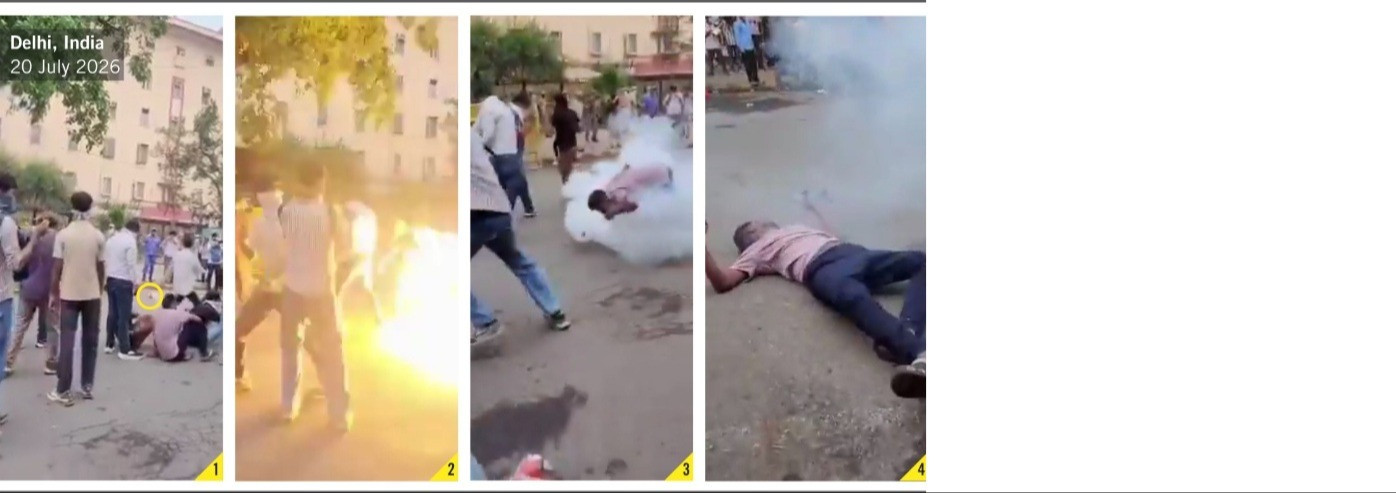
During the Parliament march on July 20, Delhi Police using excessive force on protesting students. Photo courtesy: Amnesty International
Two other verified videos showed two protesters near the same intersection with injuries resembling those caused by 'birdshot.' Birdshot is a type of cartridge used in hunting, containing a large number of small metal pellets. In India, such weapons are colloquially referred to as "pellet firing shotguns." CCTV footage verified by Amnesty also showed two RAF officers with shotguns among the crowd some distance from the scene.
Speaking to Amnesty International on condition of anonymity, a protester injured by pellets said,
I was near Connaught Place when a clash occurred between protesters and police. Despite this, most of the protest was peaceful. RAF officers were using tear gas, but then without any warning, they started firing pellet shotguns.
According to the protester,
he saw an officer aiming a shotgun in his direction from about 300-400 meters away. He began to run in the opposite direction when pellets hit his back. He stated that if he hadn't run, the pellets could have hit his face and chest. He claimed to have suffered about 25-30 wounds and had to go to the hospital immediately. Doctors confirmed the injuries were caused by pellets. His bones were spared, but he was left with severe scars on his body.
Birdshot ammunition is not developed for law enforcement purposes. Due to the wide spread of metal pellets, it is difficult to control its direction accurately. This poses a risk of serious injury to both the targeted individual and those nearby.
Its use in Egypt, Iran, and Jammu & Kashmir has been linked to numerous cases of deaths and loss of eyesight. Amnesty states that there is no legitimate use for birdshot in maintaining law and order and that there should be a clear ban on its use for this purpose.
The 'Standard Operating Procedures to deal with Public Agitations with Non-Lethal Measures' prepared by the Bureau of Police Research and Development (BPR&D) of India recommends that security forces should warn protesters before using less-lethal or lethal force. However, according to the injured protester who spoke to Amnesty, no warning was given before using pellet firing shotguns.
International standards related to the use of force also state that law enforcement officials should use non-violent means before resorting to force. Where possible, a clear warning should be given, and people should be given sufficient time to respond to that warning.
In response to reports of people being injured by pellets, Delhi Police issued a "Fake News Alert" on X. The police described these reports as "completely false and misleading" and warned that appropriate legal action would be taken against those "spreading rumours."
The Hindu reported that on the evening of July 20, an RAF unit fired "two ballistic cartridges filled with plastic pellets" on the orders of a Deputy Commissioner of Police (DCP). Additionally, "55 non-electrical and 15 electrical crowd-control shells" and five tear gas grenades were used. A subsequent internal CRPF investigation allegedly revealed that RAF personnel fired at least seven rounds of metal pellet ammunition.
According to a Right to Information (RTI) application filed by All India Trinamool Congress spokesperson Saket Gokhale, at least 10 people were injured by pellets during these protests.