
Nirbhaya-like horror revisits Delhi streets after 14 years

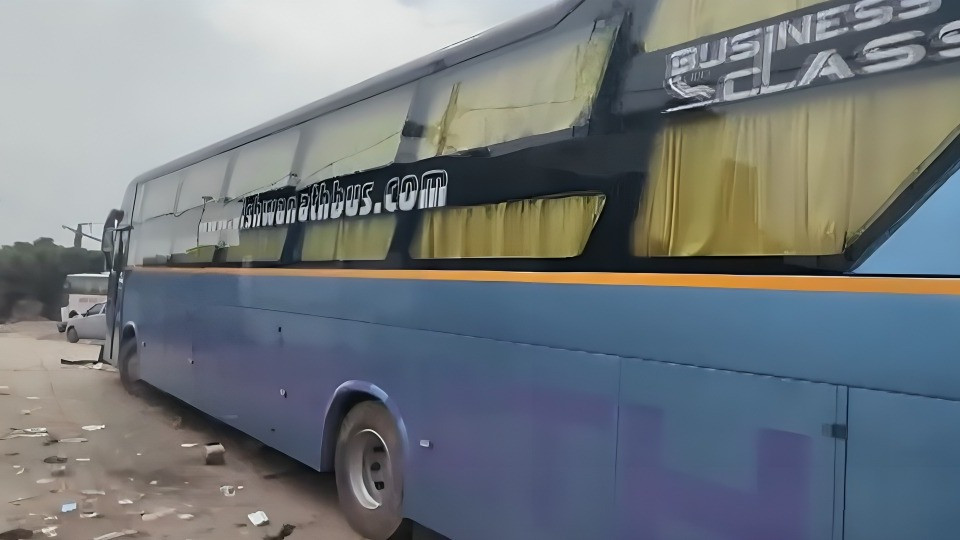
Nirbhaya law flouted as predators drive curtained bus 47 km unnoticed by police.
After the Nirbhaya case, strict laws were enacted in the country. Laws changed, the system changed, and the culprits were hanged. But 14 years later, the same question arises. Even today, 'Nirbhaya' is not safe in Delhi. On Sunday night, a 16-year-old Class 11 student was gang-raped in a moving sleeper bus. According to the police, the student boarded the bus seeking help after being stranded in heavy rain. The incident occurred on the night of August 4. The teenager from Mainpuri had left home after a family dispute and was on her way to meet a relative in Noida.
According to the police, the student mistakenly got off at Pari Chowk due to heavy rain and darkness. At this time, she signaled a passing empty sleeper bus for help. The bus driver, Kuldeep, and conductor, Sandeep, informed her that the bus was going to Noida Sector-63 and took her on board.
The police stated that.
As soon as the bus started, the conductor began making obscene gestures towards the teenager. The student alleges that subsequently, both the driver and the conductor raped her. When she resisted, they threatened to kill her. The bus traveled about 47 kilometers towards Kashmiri Gate. The accused dropped the student near the Ring Road at Kashmiri Gate bus terminal late at night and fled. The terrified student contacted the Kashmiri Gate police to report the incident.
Later, the police arrested Kuldeep and Sandeep from the bus parking in Timarpur. The sleeper bus was also seized and sent for forensic examination.
During the investigation, it was revealed that,
the bus had broken down earlier and was taken to a workshop in Surajpur for repairs. After the repairs, the driver and conductor were taking the empty bus to Timarpur when they encountered the teenager at Pari Chowk. According to the police, curtains were hung around the bus berths, which helped the accused conceal the crime. The bus traveled approximately 47 kilometers from Pari Chowk to Kashmiri Gate, after which the teenager was left by the roadside.
But the big question is how a 16-year-old minor was raped in a bus for 47 kilometers, and the police from UP to Delhi remained oblivious.
There are barricades set up by UP and Delhi police at various places, yet the police did not find it necessary to stop and check the bus anywhere. Despite the bus having tinted glass and curtains. The Nirbhaya Act enacted after the 2012 Nirbhaya case specifically prohibits the use of black film, tinted glass, and curtains on any four-wheeler or large vehicle.
The teenager wandered from Greater Noida to Delhi's ISBT and then to Timarpur, while the assault continued in the moving bus. She screamed and shouted, but there was no police presence at any checkpoint or barricade. Shockingly, there was no inspection of the bus at the Delhi border, nor did the police notice the tinted glass and curtains on the bus. The assault continued on the road for an hour and 20 minutes without the police being aware. This exposes the hollowness of the police, traffic, and the entire system. Although the police have arrested the accused after the incident, will there be any action against this negligence by the police?
The laws enacted after the Nirbhaya case were blatantly violated. Based on the recommendations of the Justice Verma Committee formed after the 2012 Nirbhaya case, the Central Ministry of Road Transport and the Delhi government had set strict rules for passenger buses, which were ignored in this case. Under safety regulations, curtains and tinted glass are prohibited. According to Supreme Court and motor vehicle rules, there is a strict ban on placing curtains or obstructing visibility on passenger bus windows. Thick curtains were hung in the bus, completely concealing the brutality happening inside from the outside.
All commercial passenger vehicles are required to have live VLTD and panic buttons connected to the control room. But the empty bus continued to run, and no alert was triggered from any emergency system or control room.
Police verification of commercial bus drivers and conductors and nameplates on their uniforms are mandatory. But at night, private buses were running without any official monitoring or regular route logs.
It was mandatory to install CCTV for internal security in public transport and long-distance sleeper buses. But there was no security surveillance inside the bus. The police had to rely only on external route CCTV.
The incident of brutality with the Class 11 student in a moving sleeper bus has made it clear that the strict safety standards set for public and private passenger buses after the 2012 Nirbhaya case remain confined to paper. The sleeper bus in which the student was assaulted ran for 47 kilometers with curtains hanging on the windows, flouting the rules, but there was no inspection at any checkpoint, nor did the emergency security system work.
According to sources, the sleeper bus used in the incident had developed a technical fault, which driver Kuldeep and conductor Sandeep took to a workshop in Surajpur, Greater Noida, for repairs. After the bus was repaired, both were returning the empty bus to the Timarpur parking in North Delhi.
During the approximately 47-kilometer journey from Pari Chowk to Kashmiri Gate bus terminal, heavy curtains were hung on the bus windows, preventing any activity inside from being visible from the outside. The bus did not face any police checking throughout this route. Police officials argue that the entire route is part of the expressway and Ring Road, where barricading causes heavy traffic jams. However, the question arises as to why the police force deployed at the Noida-Delhi border and major intersections did not keep an eye on the suspiciously running empty bus at night.