
BJP leader arrested in ₹21 crore crypto scam in Madhya Pradesh

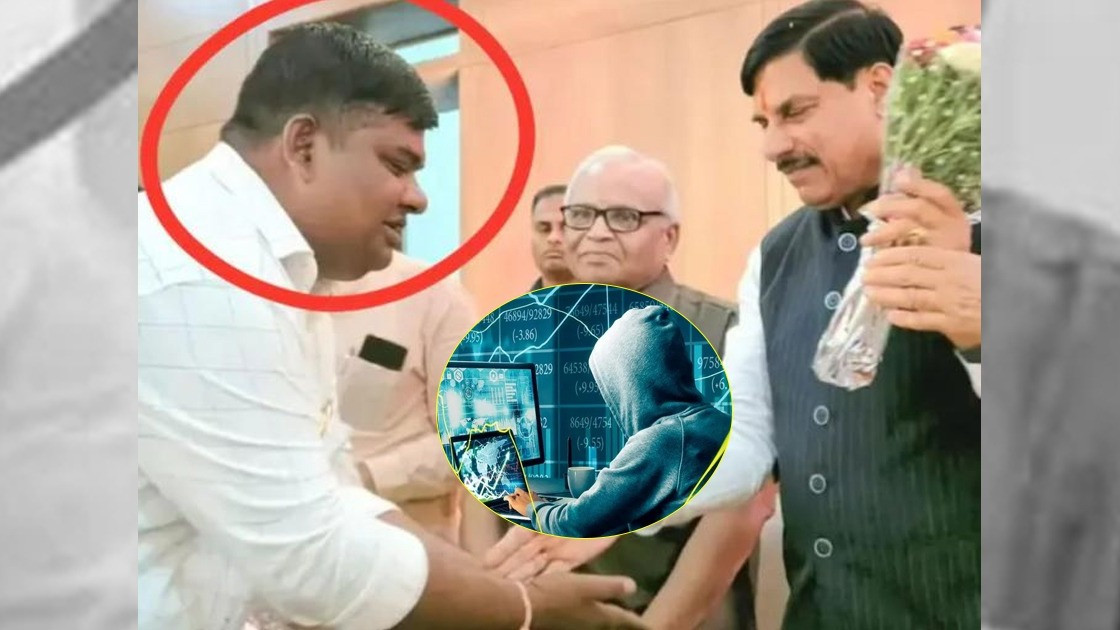
A BJP leader is accused of laundering ₹21.06 crore in a cryptocurrency scam.
Chor, thug, scamsters, and criminals are finding refuge in the BJP. Commit a crime and come out clean after going through BJP's washing machine. Now, a new case has emerged from Madhya Pradesh where a BJP leader and district panchayat member has been caught in a cyber fraud. This BJP leader is accused of laundering ₹21.06 crore from a cryptocurrency scam.
This cyber fraud was uncovered starting from a simple WhatsApp message—“Hello, I am Divya”—but gradually it became the biggest cyber fraud case in Madhya Pradesh. The Madhya Pradesh Cyber Police achieved a major breakthrough in this case when they arrested BJP leader and district panchayat member Jagdish Kumar Malviya from Shajapur. During the investigation, it was found that ₹50 lakh of the fraud amount had reached his bank account. The police allege that Malviya knowingly allowed the fraud amount to be transferred through an institution's bank account for a 2% commission, making him a crucial link in a complex money laundering network spread across the country.
NDTV reports that this arrest is considered the first major success in the sensational case where a 70-year-old chartered accountant from Gwalior, Ashok Vijayvargiya, was defrauded of over ₹21 crore. The fraudsters posed as investment advisors and trapped him into investing in fake USDT cryptocurrency trading. According to investigators, the fraud began in December 2025 when Vijayvargiya received a message on WhatsApp from a woman who identified herself as “Divya.” She promised double profits through cryptocurrency investments and gradually gained his trust.
To strengthen the trust, the fraudsters initially allowed Vijayvargiya to withdraw a small amount. This is considered a very old tactic in investment fraud. Later, his investment was shown to have grown to over ₹33 crore on a fake trading portal, making him believe the platform was genuine. However, whenever he tried to withdraw money, he was asked for new amounts under the guise of “income tax,” “risk margin,” and other fake charges. By the time he realized that the profits shown on the screen were just fake figures, he had already sent over ₹21 crore through 106 transactions to 76 different bank accounts.
During the investigation, cyber experts reconstructed the entire chain of digital transactions. It was revealed that approximately ₹77 lakh from the initial transfers reached accounts linked to Jagdish Malviya. Of this, about ₹50 lakh was directly linked to the fraud amount in this case. According to the police, Malviya was able to facilitate these transactions because he had access to the bank account and internet banking details of the institution of which he was the president. During interrogation, he allegedly admitted that he allowed the fraud amount to pass through this account for a 2% commission.
Investigators also found suspicious transactions worth over ₹2.5 crore in his accounts. This raises suspicion that these accounts may have been repeatedly used to move funds obtained from cyber fraud. The investigation also revealed that Malviya was allegedly living a lavish lifestyle supported by money from suspicious financial transactions. According to the police, while investigators were tracing the funds from this major cryptocurrency fraud, Malviya had also traveled to Bangkok in July with some associates. The accused was presented in court, where he was remanded to police custody. During interrogation, he provided crucial information about an interstate network that operated “mule accounts.”
Mule accounts are bank accounts used to receive illegal funds and quickly transfer them to other accounts before they can be frozen by authorities. Investigators are astonished by the vast scale of this money laundering network. According to the state cyber police, the ₹21.06 crore was not kept in a few select fake accounts. Instead, it was divided into hundreds of transactions and forwarded through a highly complex banking network. The investigation has so far revealed that the victim transferred funds to 76 bank accounts.
Subsequently, the money passed through 15 different layers of transactions. Over 20,000 bank accounts and digital transactions have been identified. About 35% of the funds were routed through accounts in South India and then spread across several states. The funds eventually passed through the banking networks of Karnataka, Tamil Nadu, Andhra Pradesh, Kerala, Gujarat, Rajasthan, Uttar Pradesh, Haryana, Jharkhand, West Bengal, Chhattisgarh, and Madhya Pradesh.

The police have so far managed to freeze around ₹2 crore. The remaining funds had already been withdrawn, converted into cryptocurrency, or sent to different locations through digital payment channels. Investigators believe that the funds were deliberately divided into thousands of small and large transactions so that the money would not remain in any one account long enough for authorities to freeze it.
According to sources, arresting the accused was not easy either. Investigators say that as soon as Malviya was taken into custody, some influential people allegedly contacted the authorities seeking information about the case and attempted to intervene. However, when they were informed that the case is considered the largest cyber fraud investigation in Madhya Pradesh's history, they backed off.
Police officer Sanjeev Nayan Sharma stated,
The focus of the investigation is now on identifying the masterminds behind the fake cryptocurrency platform, tracing the IP addresses, analyzing WhatsApp chats and communications. An American country code number is also being investigated. Additionally, efforts are being made to expose the interstate syndicate controlling the mule accounts.
Investigators suspect that many of these bank account holders may be mere “money mules” working for a commission, while the real operators of this entire network remain hidden behind multiple layers of digital transactions.