
Who received the missing ₹600 crore from Madhya Pradesh treasury

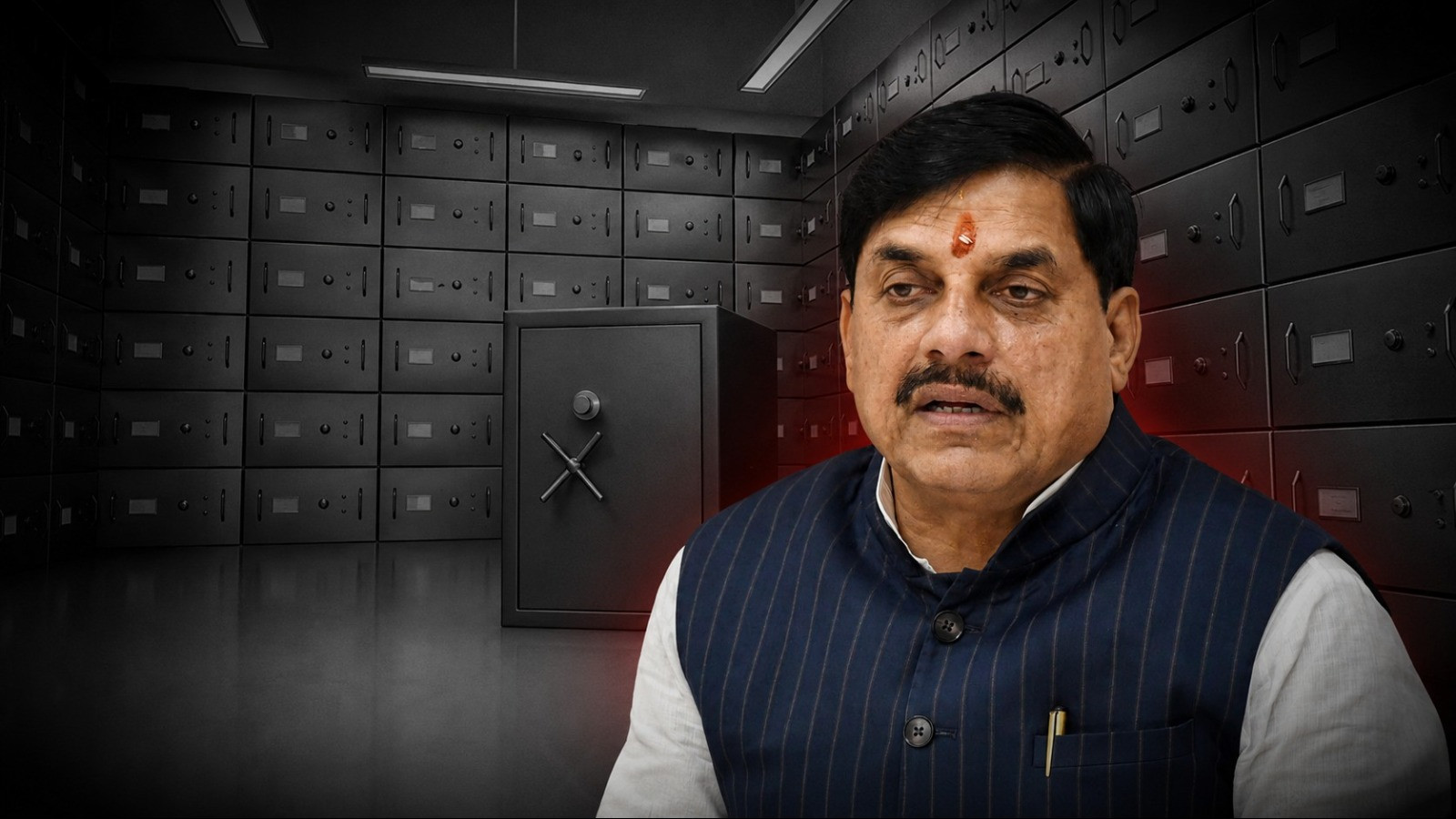
Employees exploited system flaws to transfer government funds to their own, spouses', and relatives' bank accounts.
A major financial irregularity involving approximately ₹600 crore has come to light in the Madhya Pradesh government's treasury. The State Financial Intelligence Cell (SFIC) of the Directorate of Treasury and Accounts has found that payments were made based on fake bills in some cases, while in others, funds were released twice for the same work. Some employees exploited system loopholes to transfer government money into their own, their wives', and relatives' bank accounts.
According to a report by Dainik Bhaskar, this irregularity occurred over the past five years through the Integrated Financial Management Information System (IFMIS), which handles payments for the Madhya Pradesh government's annual budget of approximately ₹4.50 lakh crore. So far, 59 FIRs have been registered against more than 400 people in the case. Several cases are also being investigated by the Enforcement Directorate (ED) and the Economic Offences Wing (EOW).
The SFIC investigation revealed two major methods of government fund misuse. The investigation uncovered 199 suspicious transactions through which approximately ₹305 crore were transferred from government accounts to private bank accounts linked to officials and employees. In many cases, the funds were transferred to the accounts of employees' wives or relatives.
According to regulations, around ₹293 crore was supposed to be kept in the treasury's Personal Deposit (PD) accounts, but the investigation found that this amount was transferred to other bank accounts in violation of the rules.
During the investigation, it was found that two different employee codes were created for the same employee. This allowed for double payments through different codes. Some Drawing and Disbursing Officers (DDO) shared their login and password with employees. The mobile numbers registered in the system were changed, causing OTPs related to payments to be sent to different numbers instead of the actual employee or officer. The names in the employee's service record and the bank account for payment were not properly matched. Taking advantage of this weakness, funds were transferred to other accounts.
The largest embezzlement case from the government treasury was uncovered in Kathiwada, Alirajpur. Former Block Education Officer (BEO) Kamal Rathore is accused of transferring ₹20.47 crore from the treasury to various bank accounts. According to the investigation,
this amount was used to develop a colony named 'Balaji Dham' in Gandhwani, Dhar district. Following police action, the ED also registered a case and attached 56 plots linked to Rathore.
The Ujjain jail case illustrates the extent to which the system can be misused when an officer's login and password fall into the wrong hands. Jail guard Ripudaman Singh's actual salary was around ₹35,000 per month. He obtained the jail superintendent's login information. Subsequently, he prepared fake applications to withdraw ₹1.50 lakh each from the provident fund (PF) accounts of two employees, approved them himself, and got the payments processed. He removed the registered mobile numbers of the employees and entered his own number, so the OTPs for transactions were sent to him.
Ripudaman then increased his salary to approximately ₹50,000 and later to ₹1.50 lakh per month. Gradually, it was raised to ₹4.82 lakh per month. According to the investigation, Ripudaman alone is accused of being involved in irregularities exceeding ₹10 crore. A significant portion of the embezzled funds was spent on gambling and betting. He is currently in jail, and the EOW's Ujjain unit is investigating the case.
In Mathwad High School, located in Sondwa block of Alirajpur, a fourth-class employee, Raisinh Tomar, had two employee codes registered in the system. It is alleged that he took advantage of these codes to receive his salary twice every month from 2020 to December 2025.
Similarly, two codes were created for sanitation worker Raghu Dudwe. He continued to receive salaries from different government offices. This irregularity was uncovered during an investigation conducted under the instructions of the then Commissioner of Treasury and Accounts, Bhaskar Lakshkar. These cases revealed how the creation of two codes for one employee could weaken the monitoring of government payments.
The biggest challenge for the government now is to recover the funds illegally withdrawn from the treasury. Out of the approximately ₹600 crore irregularity, ₹220 crore has been recovered so far. This includes ₹56 crore recovered from fraud-related cases and ₹164 crore retrieved from bank accounts. This means that around ₹380 crore is still to be recovered.
The investigation has revealed that in some cases, the money was spent on gambling and betting, while in others, it was laundered by purchasing properties. Identifying such funds and bringing them back to the government treasury remains a significant challenge for the investigating agencies and the concerned department.